Asphalt and Bitumen Removal From Paving Equipment
Published
A scoping guide for paving contractors and maintenance teams comparing approaches to buildup on equipment.
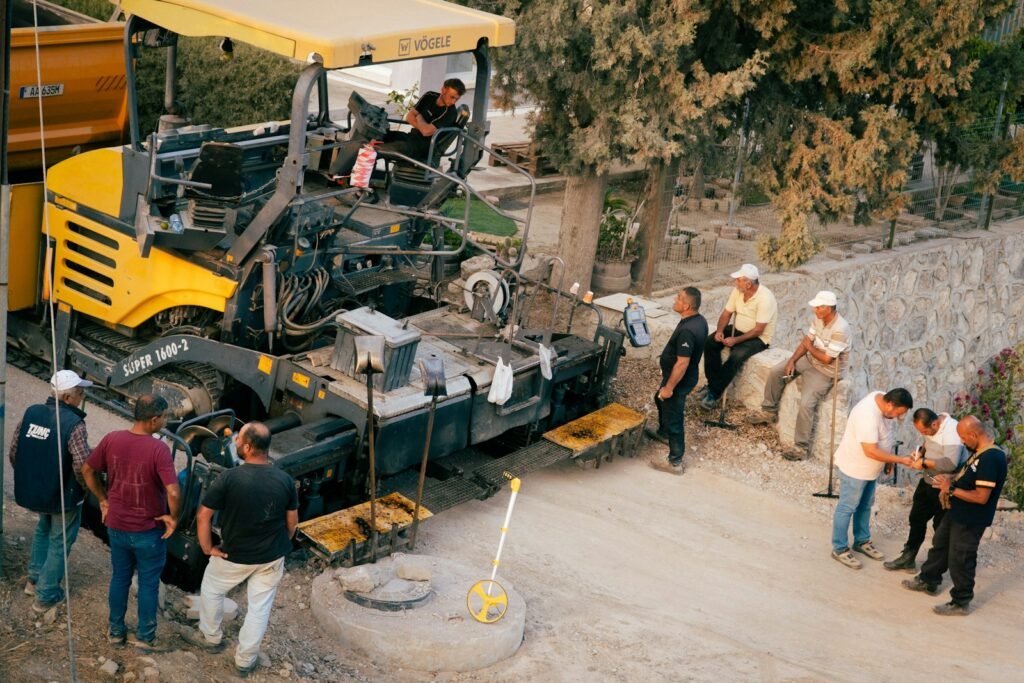
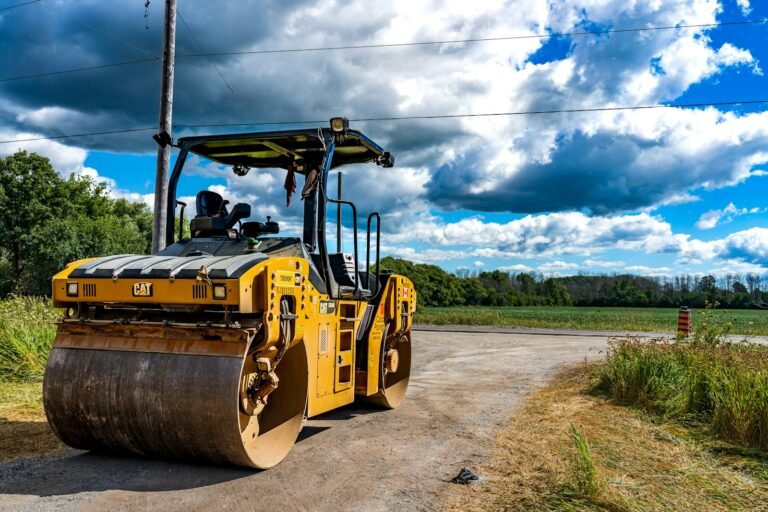
Asphalt and bitumen removal needs a surface-specific plan. Identify the machine, the deposit, and the maintenance objective before comparing cleaning methods. A broad request to clean a paver leaves too many decisions unresolved.
Use this guide to prepare questions for an equipment owner and cleaning contractor. For a service review in New Jersey, New York, Pennsylvania, or Delaware, visit asphalt machinery cleaning.
Map the buildup before choosing a method
Start with a wide photograph of the machine. Then add close-ups of each area under review. Mark accessible surfaces separately from areas hidden behind guards or within an assembly.
Record the material used, the length of time it has accumulated, and earlier cleaning attempts. Include product information for tack materials or other residues where available. Tell the contractor if the buildup contains loose aggregate or unidentified contamination.
Finally, define the objective. Is the task to expose a surface for maintenance, clean selected external areas, or prepare the machine for sale? Use that objective to set the scope.
What an asphalt truck example tells us
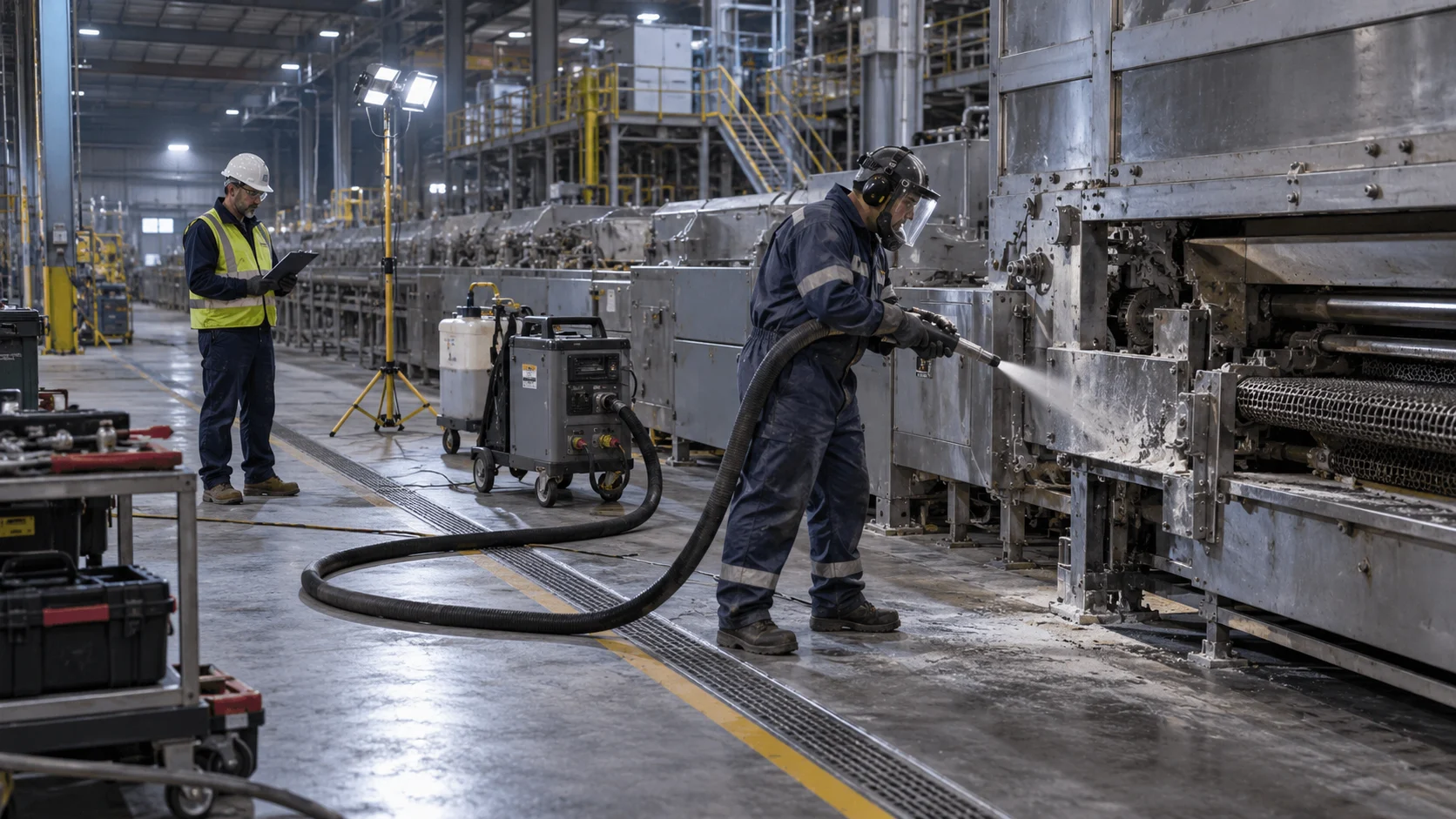
Cold Jet describes a project for Prime, Tack & Seal Company in which a contractor used dry ice blasting on trucks with hardened asphalt buildup. The account distinguishes focused summer work from broader winter cleaning. See the manufacturer’s asphalt truck case study.
Treat that as an example of an application. It is not a Precision project or a cleaning-time estimate for your equipment. Ask for a review of your own surfaces, deposits, and access before comparing expected results.
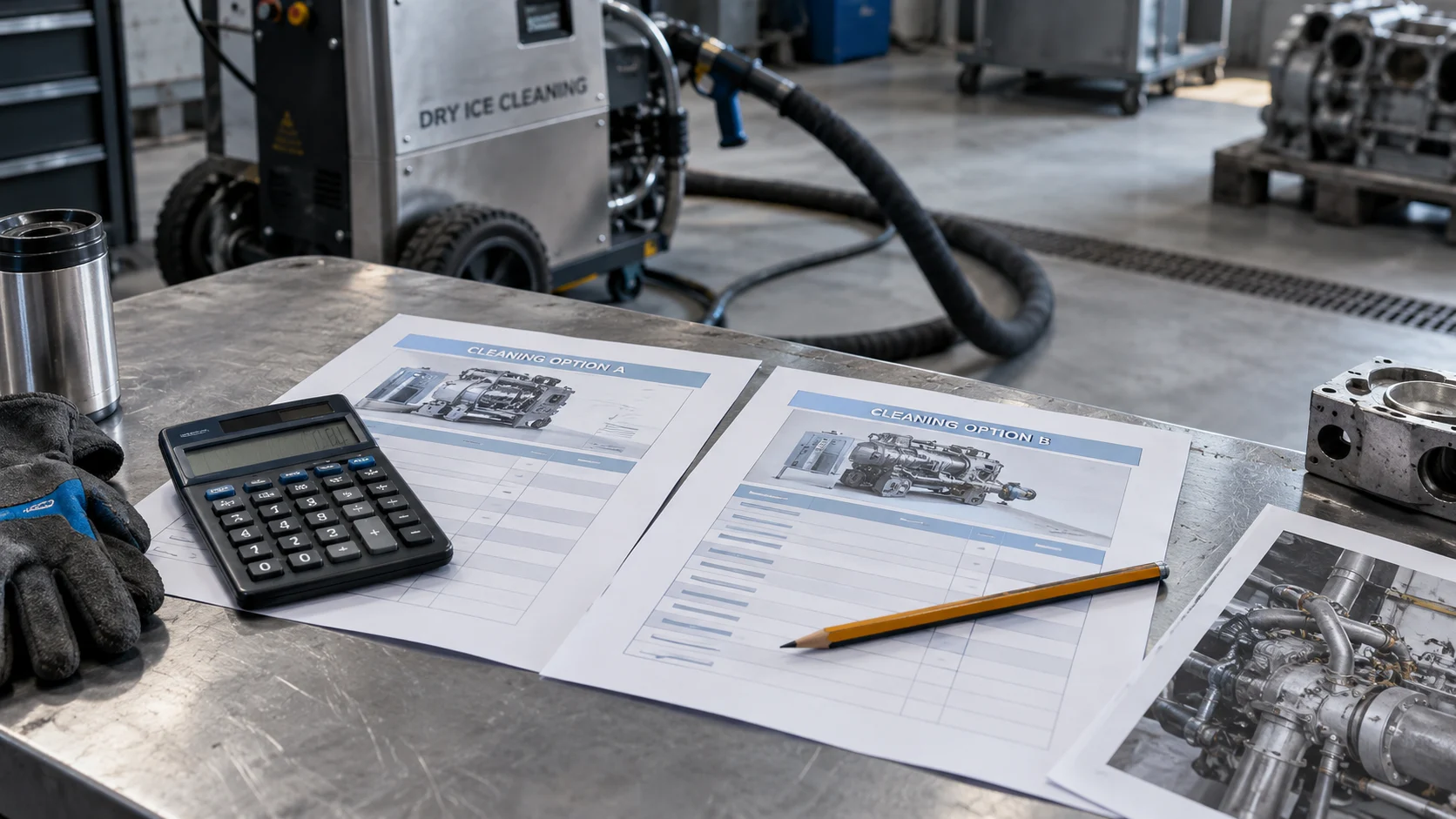
Compare asphalt and bitumen removal scopes
Ask each provider to quote the same boundaries and finish requirements. If one proposal covers only accessible exterior deposits and another includes component removal, the totals describe different jobs.
| Comparison item | Question to ask |
|---|---|
| Surface coverage | Which exact areas are included and excluded? |
| Access work | Who removes guards or positions the machine? |
| Cleaning result | What visible outcome is the quote based on? |
| Collection | Who contains, collects, and handles removed material? |
| Handoff | Who inspects the work and releases the equipment? |
Include setup and the owner’s maintenance tasks in the overall schedule. Use the cleaning cost comparison calculator with your own inputs. Do not treat an estimated cleaning duration as the entire equipment outage.
Define a representative test
Choose a test area with the deposit and surface condition found in the larger job. Agree on access, the result to inspect, and the stop point. Ask the equipment representative to review the manufacturer’s restrictions first.
After the test, record both the cleaned surface and any remaining material. Note the limits of the trial. A result on one exterior panel should not be treated as approval for hoses, sensors, seals, or internal assemblies.
Use the findings to refine the quote. If the test does not meet the objective, discuss a revised scope or another method before continuing. Request a dry ice test cleaning review for unfamiliar buildup.
Plan access and residue collection
Name the person responsible for equipment isolation and release. Identify a work zone, staging route, and collection area. Review ventilation, compressed air, noise, and nearby activity through the facility requirements guide.
Keep tank interiors and enclosed spaces out of a general exterior scope. Ask for separate review of those conditions. Also agree on who handles removed material and how the work area is left.
Turn the findings into a maintenance plan
Record the reviewed surfaces, test findings, access requirements, and accepted result. Use that record as the starting point for later discussions. Reassess the scope when the deposit or machine condition changes.
For a seasonal project, use the end-of-season asphalt equipment cleaning guide. For a sale or return, add the asset presentation requirements.
Then request an asphalt cleaning project review with the machine details, photos, location, and proposed work window.