Packaging changeover cleaning removes buildup before your team cleans, inspects and resets the line between runs. When a line needs to be cleaned, inspected, adjusted, and reset between runs, residue can turn routine tasks into slow, frustrating work.
September often brings a renewed push for seasonal products, larger orders, and year-end planning. We help industrial teams look at where buildup is slowing transitions so they can start each new run with equipment that is easier to see, inspect, and adjust. Sequence station release, cleaning and inspections with the production changeover scheduling guide.
Plan Packaging Changeover Cleaning Before Peak Demand
Packaging changeover cleaning removes buildup before your team adjusts and inspects the line. Adhesives, ink, film debris, powders, oils, and product residue may collect on the parts your team needs to inspect or move. What should be a quick adjustment can become a longer cleaning task when surfaces are coated, sticky, or difficult to access.
We often see residue make it harder to spot worn components, loose hardware, leaks, or alignment issues. Teams may spend valuable time scraping, wiping, and rechecking equipment before they can begin setting up for the next product.
Proactive packaging changeover cleaning gives production and maintenance crews a clearer starting point. See Cold Jet’s packaging equipment cleaning applications for examples. Rather than dealing with old contamination in the middle of a transition, you can plan cleaning around downtime and approach the next changeover with fewer surprises.
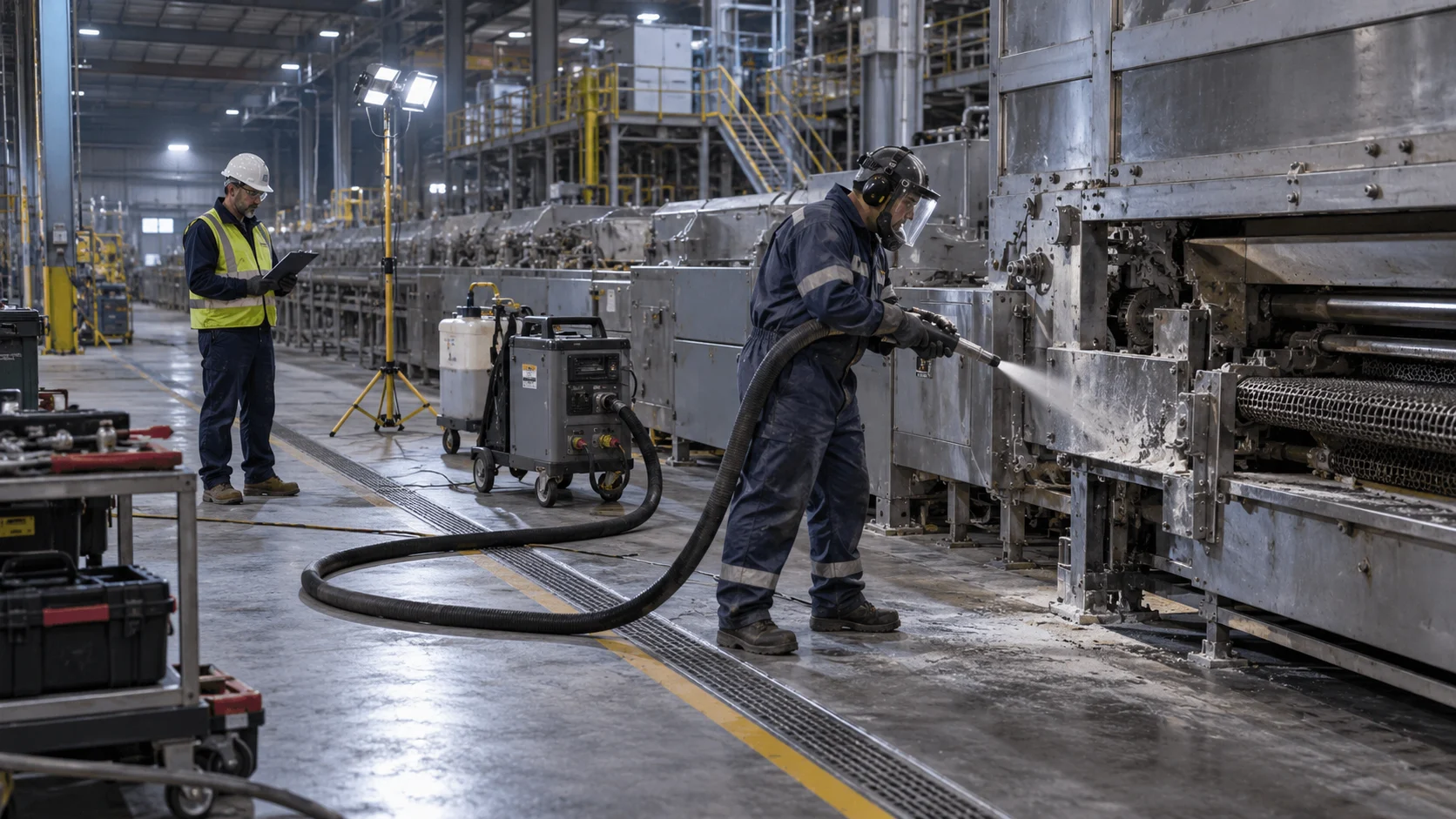
Mobile dry ice blasting is one option for removing buildup from industrial equipment, including:
- Conveyors and rollers
- Labelers, fillers, and cartoners
- Sealing stations and production line components
- Molds, guards, frames, and hard-to-reach areas
See How Residue Extends Changeover Tasks
Changeovers depend on visibility and access. If guides, rollers, belts, sensors, guards, or sealing areas are covered in residue, it may take longer to make adjustments and confirm that parts are in proper condition. Buildup can also hide wear patterns that would otherwise be easy to notice during an inspection.
A sticky adhesive area, for example, may need extra attention before settings can be checked. Film debris around rollers or guides can slow movement and make it harder to see whether the equipment needs alignment. Powdery or oily residue may collect around guards, frames, and other surfaces that are already awkward to reach.
Traditional cleaning methods may add their own delays. Water and chemical cleaners can require preparation, rinsing, drying, containment, and cleanup. Some methods may also require more disassembly than a facility planned for during a short maintenance window.
Those delays can affect more than one task. When a packaging line stays offline longer than expected, teams may face:
- Less available production time
- Pressure to catch up on scheduled runs
- Inconsistent packaging quality after a rushed reset
- Added strain on maintenance staff during busy periods
Cleaning is not the only part of a changeover, but it can influence nearly every step that follows.
Use Packaging Changeover Cleaning to Streamline Resets
Consistent packaging equipment cleaning can make changeovers more predictable because contaminants are addressed before they become stubborn problems. Instead of waiting until buildup blocks an adjustment or obscures an inspection point, we recommend identifying areas that collect residue most often and planning service around them.
The right cleaning scope depends on the equipment and the material being removed. A focused plan may include machine frames, rollers, conveyors, sensors, print areas, sealing zones, and other components that affect setup work. Product contact zones should always be handled according to your facility’s procedures and equipment requirements.
Cleaner equipment gives your team a better view of what is happening beneath the residue. That can make it easier to identify loose parts, damaged components, leaks, worn surfaces, and adjustment needs before the next product run begins.
A clean line does not replace maintenance or inspection, but it supports both. When surfaces are easier to examine, your crew can spend less time working around old buildup and more time completing the reset correctly.
Clean Critical Components Without Excess Downtime
Dry ice blasting uses compressed air and dry ice pellets to remove many types of industrial residue. The process does not introduce water or harsh chemical cleaners, which can be helpful in packaging environments where drying time and cleanup can hold up a line.
As dry ice pellets strike the surface, they help break away contamination. The dry ice then dissipates, leaving the removed material behind for collection. This can mean less secondary waste than methods that add water, blasting media, or chemical cleaning products.
Depending on the application and site conditions, dry ice blasting may allow many components to be cleaned in place. That can reduce the need to remove parts solely for cleaning, although every machine and facility has different requirements.
Before work begins, we evaluate the equipment, contamination type, manufacturer guidance, and facility procedures. Cleaning methods should always match the surface being treated and the conditions of the production area. Our mobile service is built around that application-by-application approach rather than a one-size-fits-all process.
Build Packaging Changeover Cleaning Into Seasonal Plans
The best time to address heavy buildup is often before it causes a delay during a busy production period. If your facility expects a major SKU change, a high-volume seasonal run, or an end-of-year maintenance window, cleaning can be included in the planning process instead of treated as an emergency task.
Start by looking at the equipment that regularly slows down changeovers. High-speed lines, adhesive application areas, sealing stations, mold surfaces, and heavily used conveyors are common places for residue to collect. Your maintenance and production teams may already know which areas take the longest to clean by hand.
Coordinating cleaning with planned inspections and downtime can help reduce disruption. We provide mobile dry ice blasting for commercial and industrial facilities throughout New York, New Jersey, Pennsylvania, and Delaware, allowing teams to plan equipment cleaning around their operating schedule.
Schedule a Changeover Review Before Peak Demand
Reducing changeover delays starts with equipment that is clean enough to inspect and adjust without unnecessary extra work. Review where residue is collecting, which components create the most repeat delays, and when your line has planned downtime for maintenance or transitions.
A targeted cleaning plan can help your team enter the next production run with clearer equipment surfaces, fewer hidden contaminants, and more time for the work that keeps the line moving.
Make Changeovers Easier To Manage
Precision Dry Ice Cleaning provides packaging equipment cleaning tailored to the demands of converting and packaging lines. Our dry ice blasting process removes buildup without introducing water or abrasive media. Contact us to discuss a service plan that fits your production schedule.