Coffee Roaster Cleaning Methods Compared
Published · Updated
Compare coffee roaster cleaning methods by component, deposit and manufacturer instructions. Plan a test, residue collection and production handback.

Coffee roaster cleaning methods should be compared one component at a time. Start with the roaster model and its maintenance instructions. Then identify the deposit, the accessible surface and the result your team needs before the next production run.
This is a suggested comparison framework for a scope discussion. Use coffee roaster cleaning for service information. Keep your equipment manual as the starting point for the actual cleaning and maintenance procedure. Turn the component list into booked work windows with the holiday roaster cleaning schedule.
Start with the roaster manufacturer’s instructions
Diedrich publishes an IR Series cleaning, maintenance and troubleshooting guide. Locate the equivalent current instructions for your own make, model and configuration. Do not transfer one manufacturer’s procedure to another machine without review.
Ask the equipment owner to identify the maintenance tasks already covered by that manual. List the work requiring an outside provider separately. Include the drum, cooling components, chaff-handling equipment and exhaust-related systems only where they are relevant to your machine.
Attach photographs and label each component. Record previous cleaning products or methods, the observed deposit and the areas that are inaccessible. If a component has a coating, seal, sensor or repaired surface, flag it before requesting a method comparison.
Compare coffee roaster cleaning methods by task
| Option to review | Information to establish | Scope question |
|---|---|---|
| Approved routine manual cleaning | The manual’s method, tools and accessible parts | Which owner maintenance tasks are already defined? |
| Approved cleaning product | The permitted product and surface instructions | What preparation and follow-up steps are required? |
| Selective dry ice trial | The deposit, finish, access and inspection criterion | What can a representative test establish? |
| Specialist exhaust or mechanical work | The affected system and service provider | Which tasks require a separate work order? |
The table is a purchasing checklist, not an operating procedure. Ask each provider to describe the same named component and deposit. Keep a general equipment-cleaning quote separate from exhaust inspection, combustion-system service or certification.
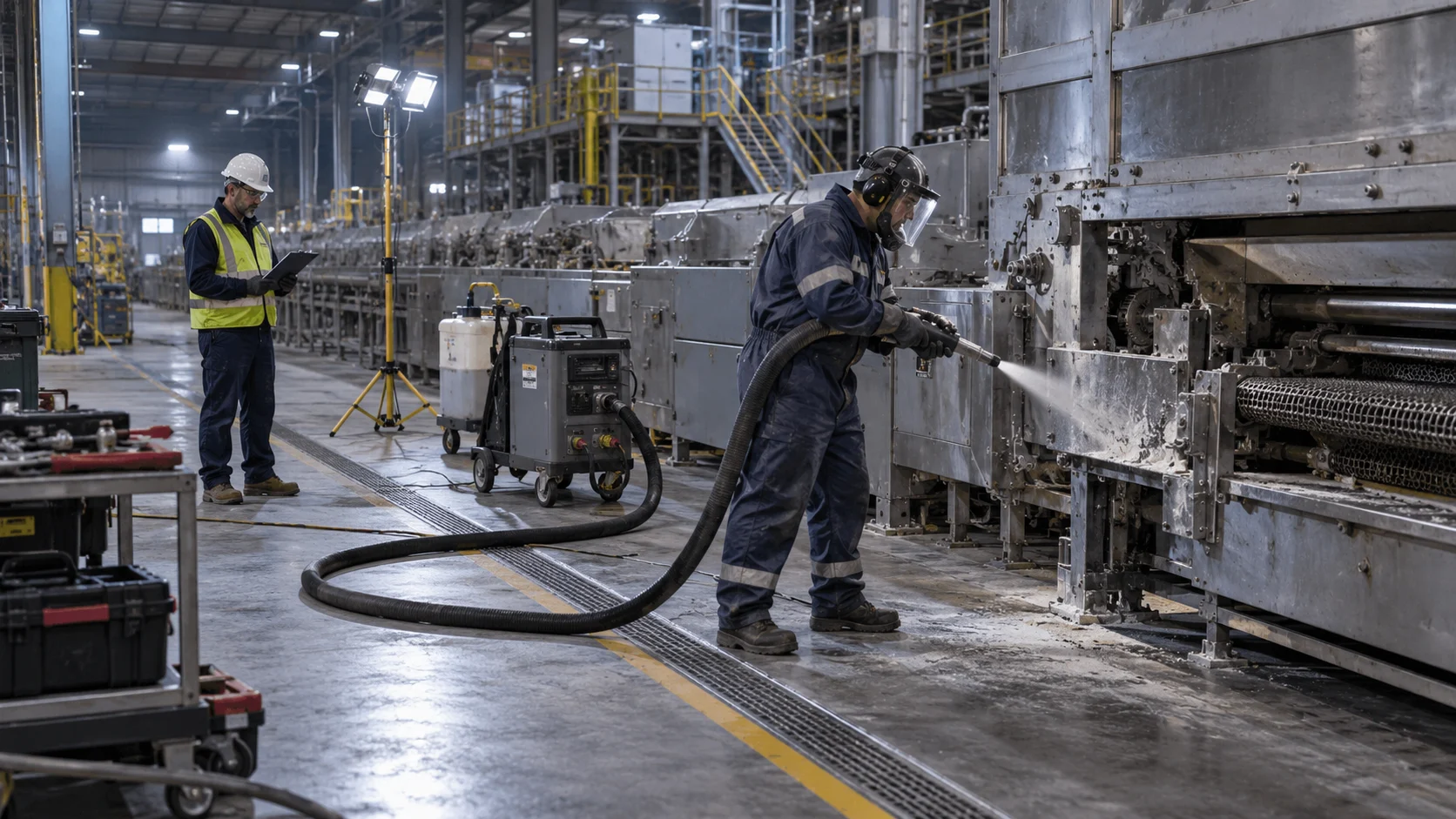
For a proposed dry ice application, ask the reviewer to evaluate accessible deposits and the underlying surface together. ASCO describes compressed air and solid carbon dioxide particles in its process overview. See the dry ice blasting explanation for background, then review suitability for the actual roaster.
Give the test a specific question
Choose a question that the trial can answer. For example, can the visible deposit be removed from a named accessible surface while meeting the owner’s agreed inspection criterion? Treat that as a proposed objective, not a promised outcome.
Record the test area, starting condition, material to retain and stop point. After the trial, record remaining residue, visible surface changes and inaccessible areas. Include matching photographs if the owner permits them.
Use the test report worksheet and discuss the findings with the equipment representative. A result on one accessible surface should not be used as approval for the entire roaster or exhaust system.
Include preparation and residue collection
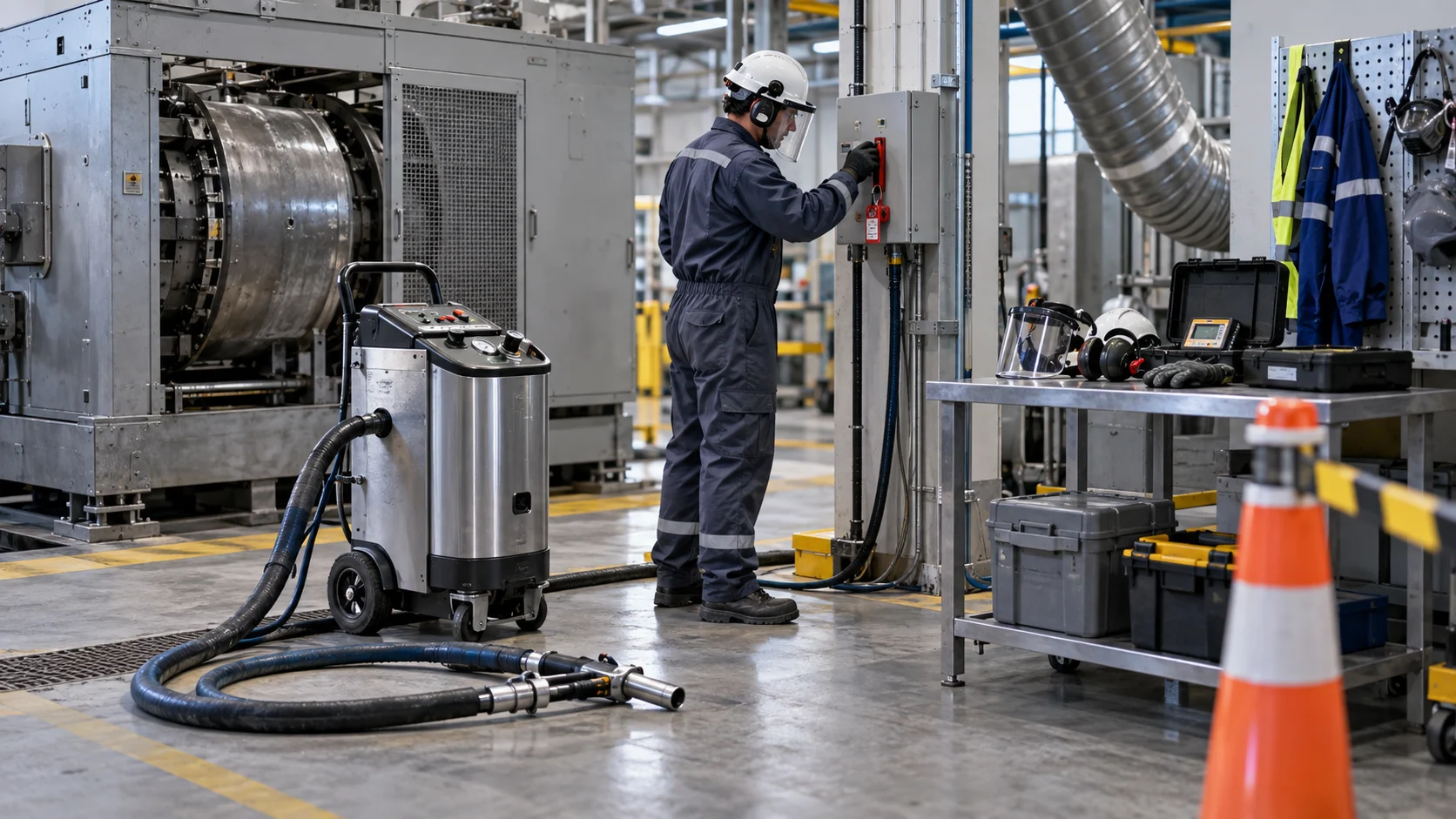
Ask the roaster owner to assign shutdown, isolation, cooling and component removal according to the equipment instructions. Confirm the condition in which the machine will be presented. Do not set operating temperatures or access arrangements from a general article.
Name the work area, staging route and contact who can release each component. Review compressed air, ventilation, noise and adjacent activity with the site team. Use the facility requirements guide to organize that discussion.
Include removed material in the cleaning scope and assign collection responsibilities. The dry ice blasting cleanup guide explains the distinction between dry ice media and the material removed from the equipment.
Compare the full maintenance window
Request separate allowances for preparation, the cleaning task, collection, inspection and the owner’s follow-up maintenance. Record contractor labor and owner labor separately. Keep optional work outside the critical production deadline.
Use the cost comparison calculator with your estimates. If an estimate comes from a small trial, identify which areas share the same access and deposit. Ask for separate allowances where they differ.
Define the production handback
Agree on who checks the completed cleaning and who performs any required reassembly or operational checks. Refer food-contact, sanitation and production-release requirements to the responsible facility team. Keep the cleaning record within that wider maintenance process.
List completed components, remaining deposits and areas needing another provider. Record the reviewer and date. For the next visit, compare the same locations and note changes in products, production volume or equipment condition.
Request a component-based roaster quote
Send the make and model, photographs, manufacturer instructions, location and preferred dates. Include your component list and production deadline. Get a coffee roaster cleaning quote, then use the maintenance log to retain the accepted scope and visit observations.