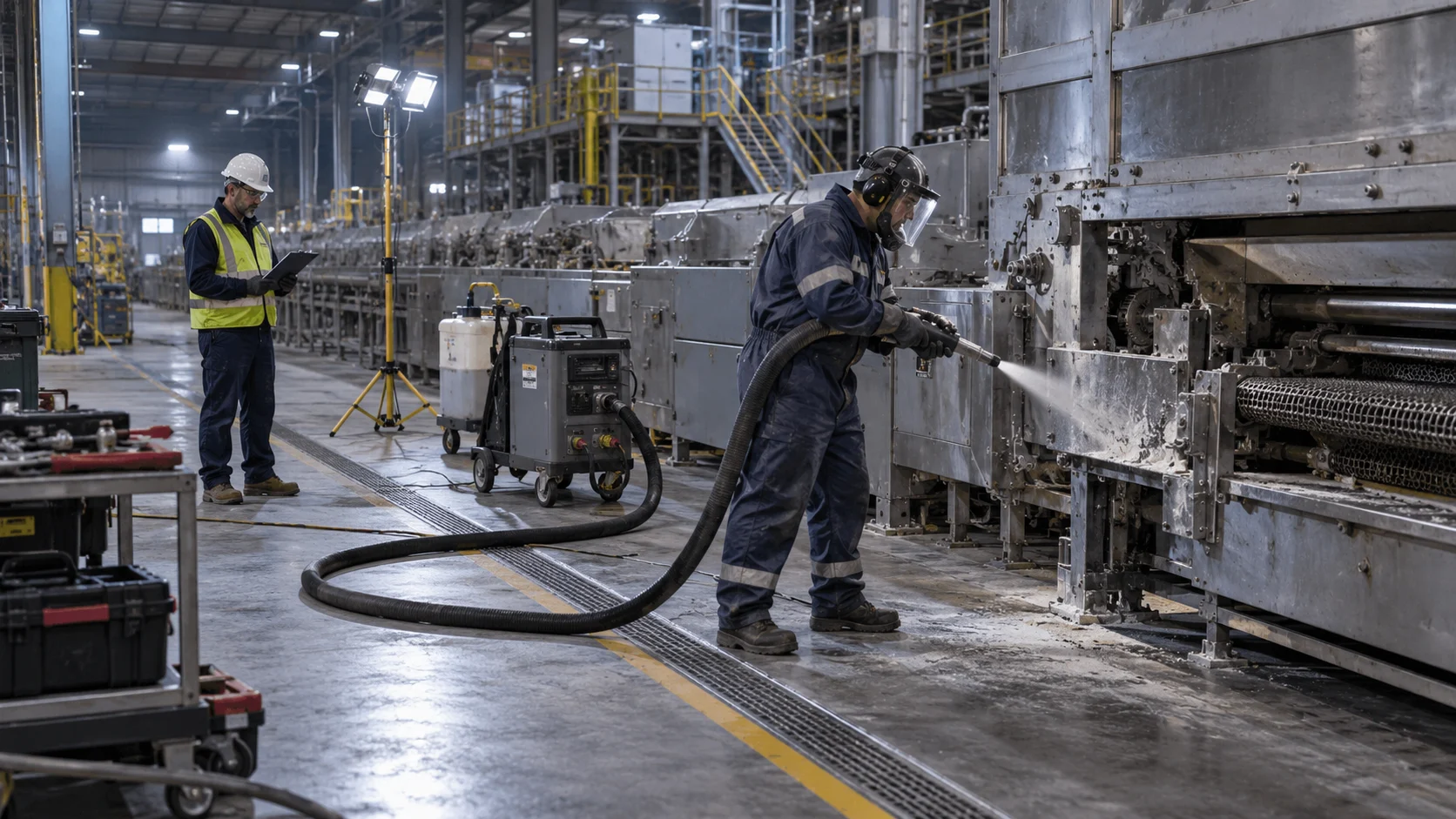
Dry Ice Blasting for Effective Injection Mold Cleaning
Published · Updated
Injection molds can lose performance long before a major problem stops the line. Resin buildup, release agents, oils, carbon deposits, and other contaminatio...
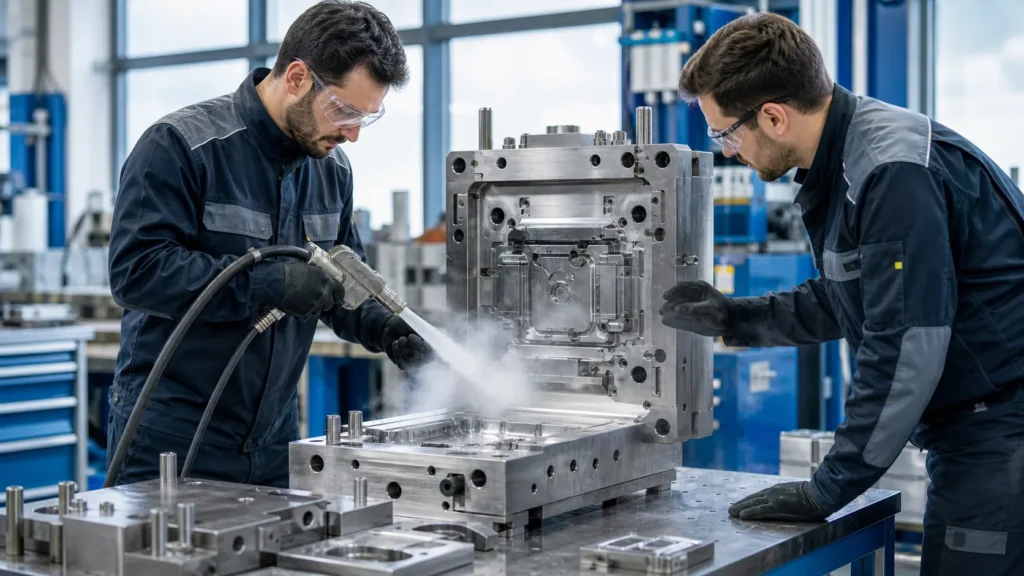
Injection molds can lose performance long before a major problem stops the line. Resin buildup, release agents, oils, carbon deposits, and other contamination can affect part appearance, dimensional consistency, venting, cycle times, and overall output. We use dry ice injection mold cleaning to remove that buildup while helping you avoid unnecessary abrasive media, chemical solvents, and lengthy cleanup.
When molds are valuable, detailed, and running on a tight schedule, cleaning methods matter. The right approach can help protect mold surfaces, support consistent production quality, and reduce avoidable downtime.
Restore Mold Performance Without Lengthy Teardowns
Small deposits can cause large production headaches. Residue in a cavity, vent, parting line, or ejector area may contribute to flash, poor finishes, trapped gas, inconsistent parts, or slower cycles. Once those issues start appearing, your team may need to stop production and investigate the mold.
Dry ice blasting gives us a way to target contamination on many mold surfaces without relying on abrasive blast media. Our mobile equipment can clean areas such as:
- Mold cavities and core surfaces
- Vents and narrow channels
- Parting lines and textured areas
- Ejector pin areas and hard-to-reach details
Because the cleaning process can often be completed with limited disassembly, it may reduce the time spent taking a mold apart and putting it back together. That can be especially helpful when a mold needs attention between production runs or during planned maintenance.
How Dry Ice Blasting Cleans Complex Mold Surfaces
Dry ice blasting uses compressed air to propel solid carbon dioxide pellets toward targeted surfaces. When the pellets strike contamination, the impact and rapid cooling help loosen the buildup. The dry ice then changes directly into gas, leaving no secondary blast media behind.
That matters on detailed tooling. Injection molds often include small vents, polished sections, tight corners, textured surfaces, and other features that are difficult to clean by hand. Reaching those areas manually may require more disassembly than a production schedule allows.
With the proper settings and technique, dry ice injection mold cleaning focuses on removing contaminants rather than removing the base material. We adjust the approach for the mold material, the type of buildup, and the condition of the surface. This helps us clean carefully around precise details and tight tolerances.
A professional cleaning process also gives your team a clearer view of the mold’s actual condition. Once residue is removed, it may be easier to spot worn areas, damage, or recurring contamination concerns that need attention.
Protect Mold Details and Production Tolerances
Traditional cleaning methods can raise concerns for mold owners. Abrasive media may affect delicate surfaces or fine details, while chemical cleaners can leave residue and create additional cleanup steps. Certain components may also require extra care when chemicals are involved.
Dry ice blasting does not leave behind sand, soda, plastic media, or similar blasting material. That can reduce the chance of secondary media becoming trapped in places that affect molding performance, including cavities, vents, and other detailed components.
The cleaning setup should never be one-size-fits-all. Before we begin, we consider factors such as:
- The mold material and surface finish
- The location and type of contamination
- The sensitivity of vents, cavities, and detailed features
- The pressure, pellet size, nozzle, and cleaning distance needed
Careful adjustment is especially important for molds with polished finishes, detailed textures, or close production tolerances. The goal is to remove the buildup that interferes with performance while respecting the tooling underneath it.
Cut Downtime Without Adding Secondary Waste
Maintenance downtime is not limited to the time spent cleaning. It can also include mold teardown, media collection, rinsing, drying, and cleanup around the machine. A cleaning method that reduces those extra steps can make maintenance easier to plan.
Since dry ice converts to gas during blasting, the primary material left behind is the contamination removed from the mold. Your team does not have piles of blast media or water runoff to manage after the work is complete. That can simplify cleanup around presses and production equipment.
We can bring mobile dry ice blasting equipment directly to facilities throughout New York, New Jersey, Pennsylvania, and Delaware. Cleaning on site means you may not need to transport valuable tooling elsewhere for service, which can help keep maintenance activities closer to your normal production schedule.
Planned maintenance windows are often a practical time for mold cleaning, including mold changes, shift transitions, and scheduled equipment downtime. When cleaning is built into the plan, your team can address buildup before it has a larger effect on part quality or output.
Plan Mold Cleaning Around Fall Production Demands
Fall is a useful time to inspect molds that have worked hard through much of the year. As teams prepare for year-end fulfillment goals, seasonal demand, or holiday shutdown periods, mold condition deserves attention alongside other maintenance tasks.
We recommend watching for warning signs that contamination may be affecting performance:
- Visible residue on mold surfaces or around vents
- Flash, poor venting, or inconsistent part finishes
- Longer cycle times or changing production results
- Rising reject rates or recurring quality concerns
A preventive cleaning plan can help you respond before a small deposit becomes a production interruption. Dry ice injection mold cleaning can fit into maintenance planning ahead of a production ramp, a heavy run, or scheduled downtime.
Keeping simple records can also help. Document the mold condition before cleaning, the type of buildup found, how often the mold is cleaned, and what happens to production afterward. Over time, those notes can help your maintenance team identify cleaning intervals that make sense for each mold and application.
Keep Mold Cleaning From Becoming an Emergency
Clean molds support dependable part quality, smoother cycle times, and better care for high-value tooling. Waiting until contamination causes defects or forces an unexpected shutdown can make maintenance harder to manage than it needs to be.
A practical approach is to inspect molds regularly, watch for early performance changes, and plan professional cleaning around your production calendar. Addressing buildup before it affects critical runs can help keep molds, presses, and production lines ready for the work ahead.
Protect Mold Performance With Expert Cleaning
Precision Dry Ice Cleaning provides dry ice injection mold cleaning tailored to help remove residue without abrasive media or lengthy downtime. Our team works with your production needs to support cleaner molds and more consistent part quality. Contact us to discuss a cleaning schedule for your operation.