Dry Ice Cleaning for Food Processing Equipment
Published · Updated
Food processing equipment works hard, and buildup can develop quickly. Grease, oils, carbonized residue, starches, powders, and product debris can affect san...

Plan Food Processing Equipment Cleaning Around Production
Food processing equipment cleaning removes buildup before your team completes sanitation, inspection and restart. Grease, oils, carbonized residue, starches, powders, and product debris can affect sanitation work, machine performance, and the time available for production. When cleaning takes too long or leaves moisture behind, a routine shutdown can become a bigger interruption.
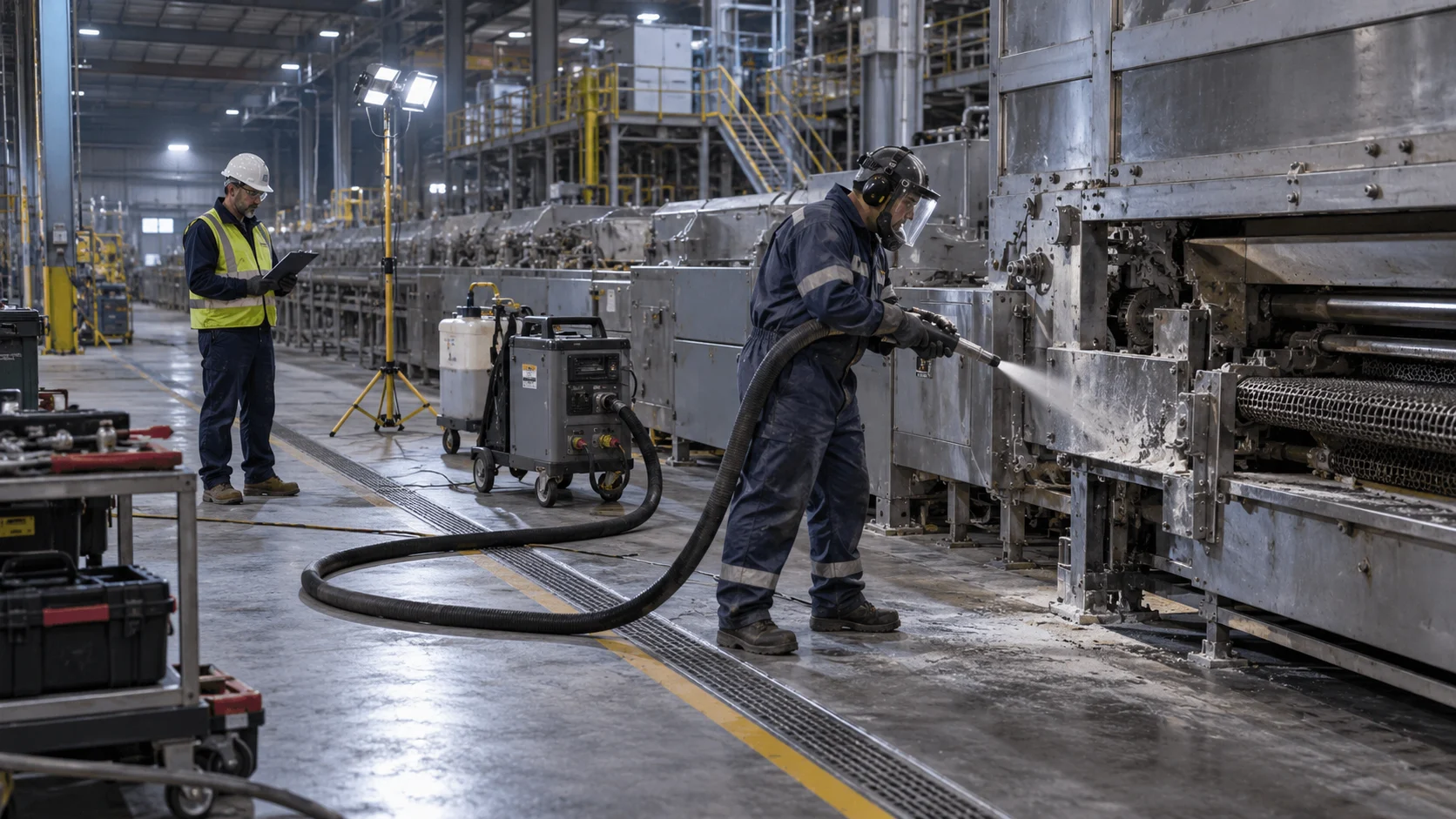
We use dry ice cleaning for food processing equipment as a low-moisture, non-abrasive option for removing stubborn buildup. The process does not introduce water, cleaning solvents, or secondary blasting media into the work area. That can make it a practical fit when you need to protect equipment condition while keeping your production environment clean.
Throughout this guide, we’ll cover where dry ice blasting can be useful, how it fits into food safety planning, and how you can prepare cleaning work around busy production seasons and short maintenance windows.
Dry Ice Cleaning for Food Processing Equipment
Dry ice blasting uses solid carbon dioxide pellets propelled by compressed air. See Cold Jet’s food and beverage cleaning applications for equipment examples. When the pellets strike a contaminated surface, the rapid temperature change can help loosen residue. The dry ice then turns directly into gas on impact, leaving the removed contaminant as the main material that must be collected and cleaned up.
Because the dry ice disappears during the process, there is no sand, soda, plastic media, or similar blasting material left behind. This matters in food environments, where cleanup steps must be controlled carefully. We can clean targeted areas without soaking machinery or leaving chemical cleaning residue on the equipment.
Dry ice blasting may be a helpful method for buildup that is hard to remove through ordinary wiping or scraping. It can be especially useful where water is a concern, such as around electrical components, motors, controls, and detailed machine surfaces.
Still, dry ice blasting is only one part of a complete sanitation plan. We recommend treating it as support for your facility’s established procedures, not as a replacement for them. Your sanitation standard operating procedures, hazard controls, inspections, verification steps, and validation practices should continue to guide the work.
Clean Critical Equipment with Less Disassembly
Production equipment often has tight spaces that are difficult to clean by hand. Crevices, chains, rollers, guards, frames, and other detailed areas can collect residue over time. Taking every component apart may not always be practical during a short shutdown, especially when the line must return to service on schedule.
We often assess equipment such as:
- Conveyors, chains, rollers, and production line components
- Mixers, molds, presses, and machine frames
- Ovens and areas with carbonized residue
- Packaging equipment and hard-to-reach surfaces
- Motors, control panels, and nearby equipment areas
Dry ice blasting can often reach detailed surfaces with less disassembly than traditional hand-cleaning methods or abrasive blasting. The exact approach depends on the equipment, the type of buildup, and the areas that must be protected. Before work begins, we consider access points, sensitive parts, and the cleanup needed after contaminants are removed.
Less teardown can help your maintenance team use shutdown time more efficiently. Since the process adds little moisture, there may also be less drying time than with water-based cleaning methods. That can be useful when you are working around product changeovers, scheduled maintenance, weekend downtime, or off-shift cleaning periods.
Protect Food Safety Goals and Equipment Condition
A clean machine is easier to inspect. Grease, oil, food residue, dust, carbon deposits, and biofilm-related buildup can hide surfaces that need attention. They may also interfere with sanitation efforts and make it harder to spot wear, leaks, or other equipment concerns during routine checks.
When properly applied, dry ice blasting is non-abrasive. That means it can help remove buildup without the surface wear associated with aggressive scraping or abrasive media. Protecting surface condition matters for equipment with detailed parts, finished surfaces, and areas where rough treatment may create more places for residue to collect.
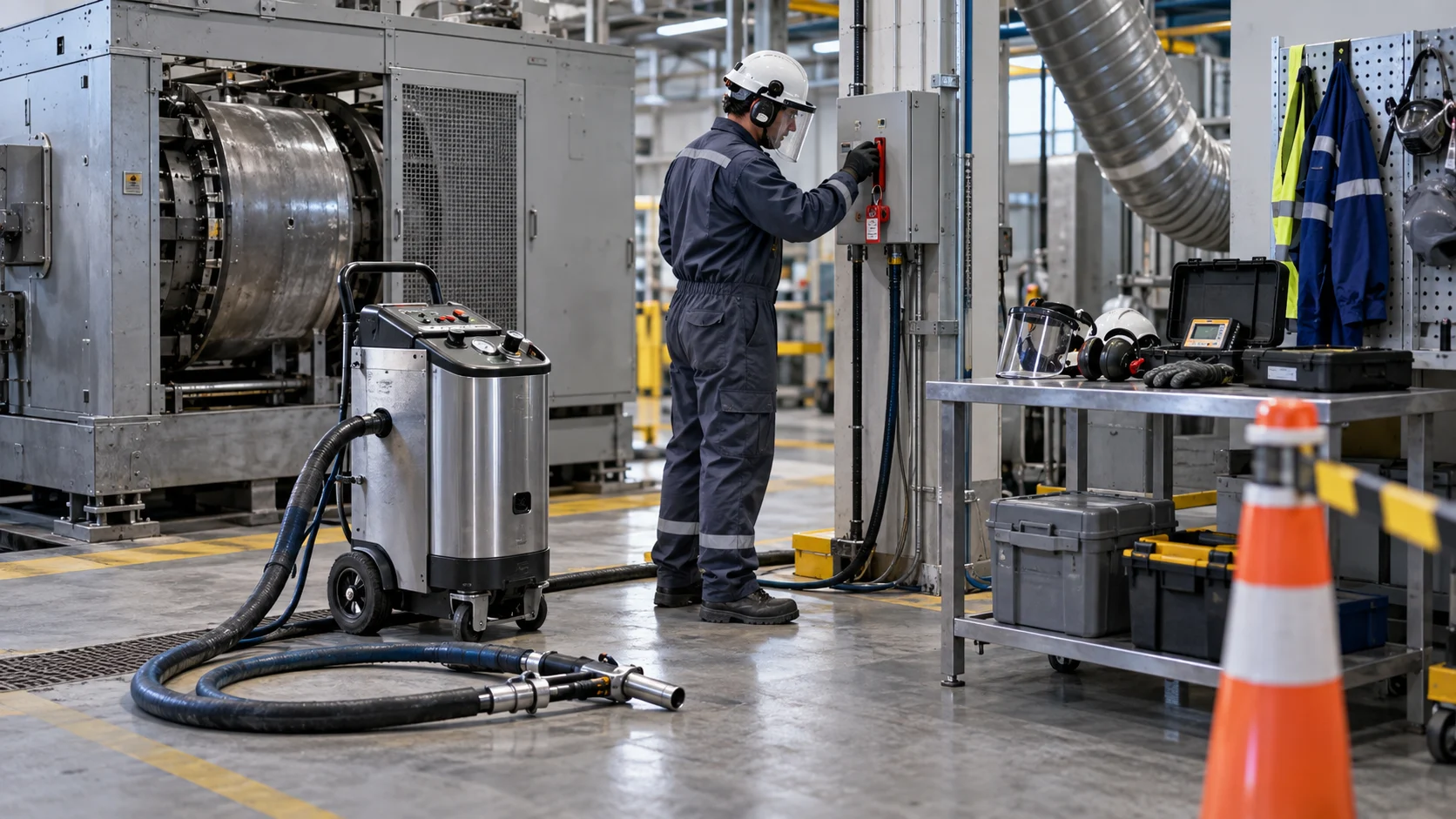
Food safety planning should always shape the cleaning process. We work within the operational requirements of the facility, including safety steps for the work area and the equipment involved. A proper plan should account for:
- Ventilation and carbon dioxide monitoring
- Lockout/tagout procedures before equipment cleaning
- Employee safety and restricted work areas
- Cleanup and inspection of removed residue
- Your HACCP, SSOP, and regulatory requirements
Dry ice blasting does not remove the need for inspections or follow-up sanitation steps. Instead, it can help expose surfaces and remove heavy buildup so your team can complete the remaining steps in its approved cleaning program.
Prepare for Holiday Demand Before Peak Production Starts
Fall is a smart time to review equipment before seasonal demand increases. Many food manufacturers raise output ahead of holiday purchasing periods, and equipment that has been running steadily may show more buildup in the places that are hardest to access. Waiting until peak production is underway can leave fewer options for planned cleaning.
We recommend looking at recurring problem areas before your busiest schedule begins. Start with machinery that regularly collects product residue, has frequent sanitation challenges, runs less efficiently, or requires repeated manual cleaning. A targeted plan can help focus shutdown time where it matters most.
Useful windows for dry ice cleaning may include planned maintenance shutdowns, product changeovers, weekend downtime, and off-shift hours. Planning ahead gives you time to coordinate equipment access, safety procedures, and the inspection steps that follow cleaning.
For commercial and industrial food processing facilities throughout New York, New Jersey, Pennsylvania, and Delaware, it helps to review cleaning needs well before the next maintenance window. A clear list of equipment concerns, buildup locations, and available downtime can make the process more organized and help your team enter peak production with cleaner, more reliable machinery.
Book Food Processing Equipment Cleaning
Precision Dry Ice Cleaning provides dry ice cleaning for food processing equipment that removes residue without introducing water or abrasive media. Our team can help address hard-to-reach areas while supporting sanitation and operational goals. To discuss your facility’s equipment and cleaning requirements, contact us today.