A Cleaner Plant Starts With Listening to Your Team
Published · Updated
What does your team want improved on the plant floor? Turn employee feedback into a defined cleaning plan, with clear roles and measurable results.
Which industrial workplace cleaning task takes the most effort on your plant floor? Does the same deposit keep returning after each cleaning? Which area would your operators put first on a list of improvements?
First, ask the people who work closest to your equipment. Then choose the next cleaning step with their feedback in mind.
Make industrial workplace cleaning part of the conversation about the working day. Ask what needs attention, find out why it remains difficult to clean, and give the problem a clear next step.
What the workplace happiness survey actually tells us
In December 2018, EHS Today reported a survey by Tork, an Essity brand, in which 94% of respondents linked workplace hygiene, health, and safety conditions to their happiness at work. The report concerned manufacturing employees and also highlighted access to cleaning supplies.
The article does not provide the sample size or research method, or describe a dry ice cleaning intervention. Treat it as historical evidence of employee perceptions.
For your own plant, start with a direct question. What would make this work area easier to keep clean and maintain?
Identify recurring industrial workplace cleaning problems
Next, invite operators, maintenance technicians, and cleaning staff to walk through a work area together. Ask each person to identify one recurring cleaning difficulty and explain what happens during a normal shift.
Also look beyond whether a surface appears dirty. Ask about access, time, supplies, responsibility, and the point at which a routine task needs specialist attention. Keep the discussion focused on the work and the equipment.
Useful questions include:
- Which surfaces are difficult to reach during an approved cleaning window?
- Where does the same deposit return after routine cleaning?
- What must be moved, opened, isolated, or protected before the task can begin?
- Which cleaning jobs need a different tool, method, or maintenance intervention?
- How should the team check that the issue has been addressed?
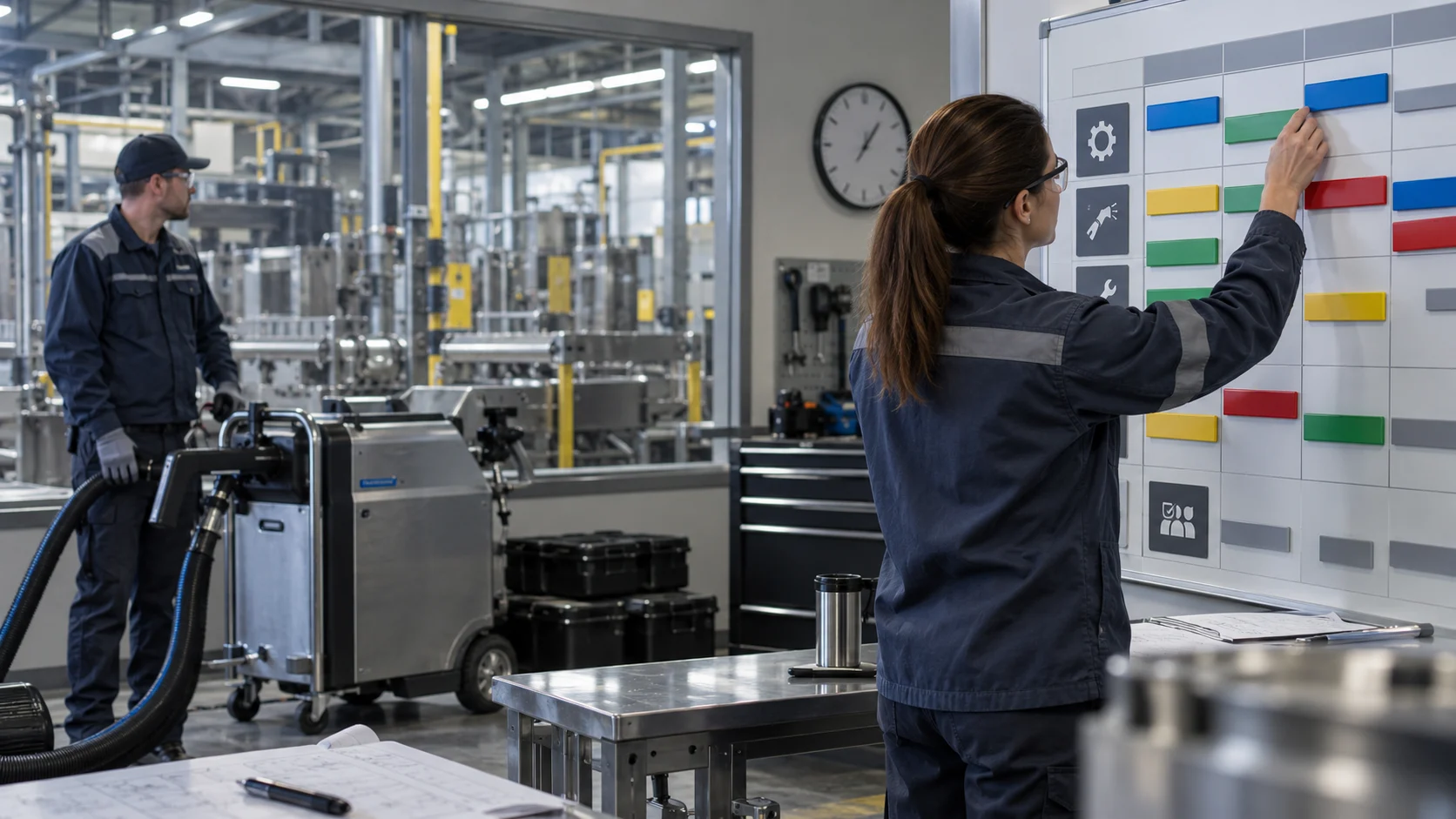
First, record the answers alongside the equipment name and location. Then assign a person to review the issue and communicate the next step. Afterward, ask the team to comment on the result.
Give each cleaning problem the right kind of response
A request for more wipes, an oil leak, and a difficult equipment deposit call for different decisions. Therefore, define the problem before turning it into a cleaning order.
| What the team identifies | What to put in the action plan |
|---|---|
| Routine wiping or housekeeping | Review supplies, access, task ownership, and the normal cleaning schedule. |
| A recurring leak or mechanical defect | Assign maintenance diagnosis and repair. Define any cleaning needed for access or inspection separately. |
| Buildup on machinery or production tooling | Assess the deposit, surface, cleaning method, equipment preparation, and acceptance criteria. |
| A hygiene, exposure, or sanitation concern | Have the responsible EHS or quality team define the required controls and how the result will be verified. |
For machinery, replace a broad instruction such as “clean the line” with a named asset and a defined surface. Then specify the deposit to remove, the material to preserve, and who will inspect the result.
That is the level of detail to bring to an industrial machinery cleaning review.
Where dry ice cleaning can fit
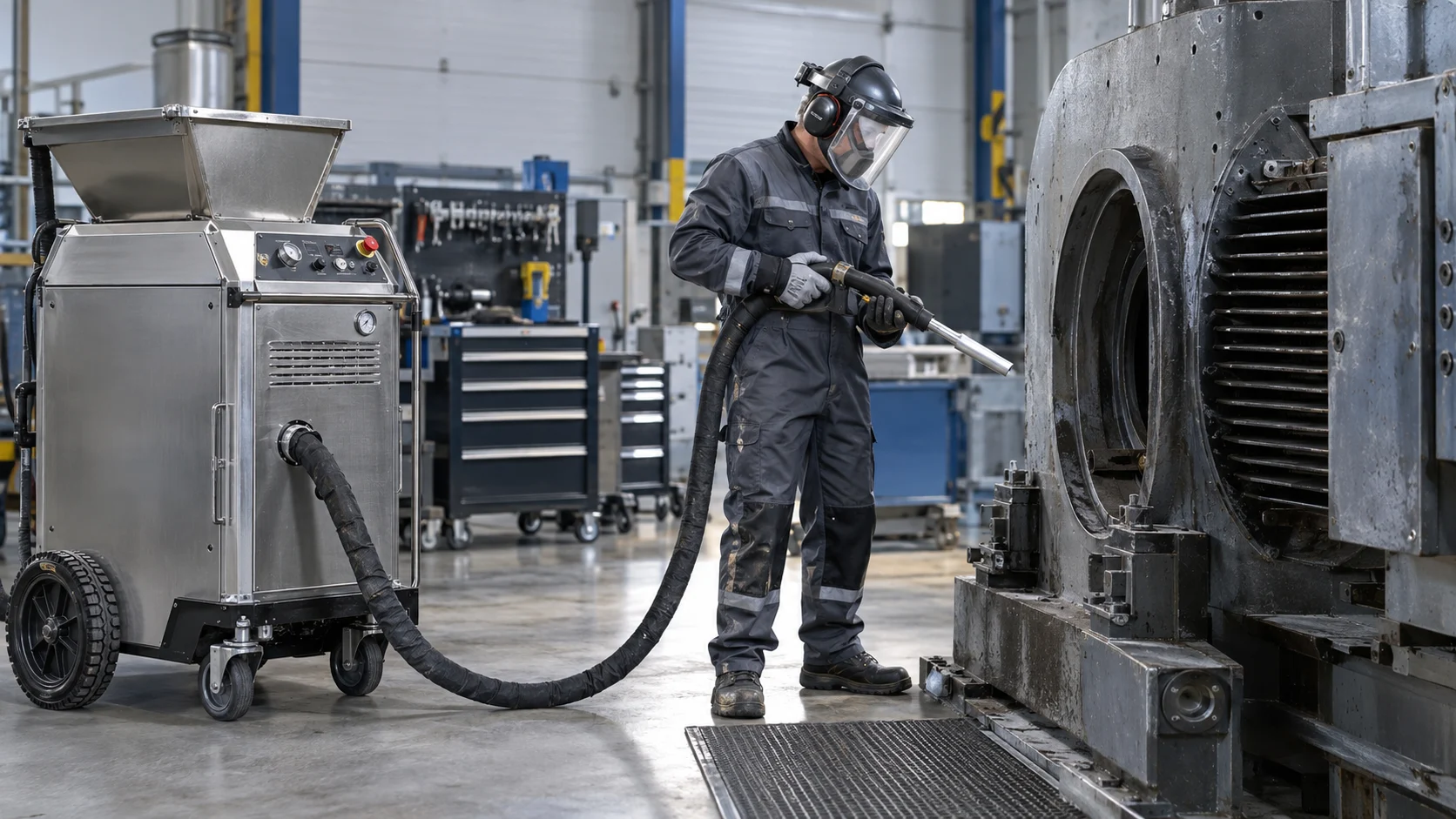
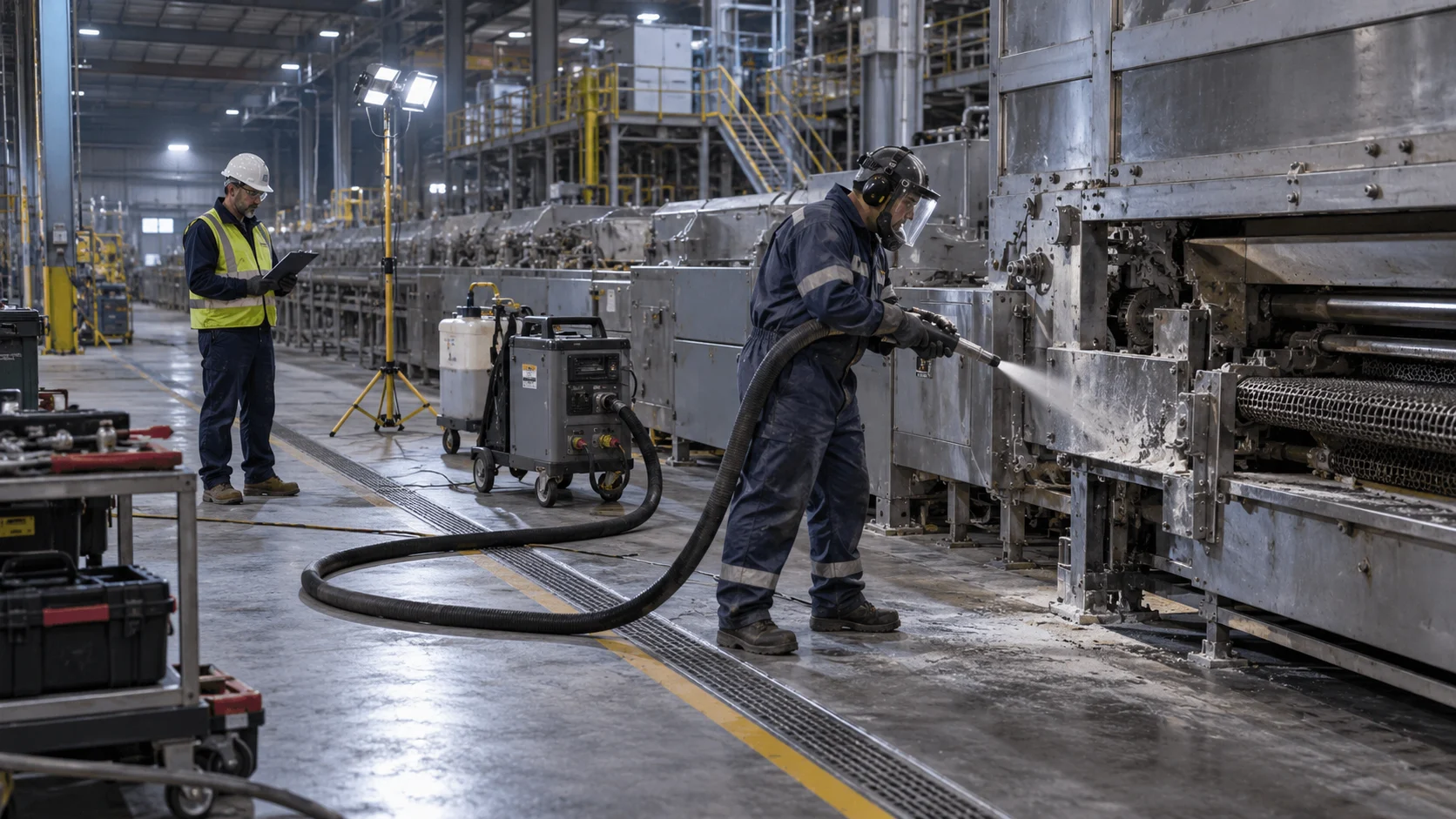
Dry ice blasting uses compressed air to direct solid CO2 particles at a surface. The dry ice changes to gas, leaving no spent blasting grit. The removed contamination still needs collection. Cold Jet lists conveyor assemblies, accessible machinery surfaces, and selected facility equipment among its facility-maintenance applications.
Consider an assessment when the job involves a suitable equipment deposit and the proposed scope would benefit from avoiding added rinse water or grit. Ask which surfaces can be reached, what preparation is required, and how the result will be inspected.
For a mixed production area, identify each application separately. A printing press or roller needs its own surface review. A control cabinet belongs in an electrical and electronic equipment assessment. Approval for one surface should not be treated as approval for every nearby component.
Also keep routine housekeeping, equipment cleaning, and any required sanitation checks in the overall plan. If the objective includes microbial, allergen, or exposure criteria, ask the responsible specialist to define the validation. Do not accept appearance alone as proof that those criteria have been met.
Plan industrial workplace cleaning around your team
First, bring the facility team into the planning discussion before assigning a date. Identify the equipment condition required for cleaning, the people responsible for isolation, and the boundaries of the work area.
Review ventilation, CO2 monitoring needs, noise, protective equipment, and separation from adjacent activity. Agree on how removed material will be contained and collected. Our safety and facility requirements page provides a starting point for that review.
Build your facility preparation checklist with the access, utilities, work-area controls, and handoff details to discuss with your team.
Also give the crew a clear handover process. Define who inspects the cleaned surfaces, handles reassembly, and authorizes return to service. Include these steps when planning the available window.
For jobs that require production access, connect the scope to a planned shutdown. For repeating deposits, discuss scheduled maintenance cleaning after reviewing the first result.
Start with one issue and measure what changes
Choose one recurring cleaning problem from the team’s feedback. Next, set a baseline before the work starts. Record the equipment condition, current cleaning time, preparation requirements, and the difficulty employees want addressed.
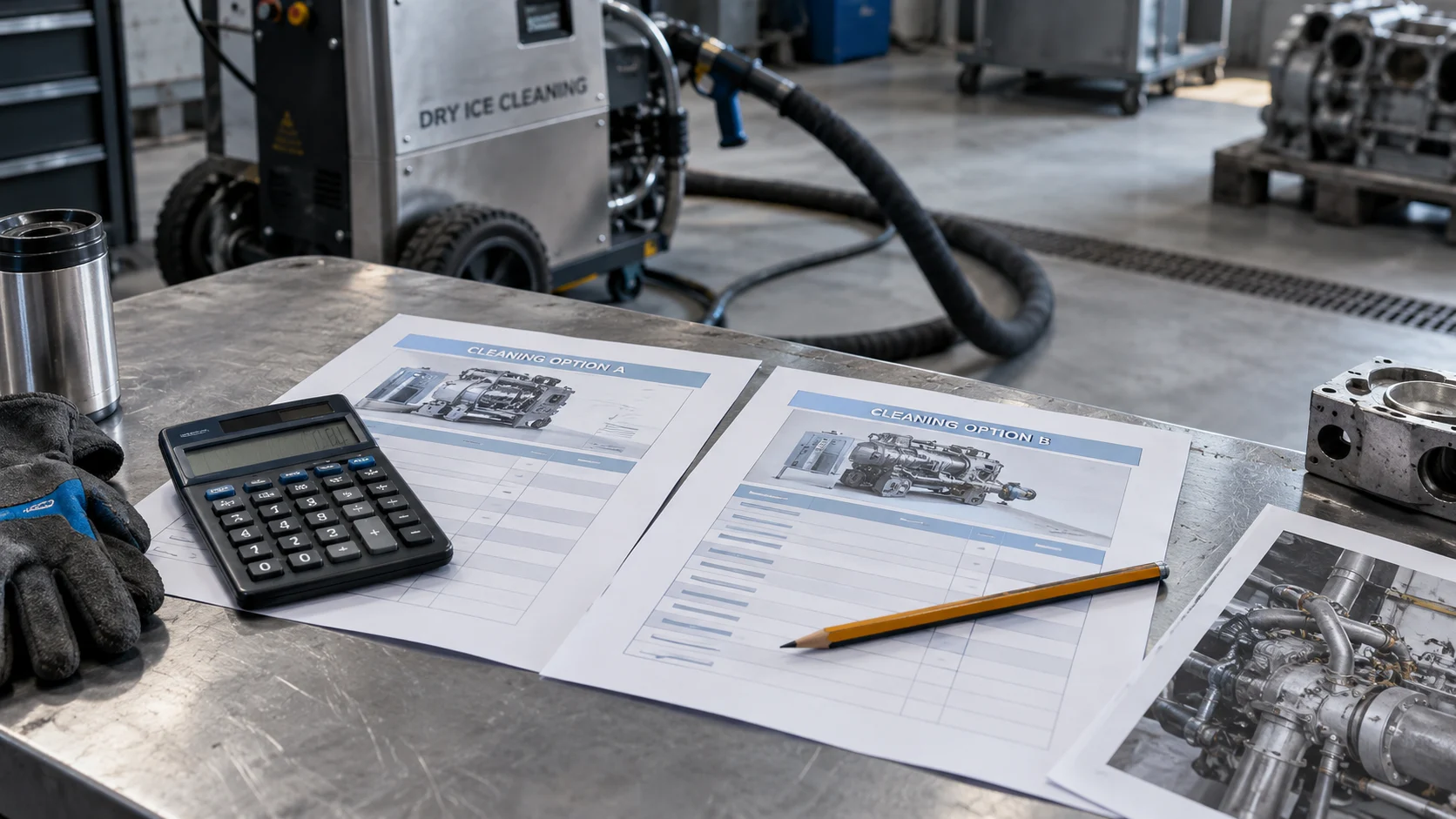
If suitability is uncertain, agree on a representative test area. Define the result in advance and record what remains afterward. Include preparation, active cleaning, collection, inspection, and handover when comparing the total task.
Then return to the people who raised the issue. Ask whether access improved, whether the task is easier to complete, and whether the original concern remains. Also keep their feedback alongside the maintenance findings.
Finally, use those observations to choose the next step. Decide whether to repeat the work, change the method, or investigate the deposit. Keep employee feedback and measured operating results separate so each conclusion has a clear basis.
Make industrial workplace cleaning improvements visible
Choose an issue your team has identified, put a specific action against it, and report back after the work. Invite the same people to review whether the result meets the need they described.
For equipment buildup, start with the asset, the deposit, and the cleaning objective. Precision Dry Ice Cleaning serves industrial facilities in New York, New Jersey, Pennsylvania, and Delaware.
Request a project review for the machinery your team wants addressed. Share the equipment type, site ZIP code, and a short description of the problem. If the surface or deposit needs evaluation first, discuss a test cleaning.