PRECISION DRY ICE CLEANING
Winery Equipment Cleaning with Dry Ice Blasting
Winery equipment cleaning for bottling lines, packaging adhesive, vessel exteriors and support equipment using dry ice blasting.
Winery equipment cleaning with dry ice blasting removes specified product residue, grease and packaging adhesive from accessible machinery surfaces. Precision Dry Ice Cleaning helps wine-production teams organize exterior cleaning around harvest, bottling runs and planned maintenance. We serve New Jersey, New York, Pennsylvania and Delaware.
Deposits removed during winery equipment cleaning
Identify sticky wine or grape-product residue on handling equipment, oily grime on machine housings, and label adhesive or glue splash around packaging stations. Attached dust can collect on frames, guards and air-moving fans. Record each deposit and its location so the cleaning plan names the surfaces to be cleared.
Residue removal exposes accessible components for inspection and adjustment. Photos of the deposit, surface material and nearby components help define the work. For unfamiliar buildup or a delicate finish, arrange a representative cleaning test before setting the larger scope.
Winery equipment cleaning for bottling and packaging
Include accessible filler exteriors, bottling and canning conveyor frames, guides, rollers/orienters, nesters and de-nesters, weighing-equipment supports, labelers and glue-application exteriors where present. Packaging liners are machines on the packaging line. Identify the machine and component rather than treating the line as one cleaning task.
Clear adhesive buildup near labeling stations and grease or attached product residue from the named exterior surfaces before maintenance inspection. Keep glue-system servicing, internal filler cleaning and component adjustment assigned to the responsible teams. Our packaging equipment cleaning service provides related equipment guidance.
Vessel exteriors, support equipment and fans
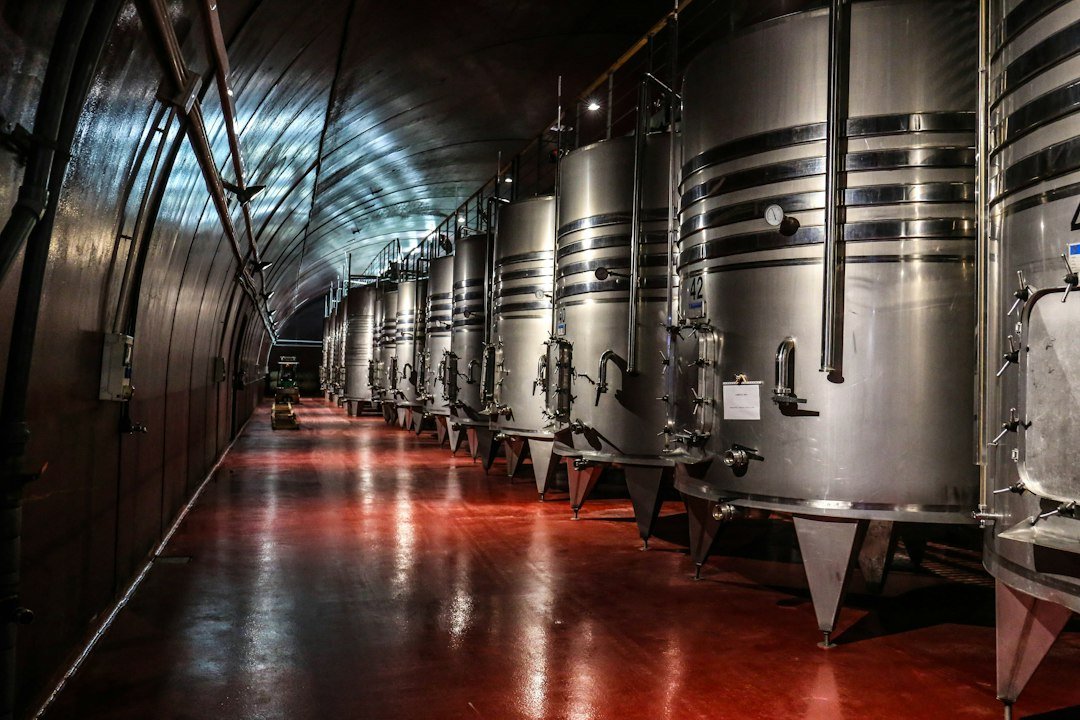
List tank and vat exteriors, vessel supports, platforms, handling-equipment frames and accessible hopper or bin exteriors individually. Mark finishes, insulation, seals, sensor faces and electrical cables that need protection. Internal vessels, product-contact parts and piping retain the winery’s defined cleaning procedures.
Fans / man fans move air and accumulate airborne particles on blades, guards and housings. Include attached dust and oily grime in the maintenance list. Motors and control-panel enclosures can be separate tasks after equipment isolation. Establish access, component protection and inspection requirements with the equipment owner.
Operational benefits of winery equipment cleaning
Dry ice blasting performs the deposit-removal step without wash water, detergents, solvents or added abrasive grit. That avoids a water-drying step for this work and leaves no spent blasting grit to recover. The material removed from the equipment still needs collection.
Group exterior, conveyor and packaging tasks in one maintenance window when equipment availability aligns. A defined sequence helps the team move from isolation and cleaning to inspection, adjustment and restart. Clear surfaces make buildup and component condition easier to assess. Use the shutdown cleaning planner to include preparation and release time.
Non-toxic, food-safe media and environmental benefits
Food-grade dry ice is a non-toxic, food-safe cleaning medium. Specify media quality and compressed-air quality for the facility’s food-production requirements. Dry ice is solid carbon dioxide. The FDA carbon dioxide food-use listing identifies specified food uses; it does not establish blanket approval of every blasting procedure.
Eco-friendly benefits include avoiding chemical rinse water and spent blasting media from this cleaning step. Dry ice turns into gas, so ventilation, CO₂ controls and protective equipment remain part of the work setup. Read our FDA, EPA and USDA reference guide for each agency’s distinct scope.
Plan the sanitation handoff and cleaning visit
Winery equipment cleaning removes the deposits defined in the project. The winery’s sanitation program governs internal cleaning, sanitizing, product protection, inspection and equipment release. Provide the current procedure for any product-contact request. Coordinate the exterior work with the people responsible for those follow-up steps.
For a quote, share the equipment list, deposit photos, surface materials, project ZIP code and available work interval. Identify harvest or bottling deadlines, equipment isolation, air supply, ventilation and residue collection. Request a winery cleaning quote or compare related brewery and distillery applications.
LET’S LOOK AT YOUR PROJECT
Need dry ice
cleaning?
Call for dry ice cleaning services in NJ, NY, PA, or DE. Tell us what needs cleaning and when you need the work done.
NY · NJ · PA · DE / Businesses and private owners