Defining a Cleaning Scope for Automotive Molds, Fixtures, and Robotic Cells
Published · Updated
Organize automotive molds, fixtures, and robotic cells into a cleaning scope with clear ownership and acceptance criteria.
An automotive equipment cleaning scope becomes easier to quote and schedule when every asset has an owner, a target deposit, and an acceptance standard. A mold, a weld fixture, and a robotic cell can share a maintenance window while still requiring separate work instructions.
Use this guide to organize a mixed equipment list before requesting automotive manufacturing dry ice cleaning.
Divide the automotive equipment cleaning scope by function
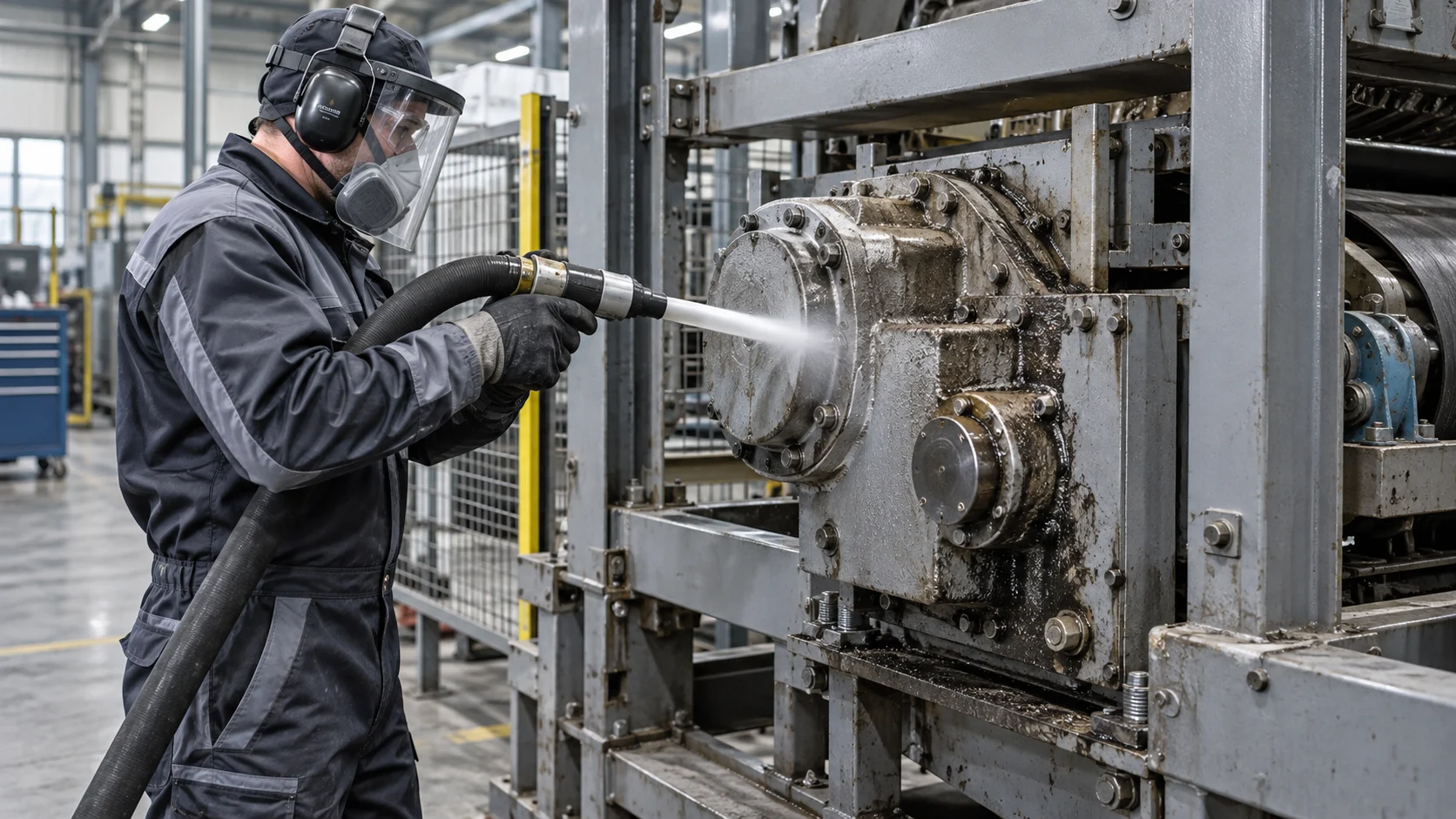
Begin with the asset register. Group molding tools, assembly fixtures, welding equipment, and accessible cell structures into distinct tasks. Include the production area and equipment identifier for each item.
Describe the target deposit in plain terms. Where your team knows the material, include its product name or process origin. Where it does not, record that uncertainty and provide photographs rather than guessing.
Also name the person who approves each task. Toolroom personnel may own a mold inspection while maintenance owns the surrounding cell. Making that distinction early prevents a single broad signoff from hiding different requirements.
Give molds their own acceptance criteria
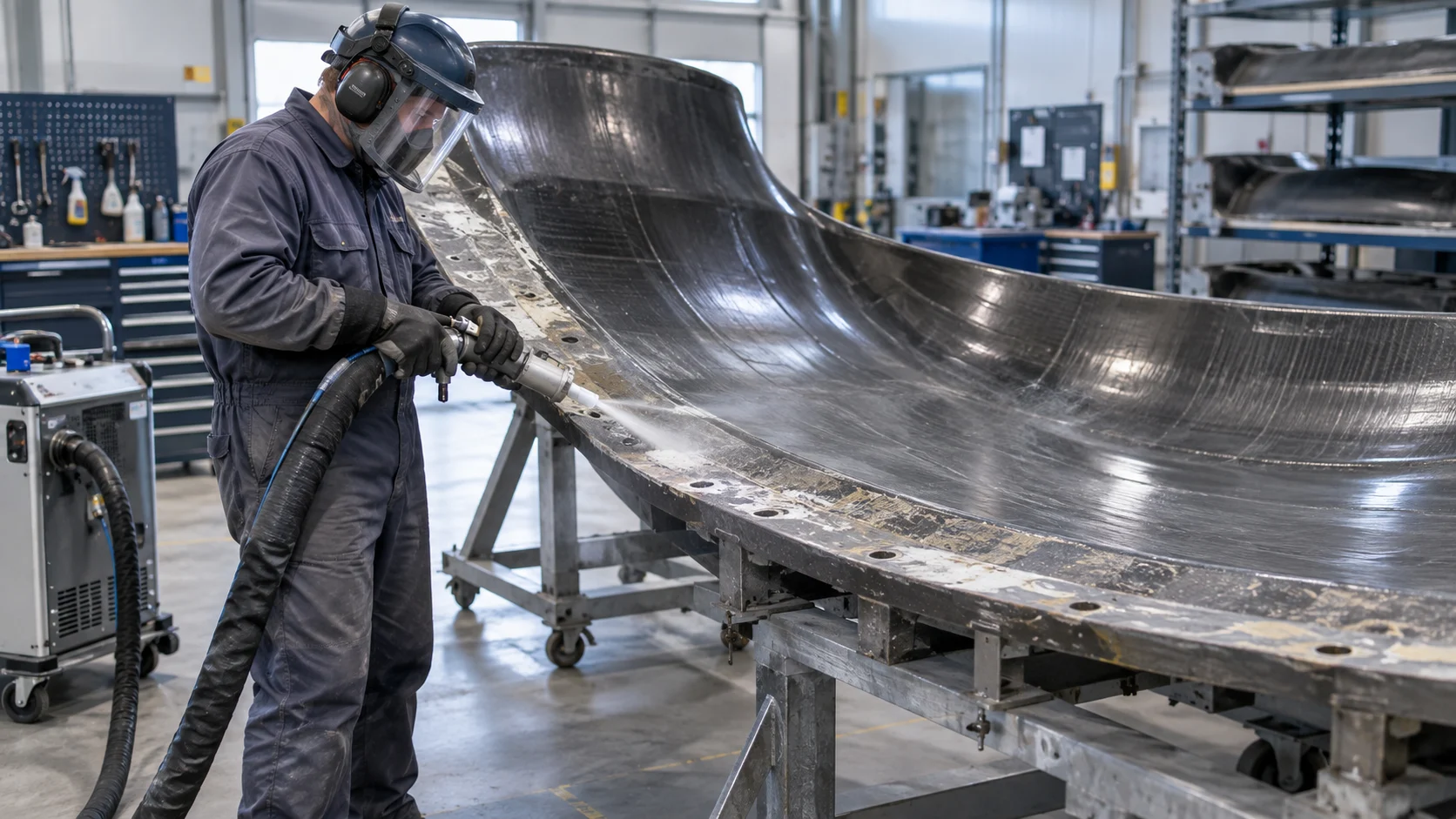
Identify the molding surface, vents, parting lines, and any coatings that must remain. Provide the toolmaker’s cleaning requirements and describe any condition that needs special review.
The cleaning objective should be separate from tool repair. If the scope includes exposing a surface for inspection, name the inspection and its owner. Do not assume that removing visible buildup establishes correct vent geometry or resolves an existing quality issue.
For a tool-focused inquiry, link the equipment record to plastic injection mold cleaning or rubber mold cleaning. This keeps the specific tooling questions visible within a larger plant project.
Define fixture boundaries before work starts
Photograph the fixture as a whole and the selected deposit at close range. Identify locating surfaces, clamps, contact points, cables, and nearby devices requiring protection or separate handling.
Explain the intended result. Your team may want a clearer inspection surface or removal of selected process residue from an accessible area. Keep calibration, dimensional verification, and mechanical repairs assigned to qualified personnel.
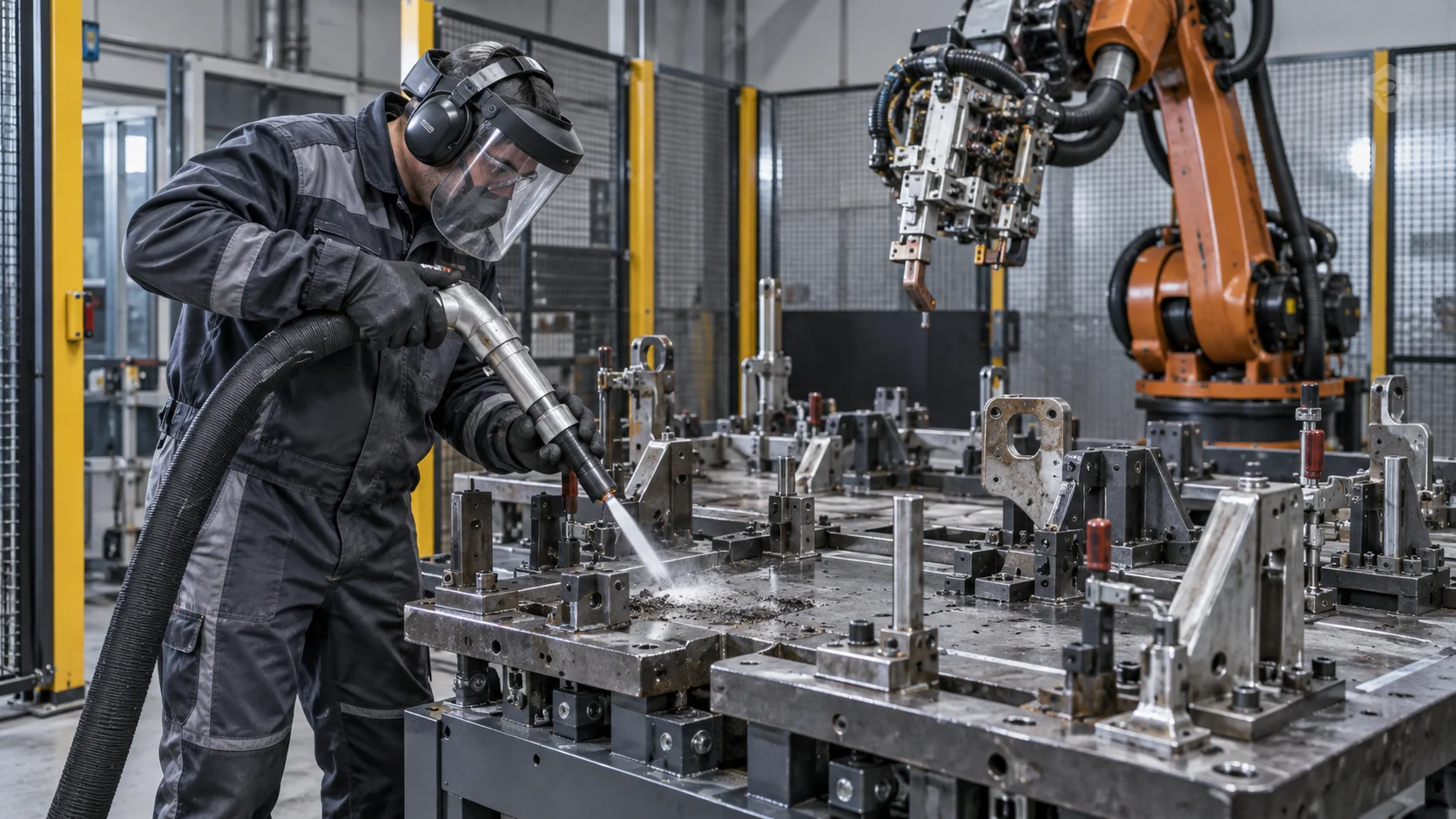
Where deposits include weld spatter, avoid assuming that every attached particle falls within one cleaning process. Identify the material and agree on a representative trial. Our weld fixture and robotic equipment service provides the application overview.
Treat the robotic cell as a controlled work area
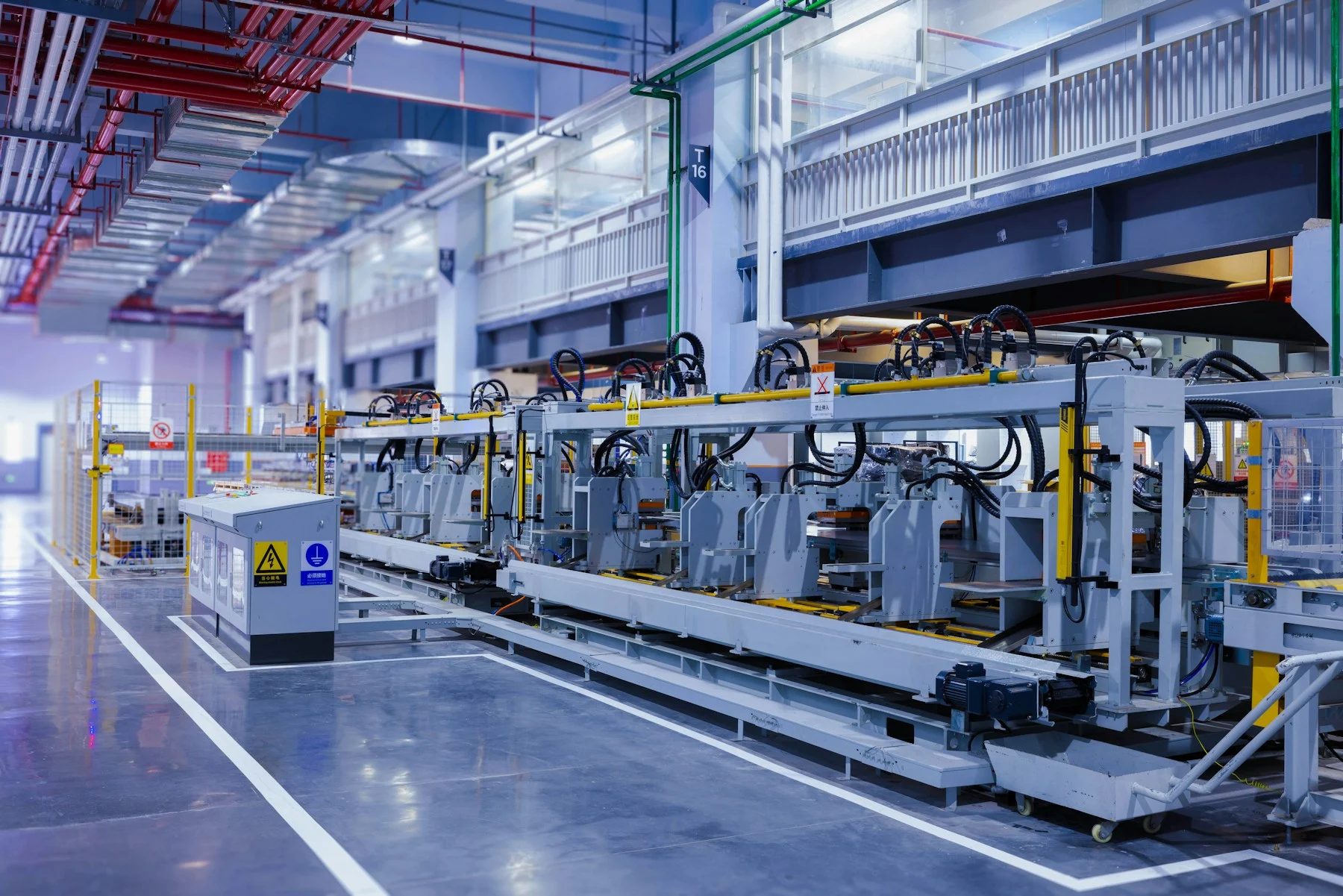
A robot cell contains more than the robot. List the fixtures, guarding, accessible structures, and other surfaces included in the task. Record which components remain outside the cleaning boundary.
Identify the site’s release, isolation, and access procedures. Name the personnel responsible for making the cell available and for returning it to service. Cleaning equipment in place does not itself authorize work on moving or energized machinery.
The scope should also show where the cleaning equipment can be staged and how released residue will be collected. These practical details belong in the work window alongside the cleaning itself.
Set trial criteria for the automotive equipment cleaning scope
Select a representative deposit and surface combination for each materially different task. A test on a fixture frame does not answer the same question as a test on a coated molding surface.
Before the trial, record the condition that must be preserved and the inspection required afterward. Afterward, document the result, remaining material, and any limits on extending the work.
Use those observations to refine the quote. Put unresolved areas in a separate optional scope so they do not become silent assumptions inside the approved work.
Plan the handoff across departments
Arrange tasks in the order assets can be released. Include guard removal, inspection access, cleanup, and reinstatement. Assign an approval point before the next trade or production team takes over.
Use the Project Brief Builder to bring the asset list, cleaning boundaries, and handoff requirements into one draft for maintenance, production, and purchasing.
Keep the completed task records with the maintenance documentation. If buildup returns, compare the same points and note any changes in materials or operating conditions.
To review an automotive equipment cleaning scope, send Precision the asset list, deposit photographs, location, and timing. Request a project review with your required tasks and optional areas clearly marked. That gives maintenance, production, and purchasing a common basis for the next decision.