Signs Your Bakery Equipment Needs Dry Ice Cleaning Before Holiday Production
Published · Updated
Spot recurring dough, grease and carbon buildup, slow changeovers and hidden residue. Plan bakery dry ice cleaning before holiday production fills the schedule.
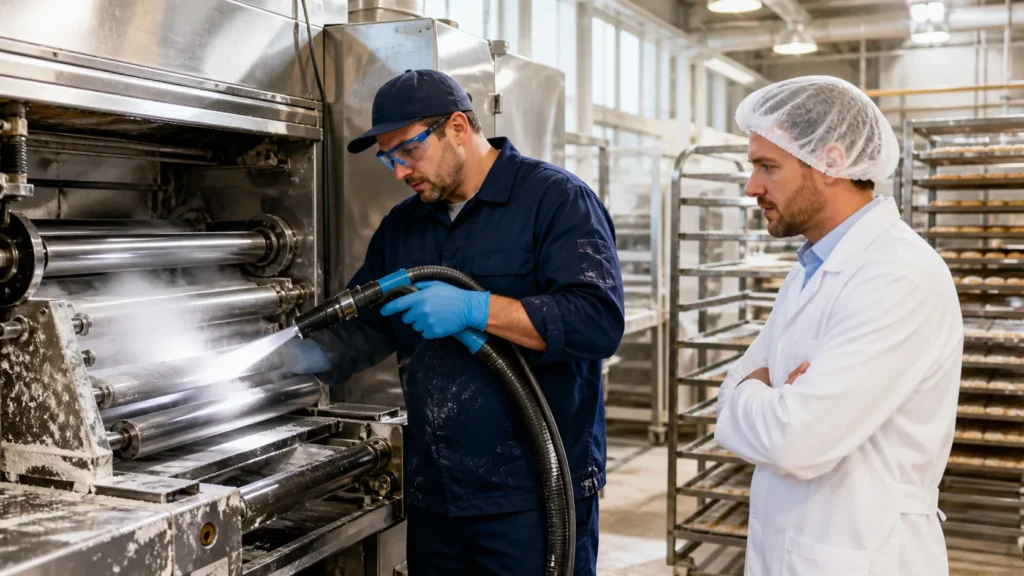
Bakery dry ice cleaning removes dough, grease and baked-on residue before holiday production. Start with the warning signs below, then plan cleaning around your busiest oven, conveyor and packaging runs. Check equipment before seasonal orders fill the schedule.
Dry ice blasting can support a cleaner, more maintenance-ready bakery without adding water, sand, soda, or other secondary blasting media. At Precision Dry Ice Cleaning, we provide mobile dry ice blasting for commercial and industrial clients across New York, New Jersey, Pennsylvania, and Delaware.
Get Holiday-Ready Before Residue Slows Production
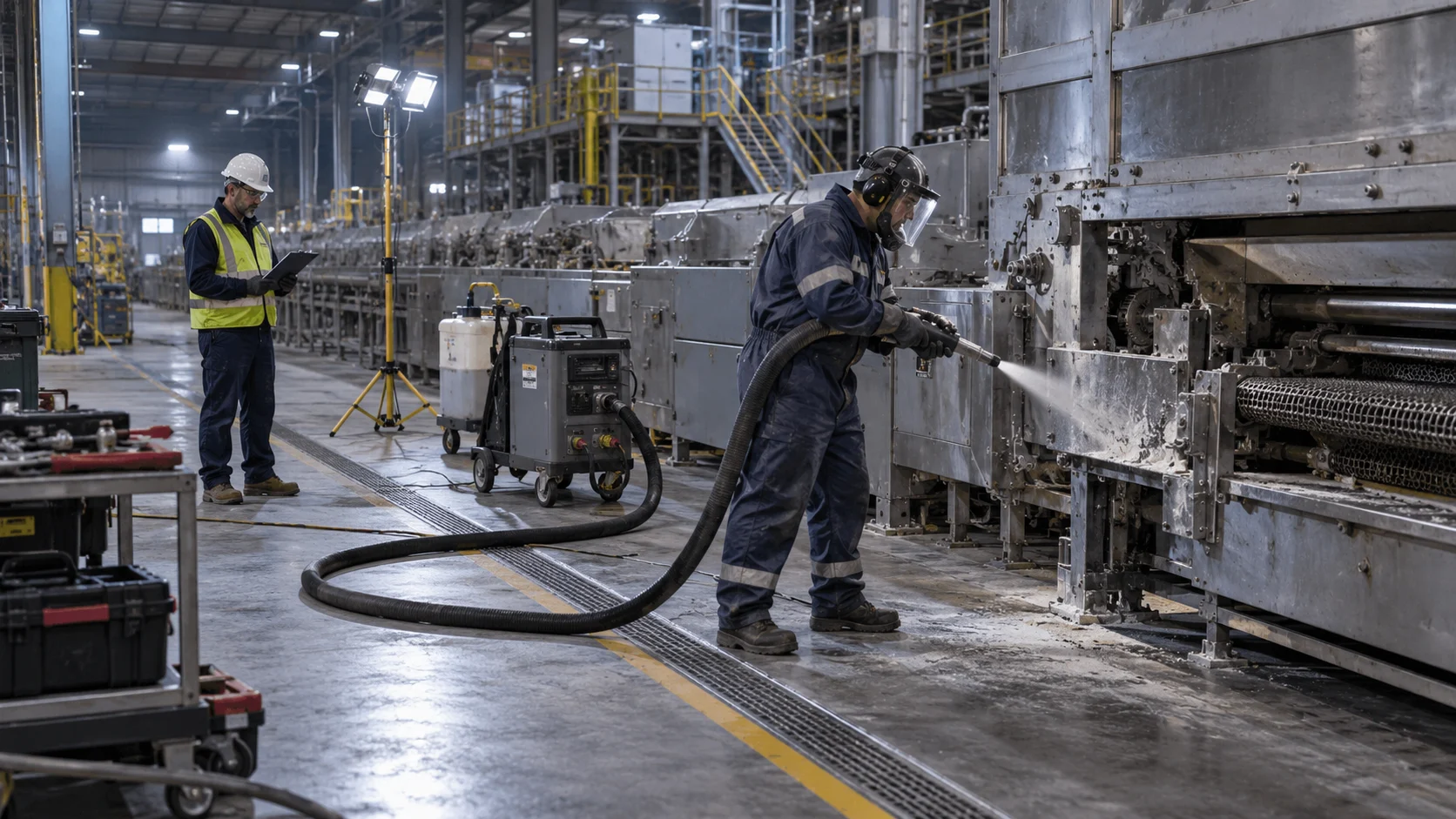
Inspect commercial bakery equipment before Thanksgiving, Christmas and year-end orders arrive. Start with the ovens, mixers and conveyors that carry your busiest production runs. Ovens, mixers, conveyors, molds, proofers, cooling areas, and packaging equipment may have been running hard through late summer and fall. Small deposits that seem manageable during normal production can become bigger problems when downtime is limited.
A pre-season inspection can help your team spot surfaces that need more than routine wiping or scraping. Pay close attention to equipment that has frequent product contact nearby, complex moving parts, or areas that are difficult to access safely.
- Sticky or oily surfaces that remain after standard cleaning
- Dark carbon buildup around oven exteriors or heated equipment
- Flour dust collecting on guards, frames, sensors, or controls
- Dough, sugar, or release-agent residue in tight crevices
- Equipment that needs more frequent manual cleaning than usual
Dry ice cleaning can support maintenance and production-readiness goals, but it does not replace your bakery’s food safety program. Food-contact surfaces should still be cleaned and sanitized according to your established procedures after any maintenance or specialty cleaning work.
How Bakery Dry Ice Cleaning Removes Hidden Residue
Visible buildup is an easy warning sign, but hidden residue can be just as frustrating. Flour dust, dough, oils, shortening, sugars, carbonized deposits, release agents, and seasonal ingredients can settle into spots that are hard to reach during daily cleaning. Conveyor components, mold cavities, rollers, guards, oven surfaces, and machine seams often collect deposits over time.
When residue keeps coming back, routine cleaning may be reaching only the surfaces your team can easily see. Buildup can make sanitation tasks take longer, affect equipment appearance, and interfere with smooth product flow. It may also contribute to inconsistent release from molds or uneven-looking finished products.
With bakery equipment dry ice cleaning, dry ice pellets lift deposits from the surface and turn directly into gas. The blasting step adds no wash water, so it requires no water drying stage. Removed contaminants still need collection. For more detail, see Cold Jet’s guide to dry ice blasting for food processing equipment.
During planning, identify the machines, deposit types and work areas. Also confirm the cleaning window with your maintenance and sanitation leads.
Slow Changeovers Reveal Hard-to-Reach Contamination
Longer changeovers are another warning sign. For example, teams may spend more time scraping, wiping or re-cleaning between products. Check for deposits in seams, guards and conveyor parts. Also track delays when switching flavors, toppings or ingredients. Keep allergen verification within your approved food safety program.
Trouble spots are not always obvious until they affect production or become visible during a sanitation inspection. We often recommend looking closely at areas such as:
- Conveyor links, chains, rollers, and chain guards
- Mixer housings, machine frames, and electrical enclosures
- Mold details, cooling racks, and equipment seams
- Packaging-line components and protective guards
- Tight spaces behind panels or around moving parts
Holiday production can bring more product variety, frequent schedule changes, and less downtime between runs. A cleaning delay that is inconvenient in a slower month can take away valuable production time during a packed week.
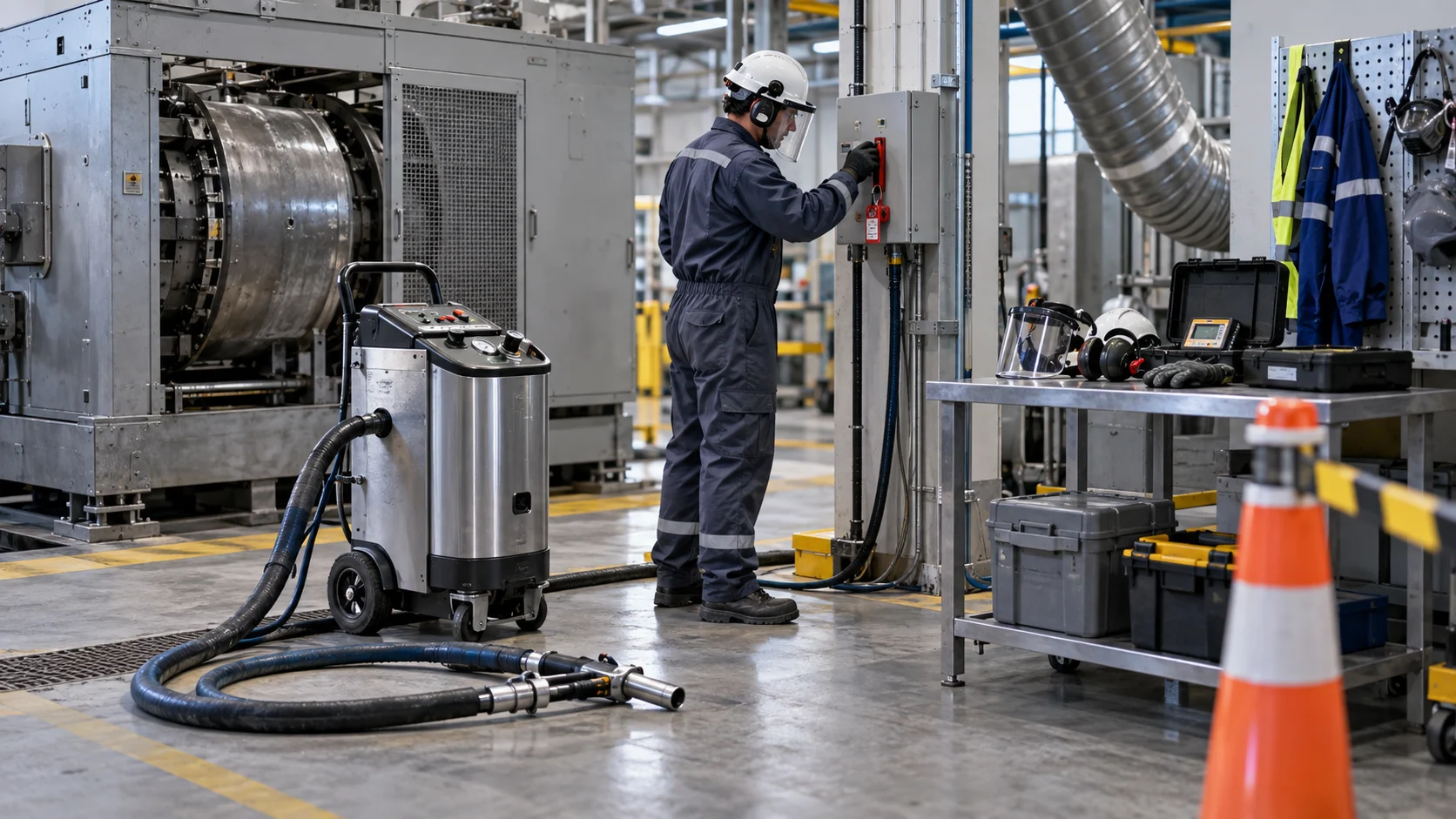
Dry ice blasting cleans equipment in place and can reduce disassembly. Before cleaning, coordinate equipment access, lockout procedures, ventilation, work area controls and PPE with your plant team.
Equipment Performance Issues Can Signal Buildup Problems
Cleaning is not a replacement for mechanical repair, but it can give maintenance teams a clearer view of the equipment. Layers of flour, grease, oils, and baked-on material can hide worn parts, loose fasteners, cracks, corrosion, and leaks. Removing those deposits before a planned inspection can make it easier to see what needs attention.
Watch for equipment that is becoming less reliable or harder to maintain. Warning signs may include conveyors that run unevenly, molds that release products inconsistently, oven surfaces with heavy carbon buildup, dust-covered sensors, or machinery that needs increasingly frequent manual cleaning.
A proactive cleaning project can also support planned downtime. Rather than dealing with buildup during an emergency shutdown, bakery teams can coordinate cleaning before peak orders reach full volume. That gives maintenance, sanitation, and production staff more room to inspect the equipment and address concerns without rushing.
Plan Bakery Dry Ice Cleaning Before Holiday Orders Peak
Plan bakery dry ice cleaning around the equipment your holiday orders depend on. Mobile service brings the cleaning equipment to your facility. Include fixed production lines, ovens, mixers, conveyors, molds, frames and packaging machinery in your equipment list. Record the deposit type and cleaning priority for each machine.
Before production reaches its busiest point, build cleaning into your broader readiness plan alongside preventive maintenance, sanitation verification, employee training, spare-parts planning, and production scheduling. Early coordination gives your team time to arrange equipment access, lockout procedures, safety steps, and post-cleaning inspections.
Inspect your equipment now for recurring residue, difficult changeovers, hard-to-clean areas, and performance concerns. Addressing those warning signs before schedules tighten can help your bakery enter the holiday season with clearer equipment, better access for maintenance, and fewer cleaning surprises.
Restore Cleaner Equipment for Peak Production
For the cleaning visit, send the oven, conveyor, mixer and dough-handling equipment list with close-up deposit photos. Our commercial bakery equipment dry ice cleaning service covers the agreed machine areas. Use the bakery equipment cleaning schedule guide to coordinate the sequence, then plan recurring maintenance cleaning around the next production cycle.
Precision Dry Ice Cleaning provides thorough bakery equipment dry ice cleaning that removes buildup without introducing water or harsh chemicals. Our process helps preserve sensitive components while improving access to areas that are difficult to clean by hand. Contact us to discuss a cleaning plan that fits your production schedule.