Removing Oil and Seasoning Buildup From Snack Equipment
Published
Snack equipment oil and seasoning buildup is best described by station.
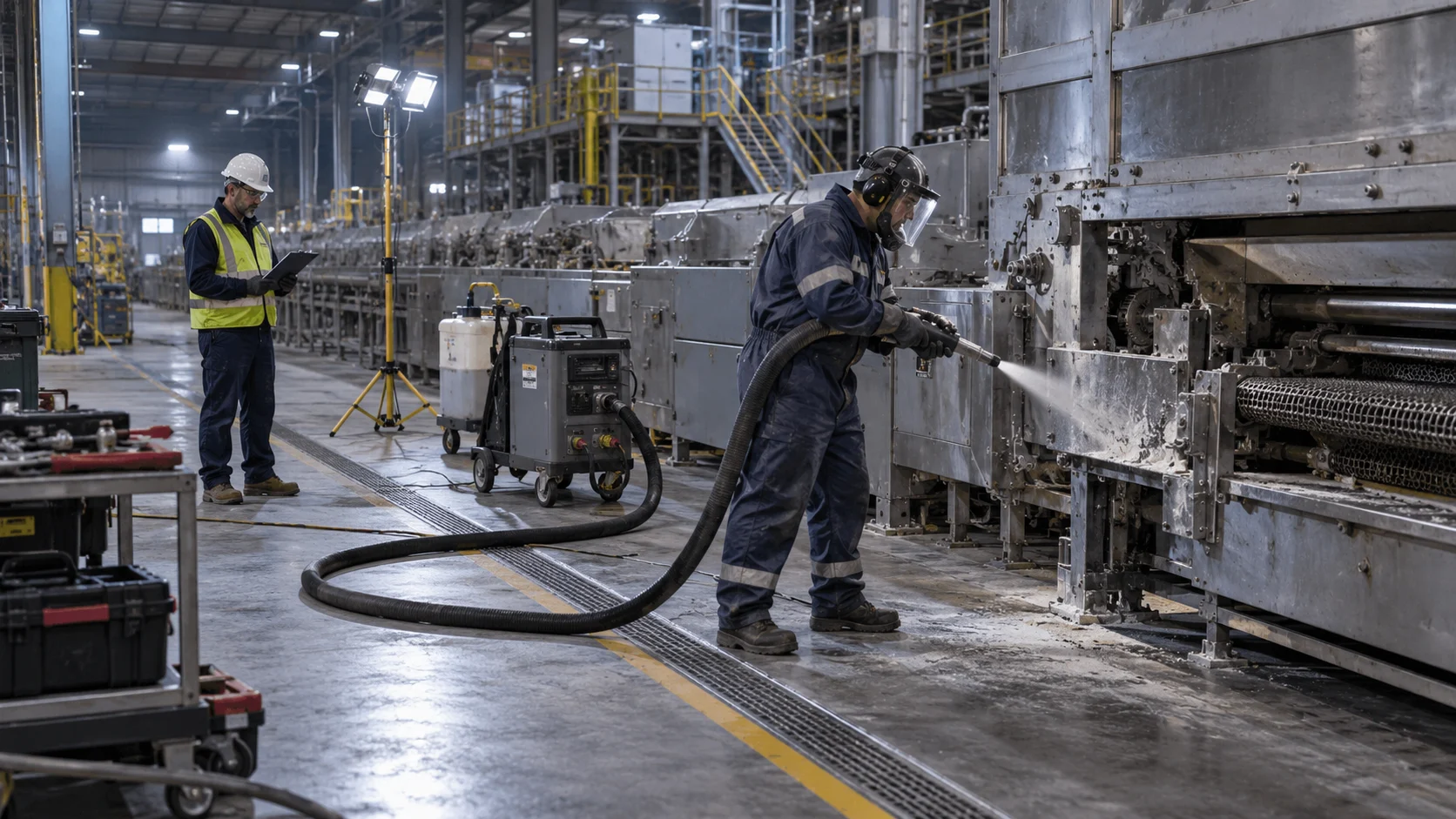
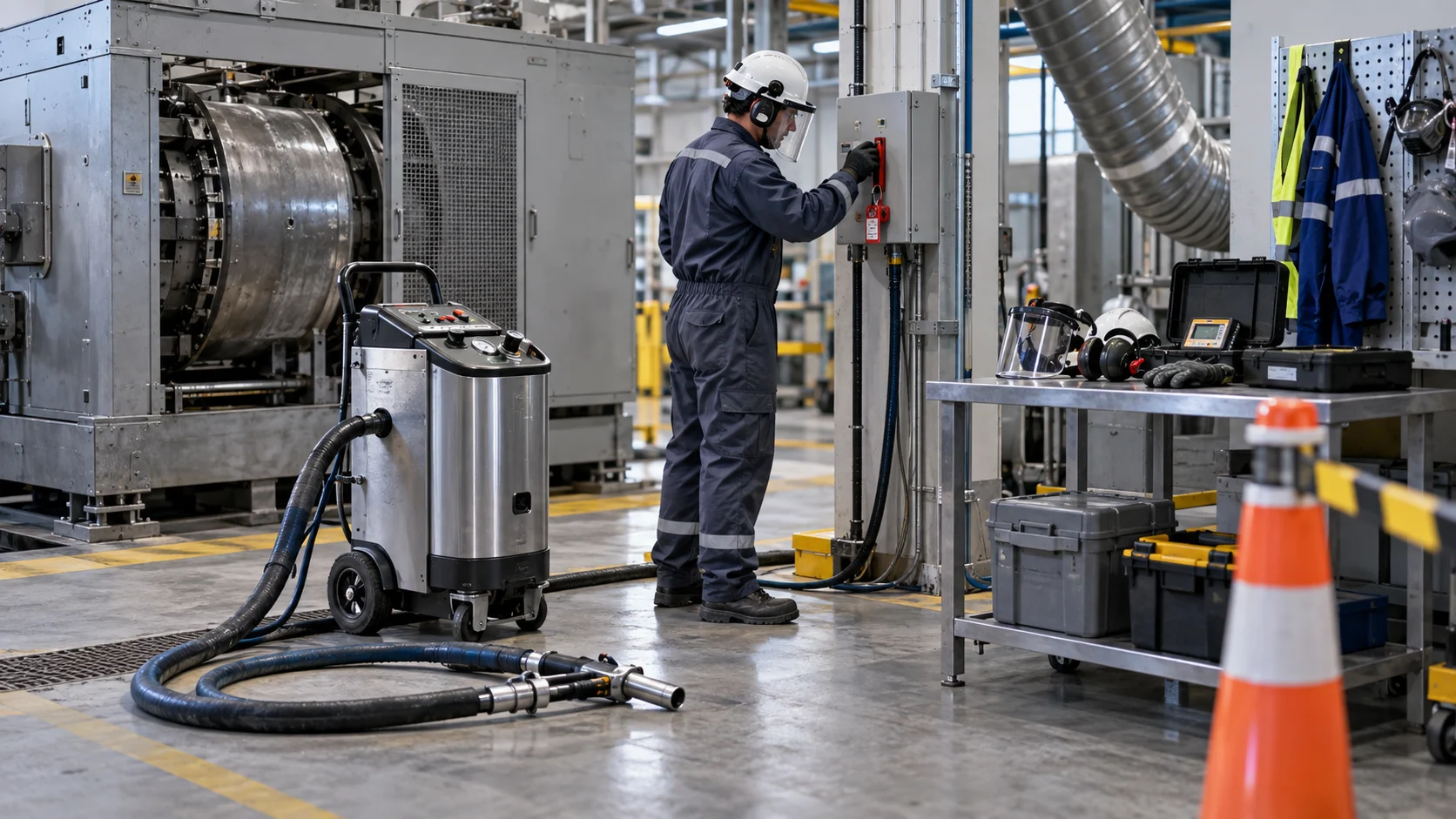
Snack equipment oil removal starts with a deposit map for each station, including attached seasoning. An oily conveyor guide, a baked-on oven deposit and a seasoning feeder need different access and collection arrangements. A station list makes the dry-ice cleaning visit useful to the maintenance crew preparing the line for inspection.
Deposits to record for snack equipment oil removal
Photograph the residue close up and photograph the whole asset. Identify the product, seasoning and surface material beneath the buildup. Separate heated equipment from feeders, handling machinery and packing stations. This gives the crew a practical map rather than a broad instruction to clean the entire production area.
Production-line tasks for snack equipment oil removal
Include accessible oven and dryer surfaces, conveyor frames, radial-feeder trays and weighing-equipment supports. Mark belts, load cells and sensors for their component-specific requirements. At the packing end, list baggers, packaging liners, labelers and adhesive areas separately. Internal glue-system servicing belongs to its own maintenance task.
Use the cleared surfaces for inspection
Dry-ice blasting removes the agreed attached deposits without adding wash water, detergents or abrasive grit during the blasting step. Collect the removed oil, seasoning and food residue as the work progresses. Maintenance can then inspect the named surfaces and complete adjustment or component servicing before the facility’s sanitation and release checks.
Equipment and handoff map
| Station or step | Cleaning focus | Next responsibility |
|---|---|---|
| Heated equipment | Baked-on food, carbon and grease | Isolation, temperature and access |
| Feeders and conveyor structures | Attached oil and seasoning | Tray, belt and sensor requirements |
| Packing machinery | Product grime and adhesive | Machine openings and glue-station scope |
Prepare the cleaning visit
- Previous product and seasoning
- Asset photographs and surface finishes
- Protected components and collection points
- Inspection and sanitation time after cleaning
The benefit comes from clearing the specific deposits that obstruct the planned maintenance work. Use recurring deposit photographs to keep future visits focused on the stations that need attention, with the plant’s quality team controlling recipe-change and sanitation verification.
Related services and planning resources
Snack Food Manufacturing Dry Ice Cleaning connects these tasks to the full industry cleaning scope. Read the related equipment-maintenance guide and use the shutdown cleaning window planner to organize asset availability.
For service support, see food processing equipment cleaning, packaging machinery cleaning and request a cleaning quote. Precision Dry Ice Cleaning provides mobile service in NY, NJ, PA and DE.
For media requirements and agency-source scope, read the FDA, EPA and USDA reference guide.
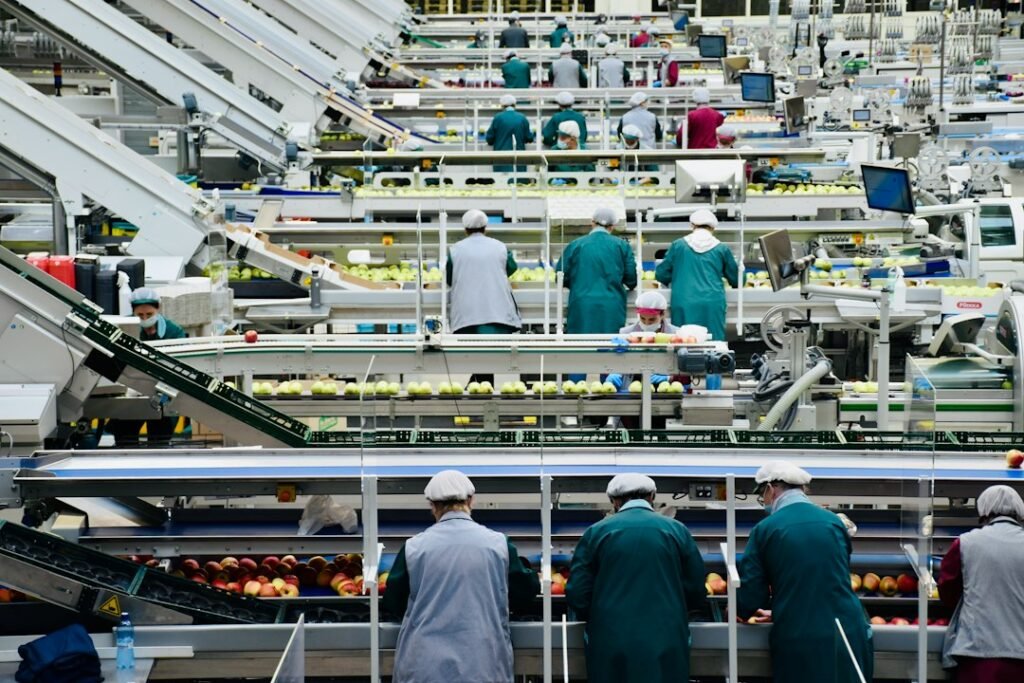
Industry reference image. Photo by Arno Senoner.