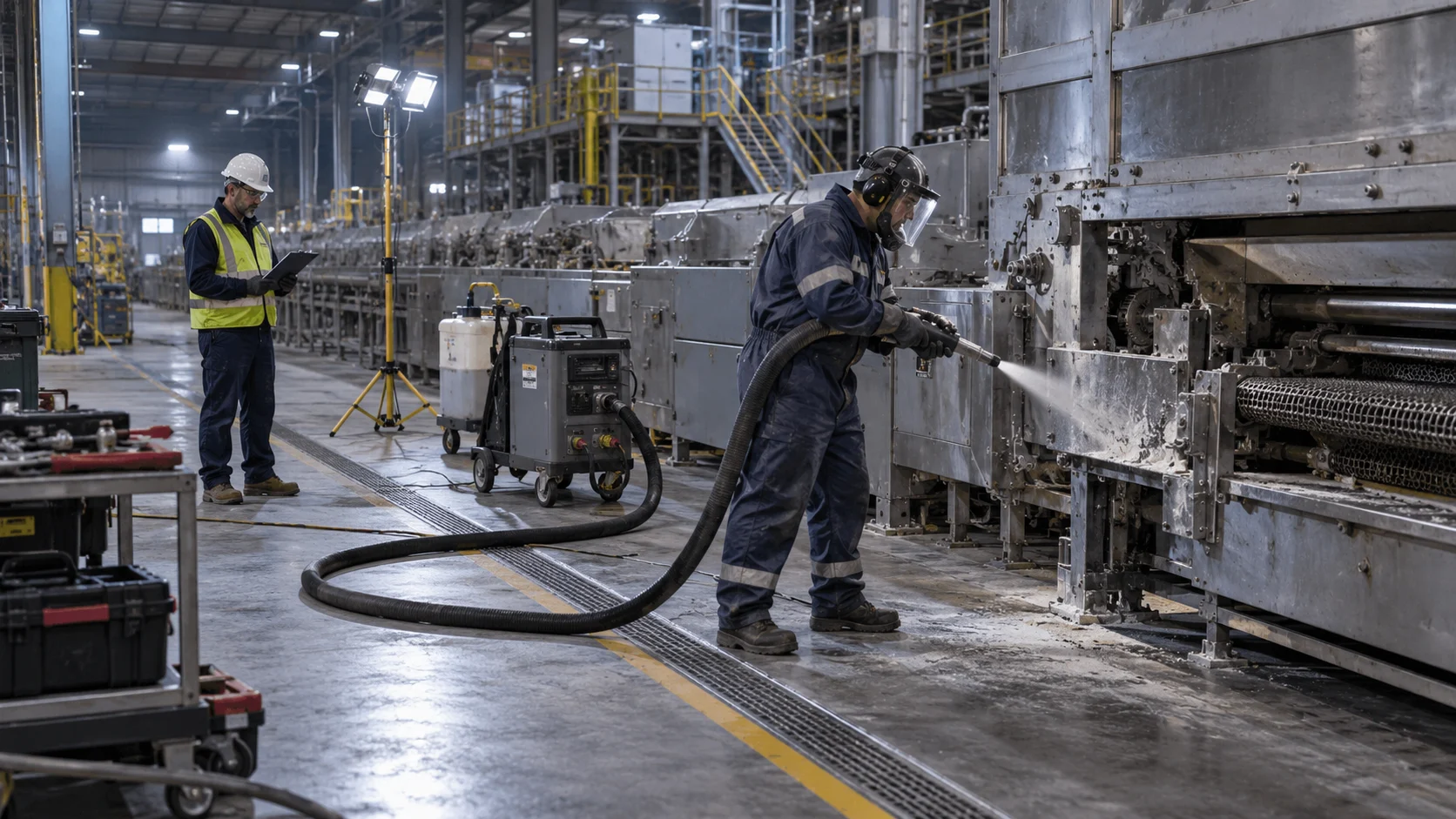
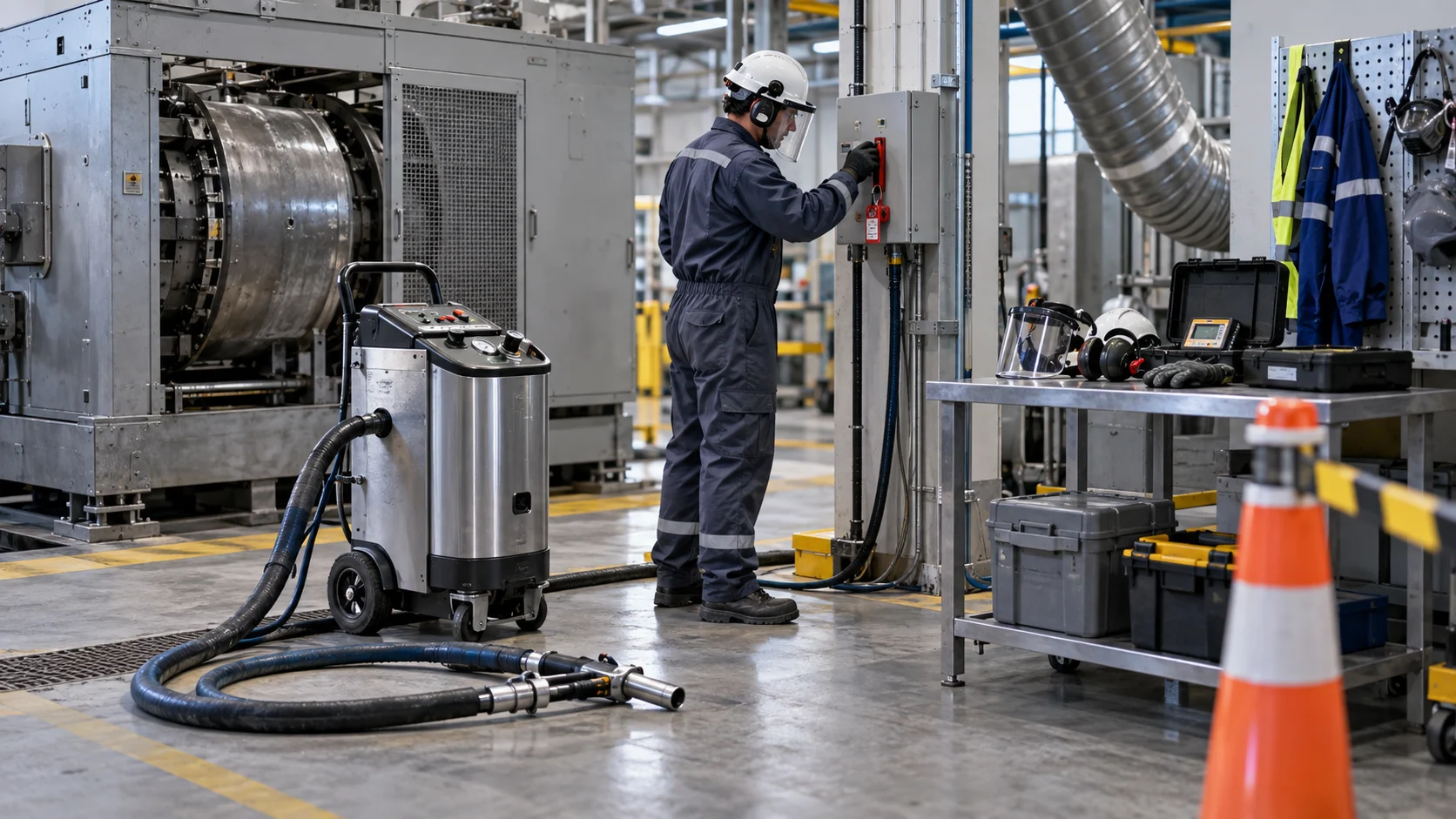
Switchgear Cleaning Methods for Planned Electrical Maintenance
Published · Updated
Compare switchgear cleaning methods, define the equipment and contamination, and plan isolation, test cleaning, inspection, and return to service.
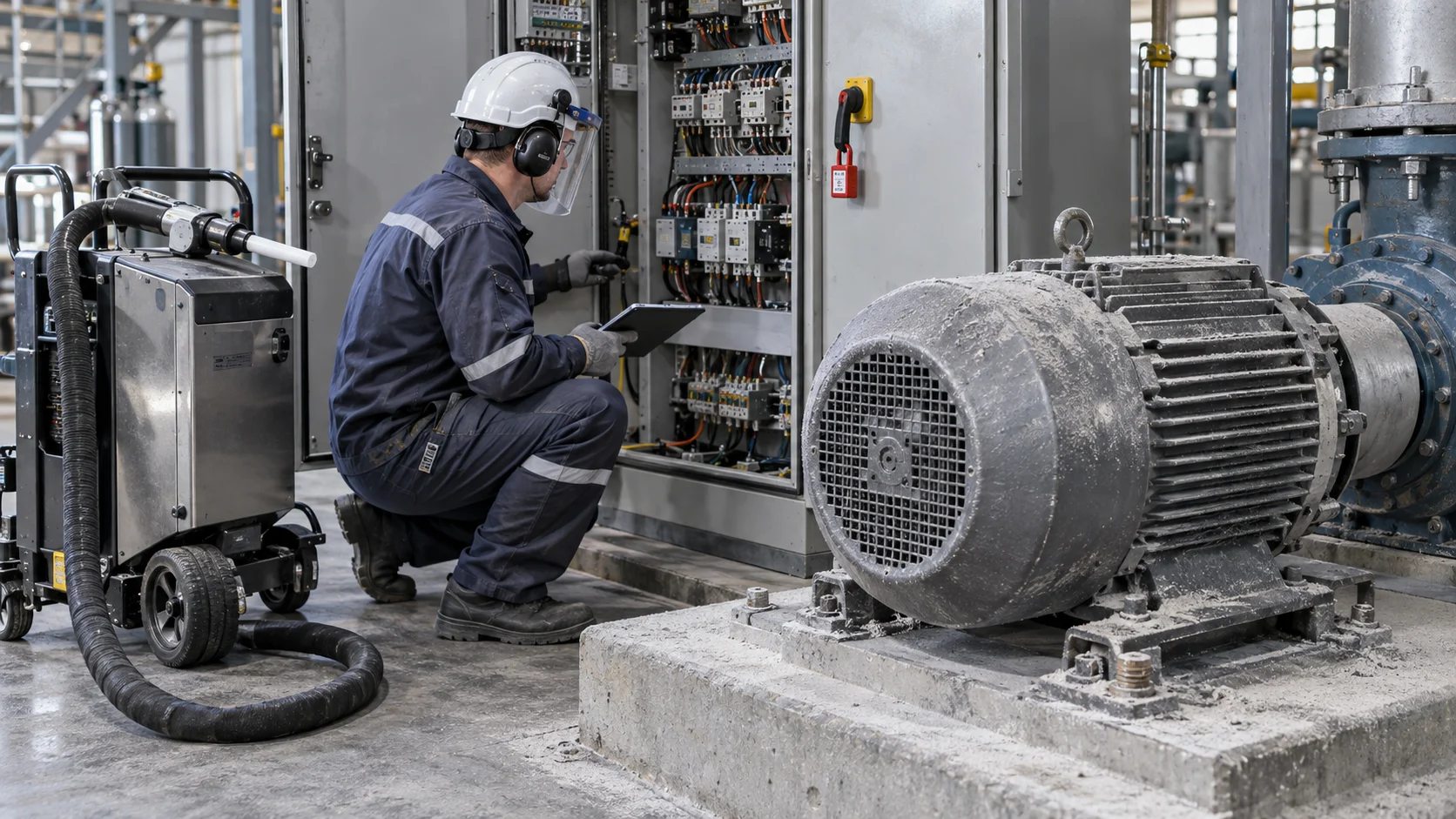
Compare switchgear cleaning methods by equipment type, contaminant and the condition needed after cleaning. Dust on a sound enclosure exterior, oily deposits on accessible structural parts, and contamination inside an electrical lineup present different work requirements. Choose a method only after the equipment owner identifies those surfaces and its electrical safety procedures.
Consider dry ice cleaning for switchgear surfaces when the manufacturer permits it and the electrical team controls access. This guide explains how to compare methods and request an equipment-specific cleaning quote. It is not an authorization to work on energized equipment.
Define the scope for switchgear cleaning methods
Record the lineup or cabinet identifier, manufacturer, model, voltage class, age, and reason for cleaning. Mark enclosure exteriors, accessible housings, insulating surfaces, compartments, vents, labels, seals, indicators, and components that the electrical team wants excluded. Provide photographs from a safe position. Do not open equipment merely to obtain marketing photographs. For enclosure-only work, define the narrower task using the cabinet exterior cleaning-scope guide.
Describe the deposit rather than calling all contamination dirt. Dry dust, oil mist, soot, water damage, corrosion products, and suspected tracking each call for different investigation. If a failure, arcing event, or water intrusion occurred, the electrical team should evaluate the equipment condition before a cleaning contractor proposes work.
Compare switchgear cleaning methods by surface and handback
Controlled vacuuming or manual cleaning may be appropriate for accessible loose deposits if the equipment maker permits it. Wiping may address a localized film, but the liquid or chemical, lint, and drying requirements must be considered. Dry ice blasting introduces no rinse water or persistent blasting grit, while dislodged contamination still needs capture. An abrasive method can affect finishes or insulation and should be assessed against the manufacturer’s limits.
No method is best for every component. Ask who will remove covers, protect vents and labels, collect residue, inspect insulation, and test the equipment after cleaning. Therefore, request a separate quote for enclosure exteriors and any interior or component work. Our electrical cabinet exterior cleaning service has the narrower boundary.
Plan isolation and the work window
The facility’s qualified electrical personnel should establish the work condition, perform required isolation and verification, and control access. OSHA’s electrical work practices address work on or near exposed electrical parts. OSHA’s energy-control standard addresses relevant servicing and maintenance hazards. The applicable procedure depends on the work and exposure. The cleaning method does not replace that assessment.
Identify the outage window, adjacent operating equipment, ventilation, access route, noise restrictions, and who will reopen and inspect the asset. For control cabinets or electronic assemblies, include coatings, exposed connectors, boards, sensors, and the manufacturer’s cleaning instructions. Sensitive assemblies may be outside a proposed dry ice cleaning scope.
Test a representative surface and define acceptance
Before broader work, select an accessible test area with the same deposit and finish. Record the starting condition and the settings used. The equipment owner checks the exposed surface and adjacent components before approving wider cleaning. A successful test on a metal cabinet exterior does not establish suitability for an insulating component.
Finally, separate cleaning completion from return-to-service approval. The responsible electrical team should identify any inspection, electrical testing, reassembly, and documentation required by its maintenance procedure. Record the surfaces cleaned, surfaces excluded, collected residue, and any condition that requires further evaluation.
Questions facilities ask about switchgear cleaning
Can dry ice blasting clean energized switchgear?
Do not infer permission from dry ice being a dry process. The electrical owner must determine the safe work condition and authorized procedure for the specific task. Precision scopes this work around de-energized equipment and site-directed isolation and inspection.
Does cleaning repair damaged insulation or corrosion?
Cleaning can expose an underlying condition for inspection. It does not repair electrical damage, restore insulation ratings, or replace a corrosion or failure investigation.
Request switchgear cleaning service
Send the equipment type, manufacturer, location, photographs, deposit description, restrictions, and proposed outage window. See our electrical equipment dry ice cleaning service, then get a switchgear cleaning quote for a defined scope in NY, NJ, PA, or DE.