Hiring a Dry Ice Cleaning Contractor vs. Buying Equipment
Published · Updated
Use cleaning frequency, staffing, infrastructure, and measured operating costs to decide whether to hire a contractor or evaluate an equipment purchase.
Before buying dry ice equipment, compare ownership with hiring a contractor for your expected workload. A purchase decision needs more than a machine price. A contractor decision needs more than a day rate. Build both around the same application, cleaning standard, and annual workload.
Planning work at your site? Explore our mobile dry ice blasting services. If you are comparing the service names, start with Dry Ice Blasting vs. Dry Ice Cleaning.
Dry ice cleaning contractor vs buying equipment for your workload
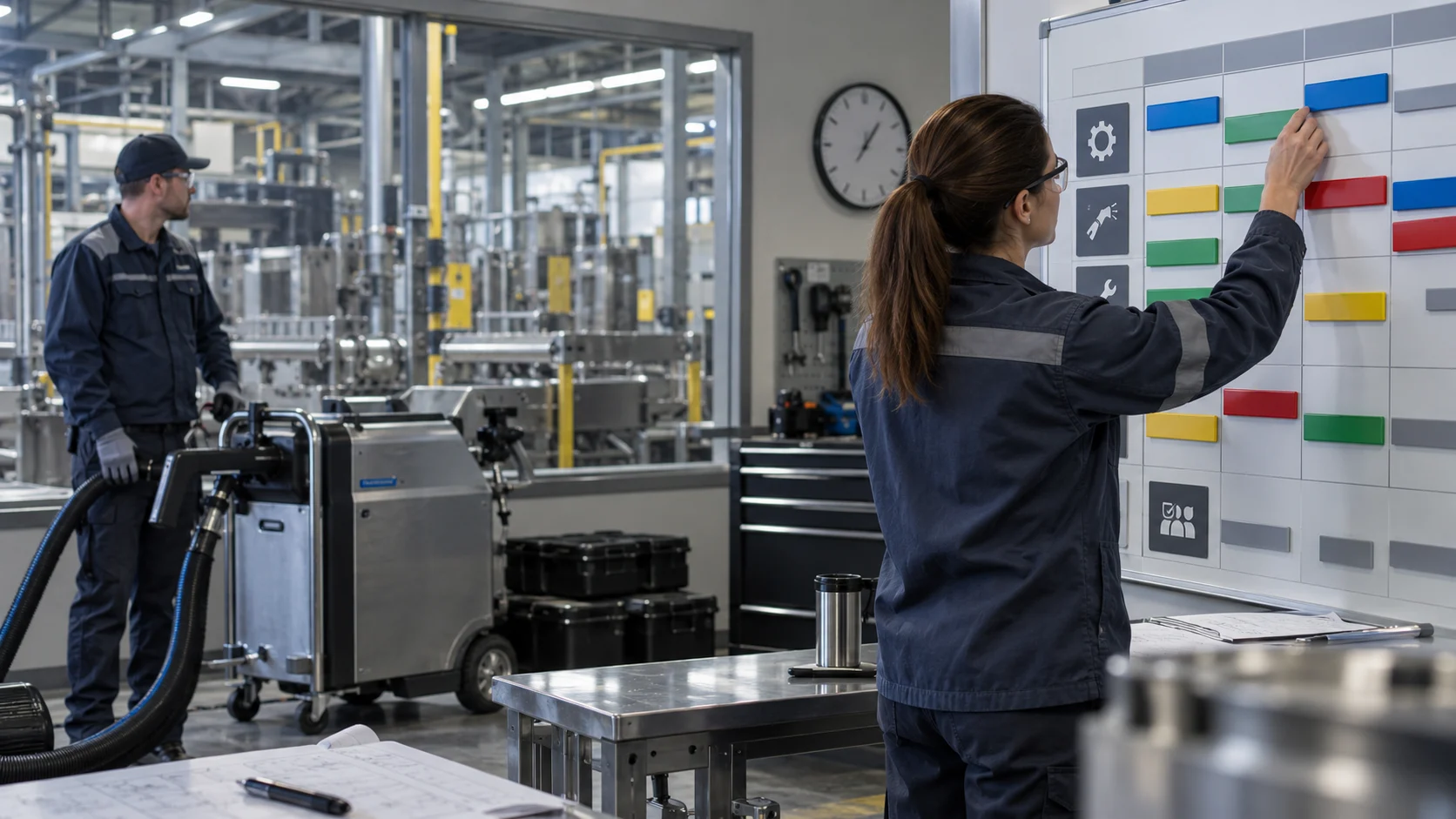
List the assets, deposits, locations, cleaning intervals, and available windows. Separate confirmed recurring work from possible future applications. Note whether demand is steady, tied to shutdowns, or limited to one restoration project. For injection tooling, compare staffing and production timing with the in-house and contracted mold-care comparison.
Ask who owns the cleaning task internally. Identify available operators, supervision, scheduling responsibility, and the person who accepts the result. Do not assume the maintenance team has spare capacity simply because a machine could be kept on site.
When to evaluate a contractor
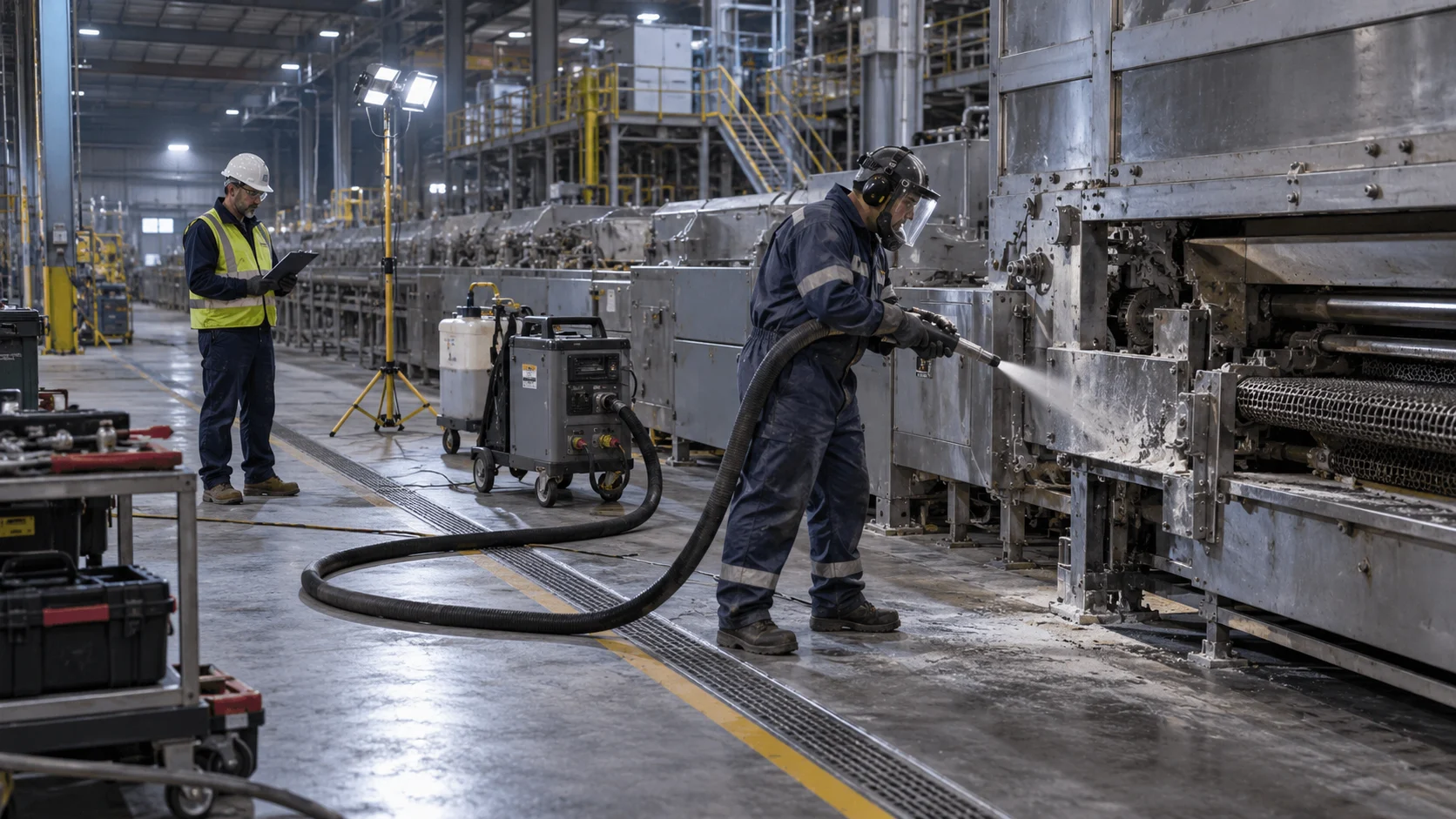
Consider a contractor proposal when you have a defined one-time project, limited internal staffing, or an application that still needs testing. Use the proposal to establish the crew, equipment, materials, site preparation, and work window being offered. Confirm availability for the actual date rather than relying on general coverage statements.
You still need a site contact and clear responsibilities. Agree who authorizes access and isolation, provides equipment information, handles any disassembly, and releases the asset after inspection. Ask which tasks remain with your team and include that time in the comparison.
When buying dry ice equipment fits your workload
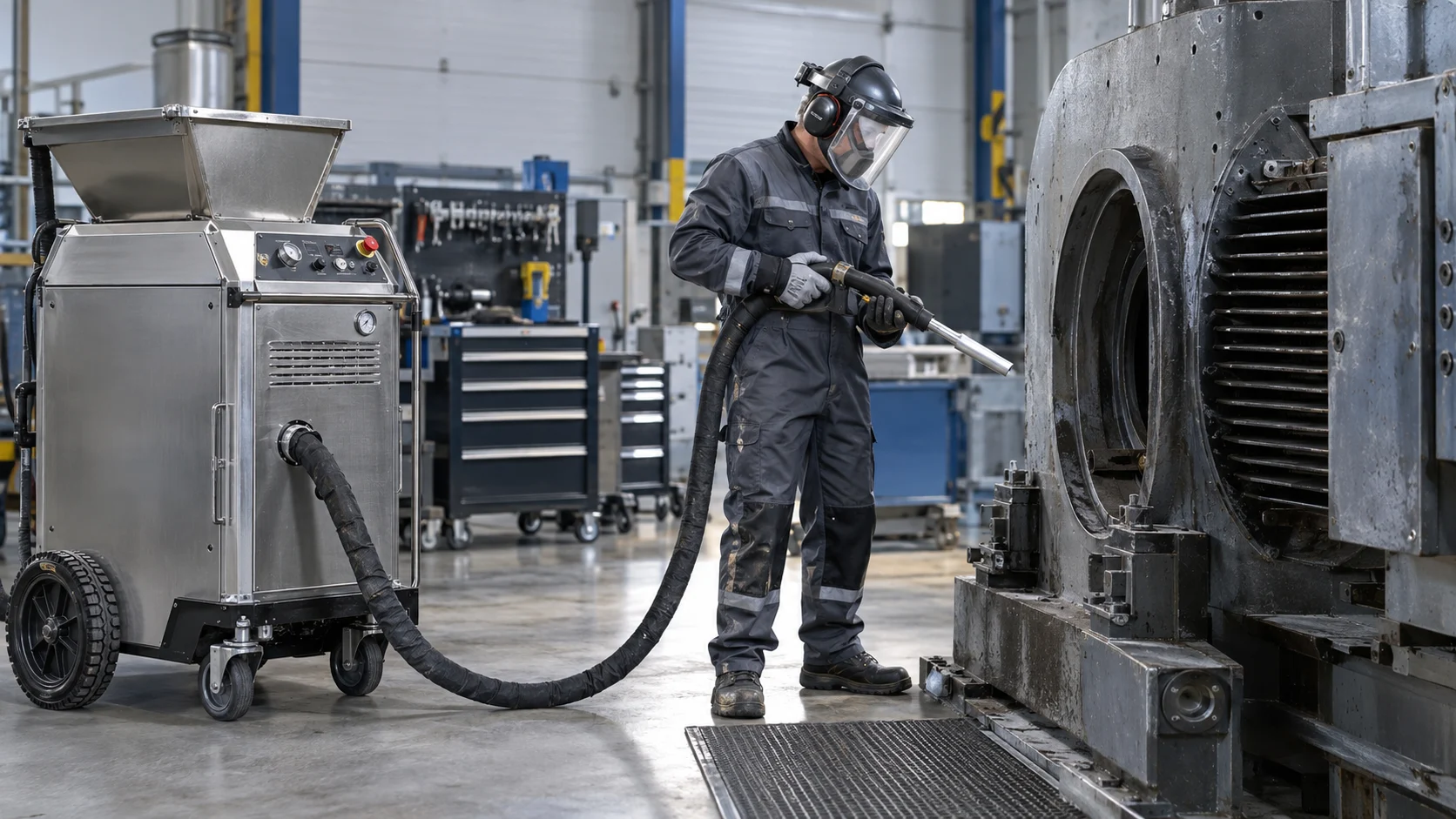
Evaluate an equipment purchase when you can define a recurring workload, assign trained operators, and support the process at the required locations. Ask the supplier to demonstrate the proposed machine on representative deposits and access conditions.
Cold Jet identifies compressed air, power, and dry ice as operating inputs. Confirm the requirements of the actual system and nozzle with the supplier, including air quality and any supporting equipment. See the manufacturer’s operating requirements.
| Decision area | Question for the ownership case |
|---|---|
| Utilization | How much confirmed work will the equipment perform, and when? |
| People | Who operates it, provides cover, and maintains application knowledge? |
| Infrastructure | Which air, power, storage, handling, and transport arrangements are required? |
| Operating costs | What are the measured labor, ice, energy, maintenance, and consumable costs? |
| Availability | What is the plan for breakdowns, material delays, or simultaneous work at two sites? |
| Oversight | Who maintains procedures, coordinates work authorization, and records inspection results? |
Annual costs of buying dry ice equipment
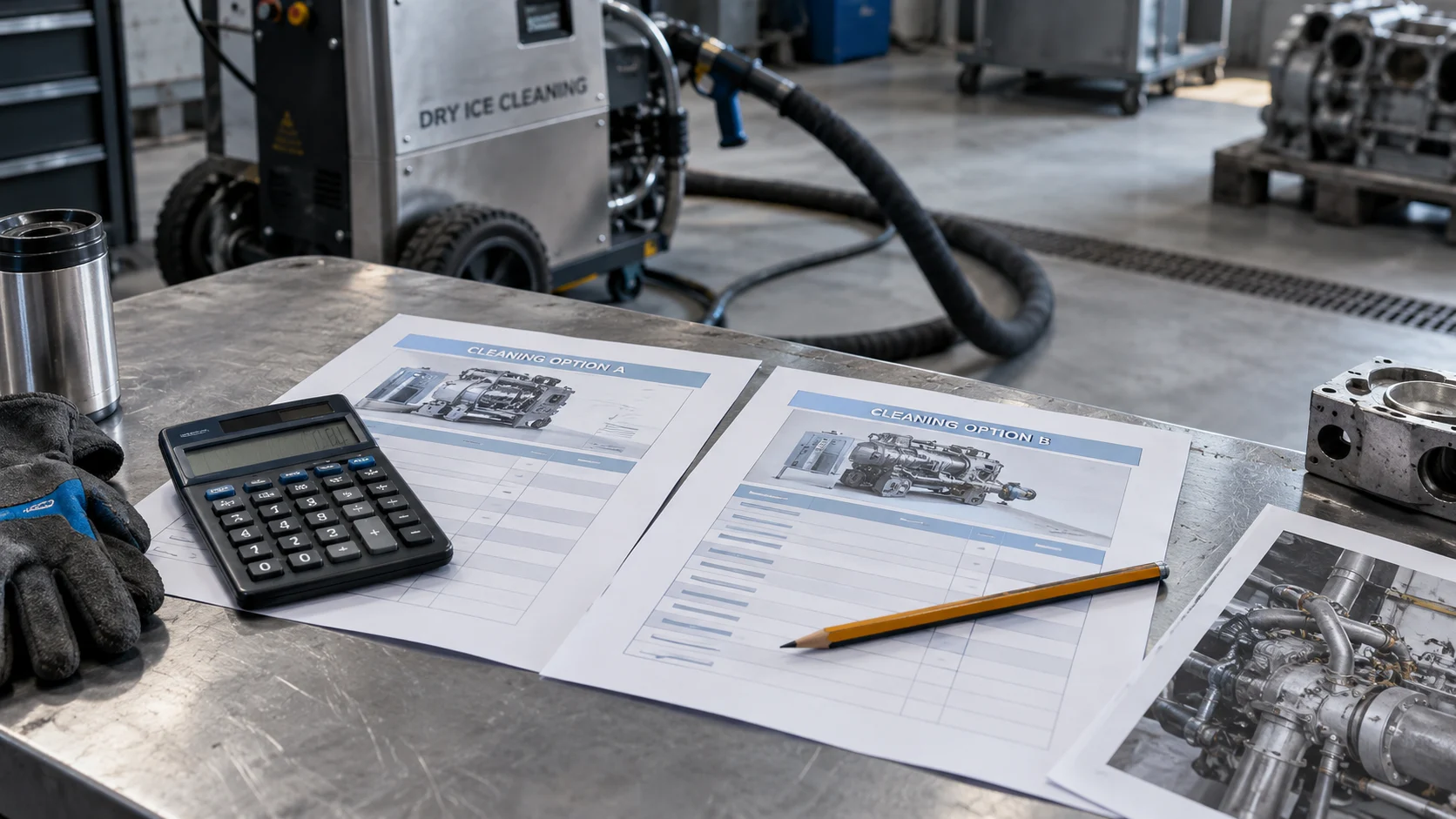
For the contractor case, total the expected project charges and your own preparation, supervision, access, and inspection costs. Confirm the included scope before multiplying a single quoted visit across a year. Different assets or deposits may need separate estimates.
For ownership, document the investment, financing assumptions if relevant, supporting equipment, operator time, consumables, maintenance, storage, training, and any backup provision. Compare alternatives over the same period. Ask your finance team how to account for the purchase and residual value consistently.
Use confirmed utilization for the base case. Then examine a lower-use case and a higher-cost case. Avoid calculating payback from a contractor’s invoice alone: owning the blaster does not remove the labor and operating inputs needed to complete the work.
Include safety and material logistics in either option
Before choosing either model, review the work area, ventilation and CO₂ monitoring, noise, material handling, and contamination collection. Cold Jet’s safety guidance addresses handling and protective measures. Assign responsibility for the facility requirements in writing.
Confirm how dry ice will arrive for the work window and what happens if the job moves. Ask about storage arrangements and supplier availability. Include those arrangements in the project plan instead of treating consumables as an afterthought.
Use a trial to reduce uncertainty
A representative trial can supply inputs for both a service quote and an ownership evaluation. Request a record of access, cleaning result, total working time, materials used, collection, and inspection. Keep the test scope narrow enough that you can compare it with the planned workload.
Use the Dry Ice Cleaning Application Review to prepare the surface, deposit, and access questions for a trial before evaluating service or equipment options.
Equipment rental may be another option to investigate with suppliers if your team can operate the system and manage the work. Confirm the package, training, support, and consumables directly with the equipment supplier.
Consider rental alongside ownership and contracting
Compare renting a dry ice blaster with hiring a cleaning crew before committing to equipment. Include operator time, air supply, dry ice logistics and residue collection in the comparison.
Discuss the service option
Explore our dry ice cleaning services and maintenance planning. Read about Precision Dry Ice Cleaning for our approach to defining and reviewing a service scope. Send the assets, location, frequency, and timing to request a contractor quote, then compare it with a supplier-supported ownership budget for the same work.