Where Does the Dirt Go During Dry Ice Blasting?
Published · Updated
Dry ice turns into gas, but removed dirt still needs a plan. Learn what to ask about containment, collection, nearby equipment, and project handover.
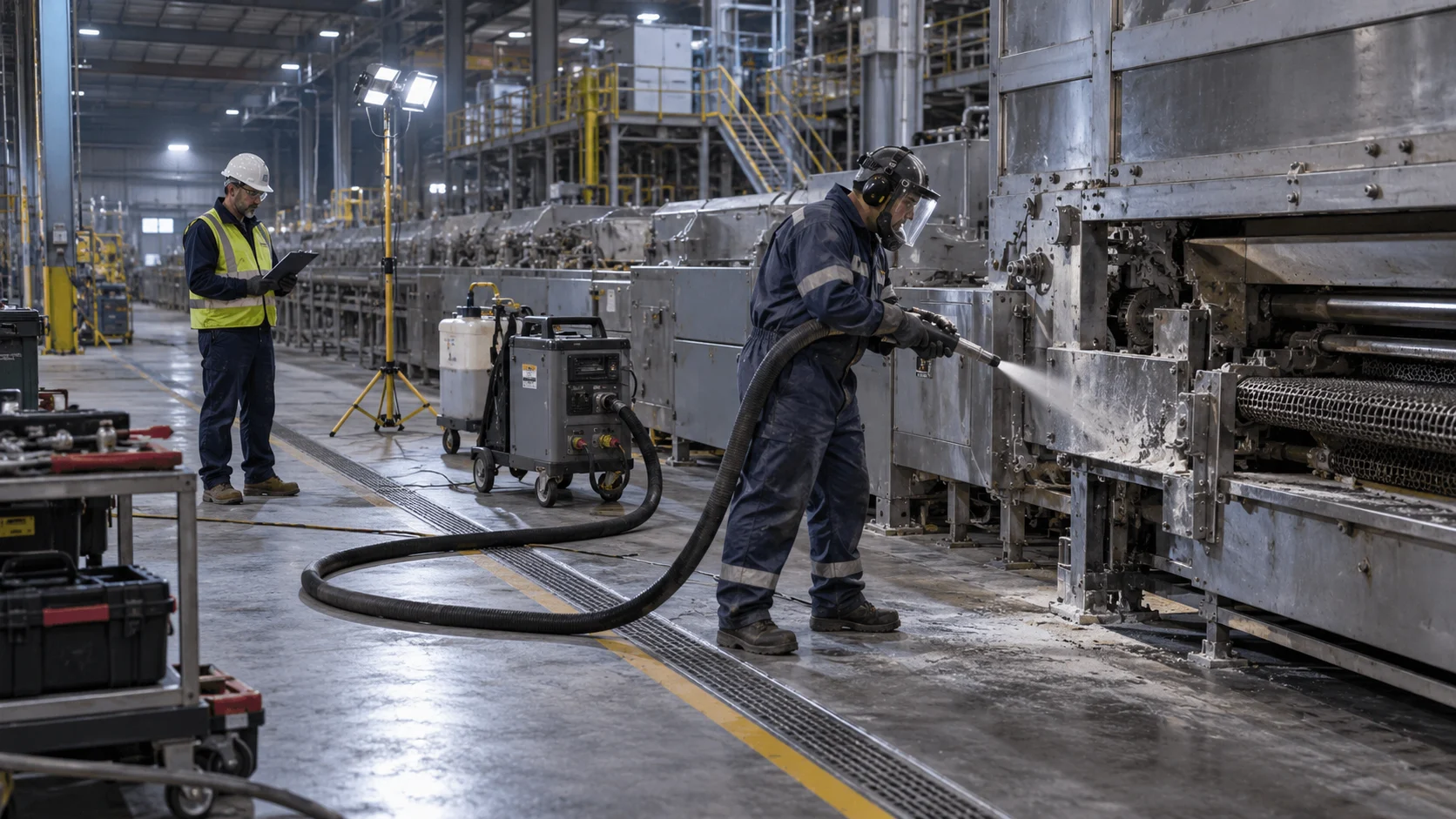
Dry ice blasting cleanup includes the contamination removed from the surface. The dry ice changes from solid CO₂ into gas. However, the dirt remains. Equipment manufacturer Sullair explains this distinction in its dry ice blasting overview.
Planning work at your site? Explore our mobile dry ice blasting services. If you are comparing the service names, start with Dry Ice Blasting vs. Dry Ice Cleaning.
First, ask who controls and collects the removed deposits. Next, ask how the team will ventilate the work area. Resolve both before cleaning starts.
Identify what is coming off the surface
First, identify the deposit. For example, is it grease, adhesive, food residue, or a known coating? Provide relevant product information and the equipment’s operating history. Also flag unknown material. Have the responsible team assess it before choosing a collection method.
Do not classify waste solely from the cleaning medium. If the original contamination needs special handling, ask the facility’s responsible person to define the assessment and disposal route. Then include those requirements in the quote request.
Plan dry ice blasting cleanup for the surrounding area
Walk through the proposed work zone with the site contact. Identify nearby equipment, open products, drains, walkways, ventilation intakes, stored materials, and other people’s work. Next, ask where displaced deposits could reach. Identify the areas that need protection or separation.
For an automotive project, include neighboring vehicles and the space beneath the lift in that review. For marine work, also discuss the yard’s restrictions and collection arrangements. Obtain the location’s permission for the planned work before booking.
| Planning item | Question to settle |
|---|---|
| Work boundary | Which surfaces and adjacent areas fall inside the cleaning and cleanup scope? |
| Containment | What protection or enclosure is appropriate for the identified deposits and location? |
| Collection | Which method and equipment are suitable for the material being removed? |
| Waste handling | Who identifies, packages, moves, and arranges disposal of the collected material? |
| Final inspection | Who checks the target surface and surrounding area before handover? |
Treat CO₂ ventilation as a separate requirement
However, collecting dirt does not control the CO₂ from dry ice. NIOSH identifies carbon dioxide as a colorless, odorless gas with inhalation hazards; its carbon dioxide reference documents those properties.
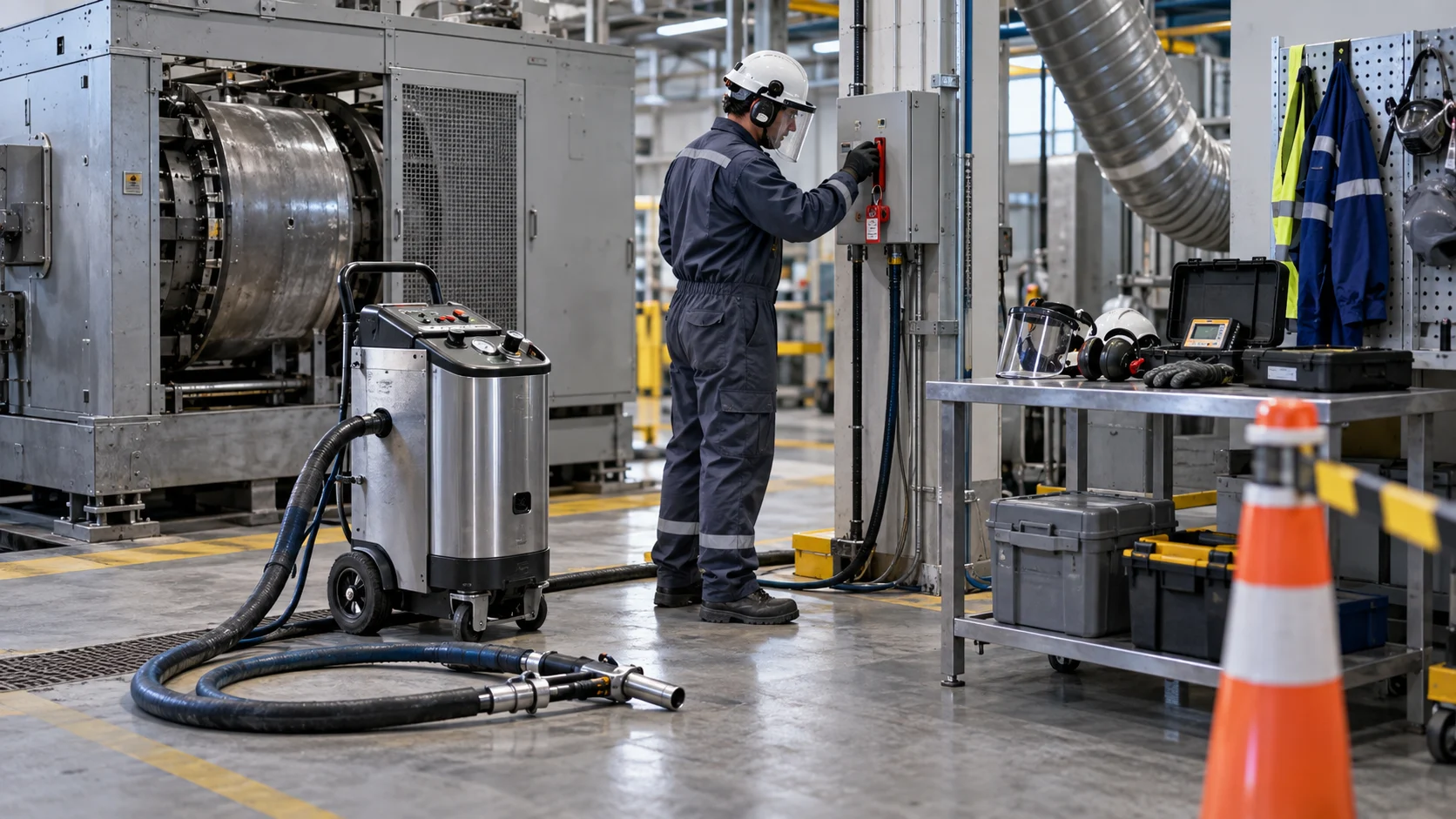
Have the responsible site team assess ventilation and CO₂ monitoring for the actual work area. Also account for any enclosure in the ventilation plan. Do not treat a dust collector, an open door, or the absence of an odor as evidence that CO₂ exposure is controlled.
In addition, review noise, access control, dry ice handling, and protective equipment before work. Our facility requirements page provides questions to bring to that discussion.
Give food-production work its own acceptance criteria
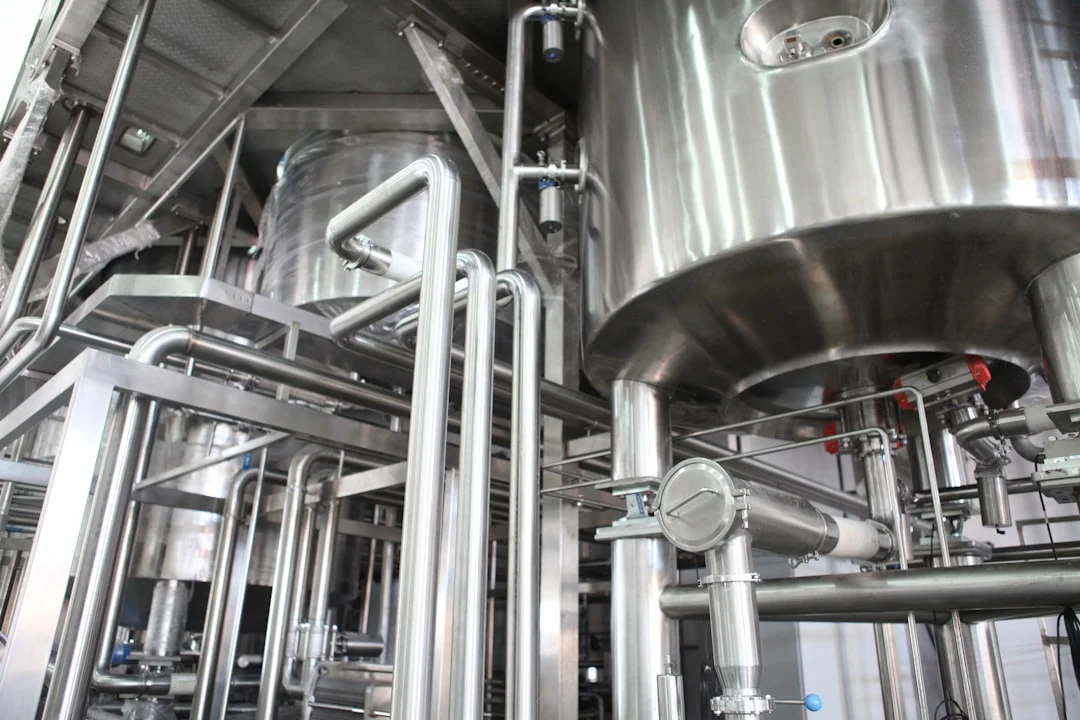
For food-processing equipment, ask the facility team to specify product removal, allergen considerations, separation from adjacent lines, and any required sanitation or verification after cleaning. Identify who authorizes the equipment’s release.
Therefore, agree on those checks before describing the job as complete. A visually cleaner surface is not, by itself, evidence that the facility’s food-safety acceptance requirements have been met. Keep the cleaning scope and the facility’s verification process explicit.
Include dry ice blasting cleanup in the proposal
Request a written description of ordinary collection and any separately scoped containment or disposal. Also clarify which surrounding areas the crew cleans. Ask who supplies collection equipment and consumables, and what happens if the deposit differs from the information provided.
Use the Facility Checklist to organize residue collection, work-area controls, and handoff questions before agreeing on the cleanup scope.
Check the time definition too. A booked shift may include setup, cleaning, replenishment, collection, and inspection. Do not assume every booked hour is active blasting. Use the quote comparison guide to compare these responsibilities across proposals.
Close the job with a documented handover
Before releasing the area, review the agreed surfaces, collection points, protections, and waste-handling responsibilities. Then record anything excluded, inaccessible, or awaiting another trade. Finally, keep before-and-after photos where the site permits them.
Read how dry ice cleaning works, then request a cleaning quote with your surface, deposit, location, and timing. Include any known containment or disposal requirements so they can be considered from the start.