Planning an Industrial Oven Cleaning Window
Published · Updated
List cool-down, isolation, access, cleaning, inspection, and restart as separate stages. Photograph the worst deposit and confirm which internal surfaces can tolerate a test.
An industrial oven cleaning window should include every handoff, from isolation through restart. List cool-down, isolation, access, cleaning, inspection, and restart as separate stages. Photograph the worst deposit and confirm which internal surfaces can tolerate a test. This guide helps a facility manager prepare for industrial oven dry ice cleaning. It also separates cleaning tasks from maintenance, inspection, and production sign-off.
Define equipment for an industrial oven cleaning window
Create an oven-zone table with rows for door frames, racks, carts, housings and any chamber surface proposed for cleaning. Add material, access route and an owner decision for heating elements, refractory, sensors and insulation.
Mark the oven drawing by door, rack, cart, housing and chamber zone. Add the model, lining material, heating elements, temperature at release and the person who can authorize access to each zone.
Identify residue before the industrial oven cleaning window
For each oven zone, name the residue and its process source. Use a sample log to record deposit release, retained finish, remaining material and whether that zone should be removed from the cleaning plan.
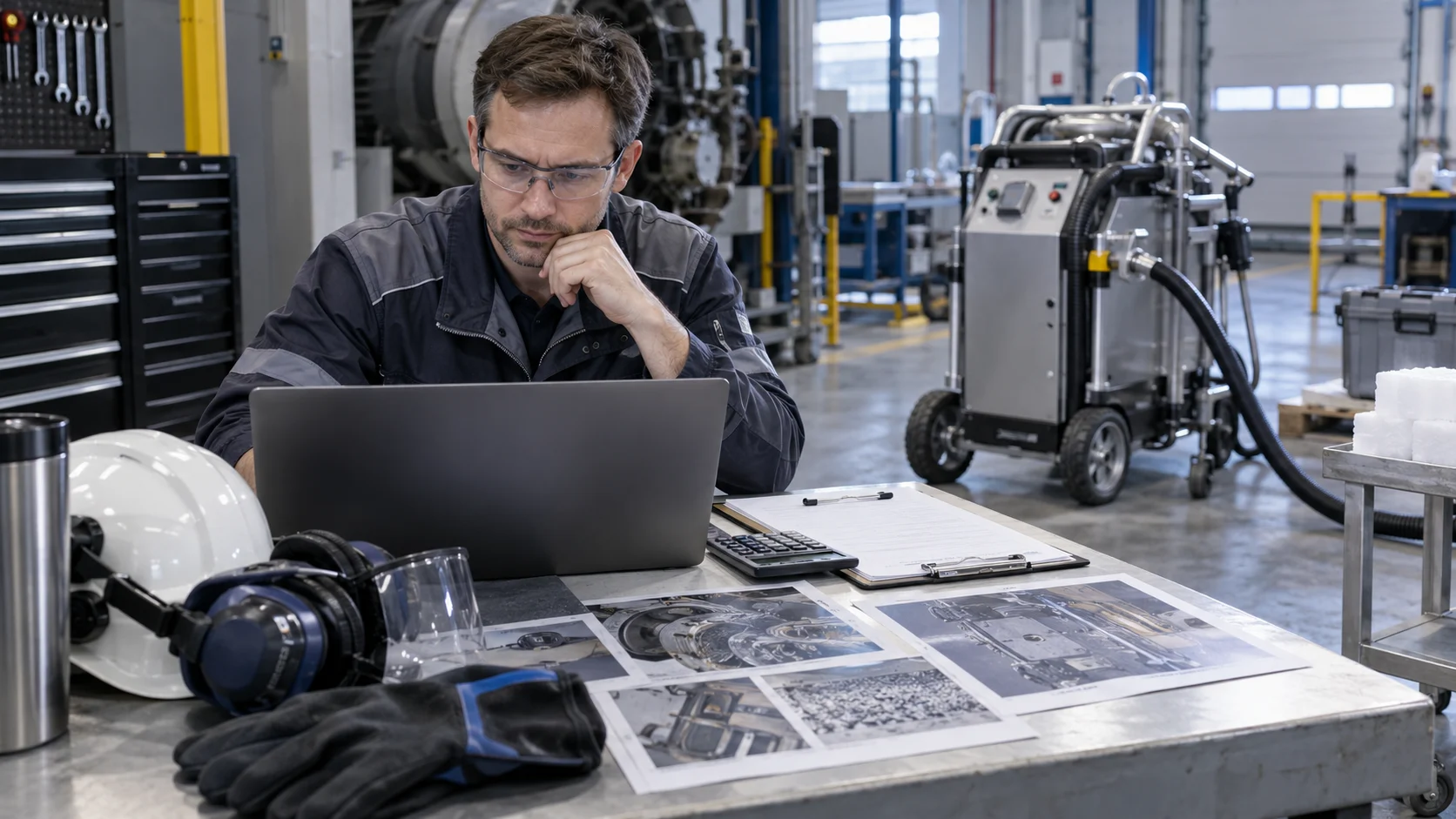
Photograph a baked-on deposit next to an unaffected area of the same substrate. Record whether the sample removes residue without disturbing lining or coating; use that result to decide which zones stay in the plan.
Set the industrial oven cleaning window
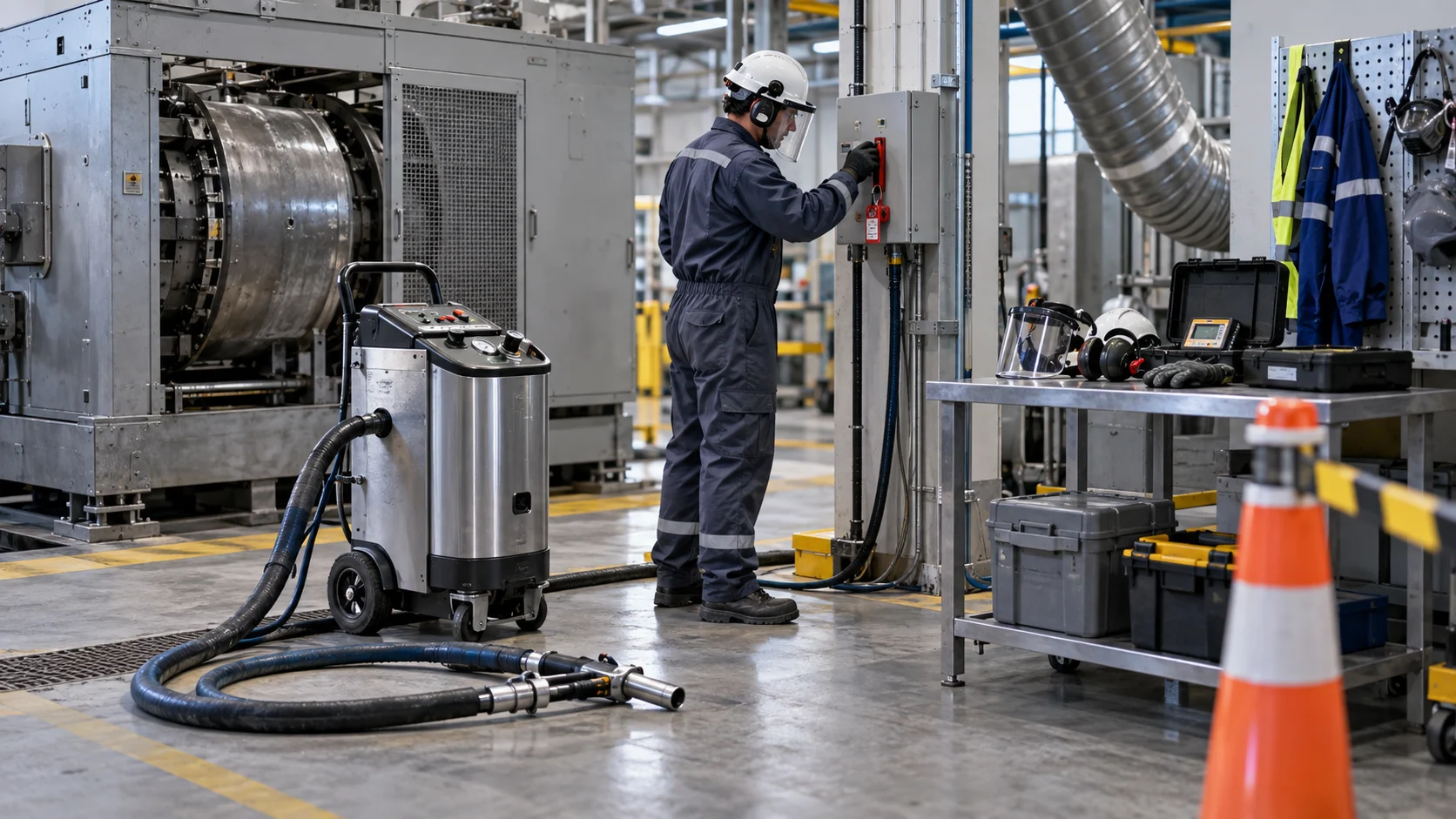
Ask the facility for its cool-down and isolation milestones before reserving crew time. The schedule should also identify who removes loose parts, who inspects the cleaned oven and who authorizes restart.
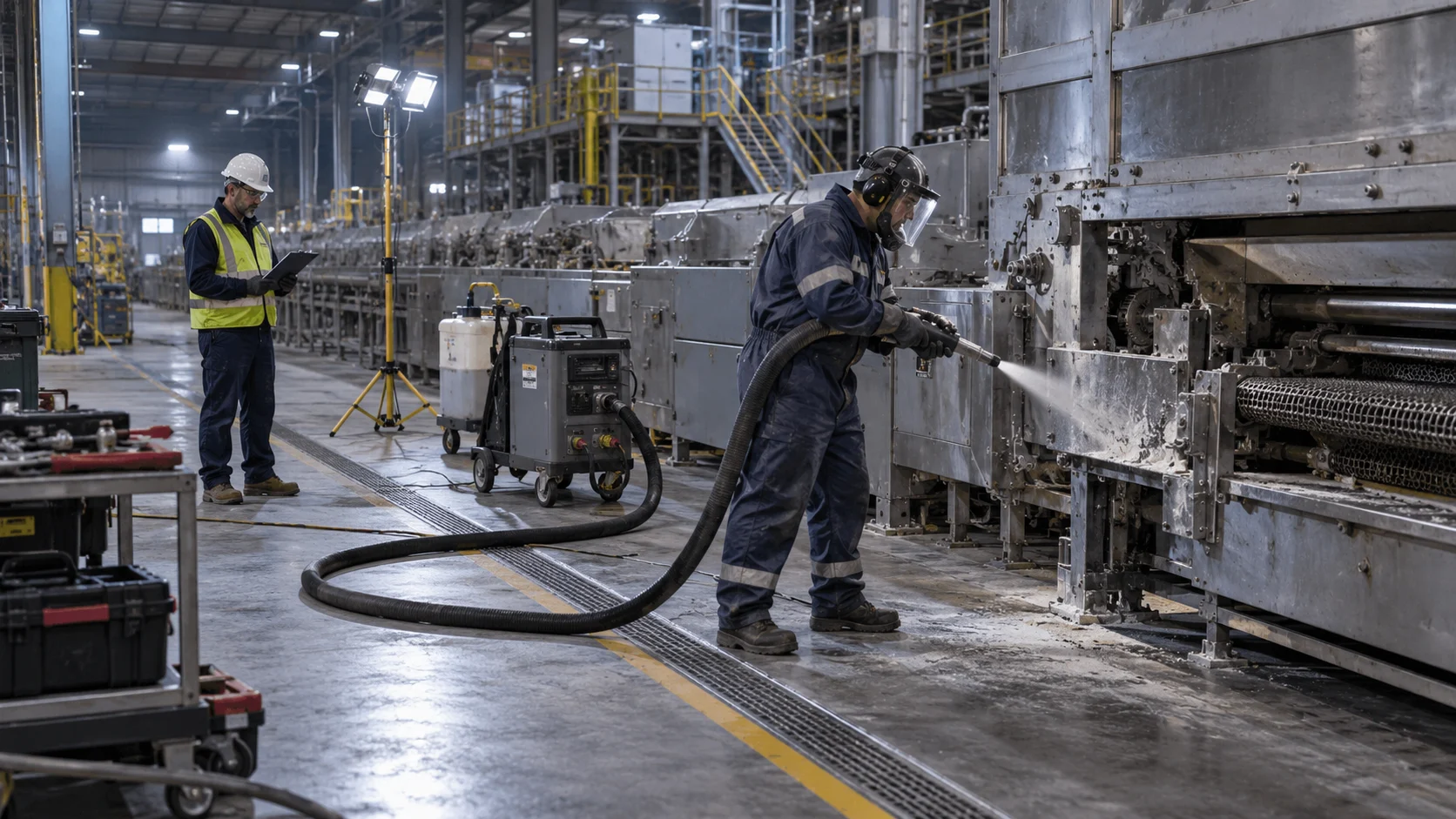
For the industrial oven cleaning window, write down the target stop time, safe access time, cleaning window, collection time, and inspection handback. Assign an owner for each stage. Allow for a change of method if the sample does not support the proposed result.
Record the boundaries
Write down the oven-room ventilation arrangement and the collection method for removed deposits. Keep inspection, repair and restart checks on the owner’s maintenance plan.
Cooling and isolation are controlled by the facility. After cleaning, collect loosened deposits before its inspection and restart checks. Use the safety and facility requirements and applications and limitations to document the ventilation and exclusion decisions for this oven.
Next step
Use the Industrial Oven and Furnace Dry Ice Cleaning service page for the full application scope. Then request a cleaning quote with photos, deposit details, location, and the available work window.
OSHA’s carbon dioxide information can help the facility review the gas exposure questions raised by dry ice use. Apply the site’s own ventilation and work-area procedures to this scope.