Dry Ice Cleaning in Food Production Facilities
Published · Updated
Learn where dry ice cleaning may fit food production equipment maintenance and how to define food-contact zones, residue control, sanitation, and equipment release.
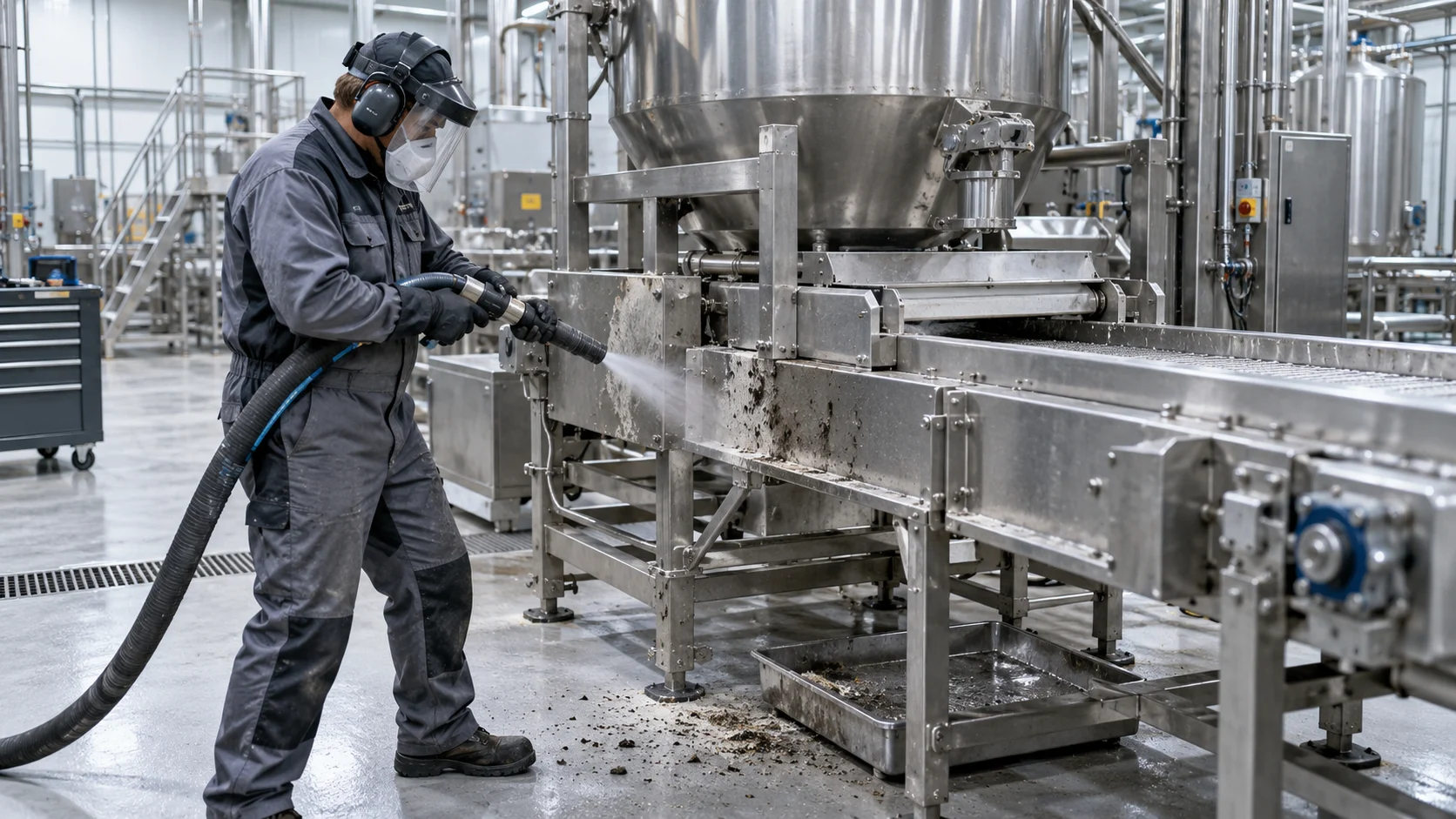
Food production cleaning starts with a defined equipment task and a clear sanitation handoff. Dry ice cleaning removes production deposits from accessible equipment. The first question is which equipment surface needs attention. The next is how the facility will protect nearby food and return the line to its required sanitary condition.
A dry process does not, by itself, establish that every food-contact surface is ready for production. Define the cleaning task, the facility’s sanitation steps, and the person responsible for release before a crew arrives. Translate food-contact zones and release duties into a machinery work list with the food equipment maintenance guide.
What if the concern is biofilm?
A suspected biofilm is a food safety and sanitation question, not merely a visible-deposit question. Identify the affected component and the plant’s written control procedure. A dry ice test can document removal of a deposit, but appearance alone cannot verify microbial control. The facility should define any sampling, sanitation, corrective action, and production-release criteria through its responsible food safety personnel. See 21 CFR 117.35 for the sanitary-operations requirements that inform the facility’s program.
Separate equipment zones before choosing the method
List food-contact surfaces, nearby non-food-contact machine parts, and external structures such as frames or guards. Identify belts, seals, coatings, sensors, exposed products, and packaging materials. Give the machine make and model and the manufacturer’s cleaning instructions. A bakery oven exterior, a conveyor frame, and a food-contact belt should not share an assumed method or handback standard.
Describe the deposit and where it comes from. Baked-on product, oil, sugar, adhesive, dry powder, and allergen-containing residue raise different questions. Identify nearby production, required isolation, disassembly, and any sanitation controls already in the plant’s written procedure.
What dry ice blasting can contribute
Dry ice blasting introduces no rinse water and leaves no persistent dry ice blasting medium. It can dislodge residue from accessible equipment, but the dislodged residue remains in the work area until collected. It may be useful where wet cleaning would add drying or water-management work. The facility still needs to compare the actual deposit, material, and cost of the complete work window.
A manufacturer overview of food and beverage applications describes potential uses. That application information does not validate a process on a specific plant’s equipment. A representative test should examine deposit removal, component condition, collection, and the downstream sanitation step.
Define food production cleaning and sanitation responsibilities
Under 21 CFR 117.35, food-contact and non-food-contact surfaces have requirements tied to contamination and allergen cross-contact. In relevant wet processing situations, food-contact surfaces must be cleaned and sanitized. The site’s food safety team should decide what inspection, sanitizing, allergen verification, or microbiological work follows a contractor’s deposit removal.
Record the boundary in the quote. State who protects food and packaging, who removes guards, who captures the residue, who inspects the equipment, and who authorizes production to resume. Do not describe a visually clean surface as proof of microbiological condition or allergen removal.
Plan a representative food production cleaning test
Choose an accessible surface and a known deposit. Document the material, coating, temperature, nearby components, and the cleaning result. If food-contact components are proposed, obtain the facility’s explicit procedure and release criteria first. Avoid extending a test result from a steel oven panel to a belt, seal, electronic control, or coated roller.
Our food processing equipment cleaning service covers the work scope and handback. The food and beverage industry page helps identify equipment types. For another waterless comparison, read our industrial cleaning methods guide.
Questions from food production teams
Can dry ice blasting be used on food processing equipment?
Dry ice blasting removes production deposits from accessible food-processing equipment. Follow the component manufacturer’s cleaning instructions and the facility’s sanitation, inspection and release procedures.
Does dry ice cleaning sanitize food-contact surfaces?
Do not assume deposit removal fulfills the facility’s sanitation program. The responsible food safety team should define and verify any required sanitizing and release steps for the specific equipment.
Schedule food production cleaning for your equipment
Send the equipment list, work zone, deposit photographs, production window, food-contact status, and facility procedures. Get a food processing equipment cleaning quote for the surfaces and work window your team needs.