Mold and Press Cleaning for Plastics Manufacturers
Published · Updated
Clean molds and presses help you make consistent parts, hold cycle times steady, and avoid scrap that eats into production. When residue is allowed to build ...
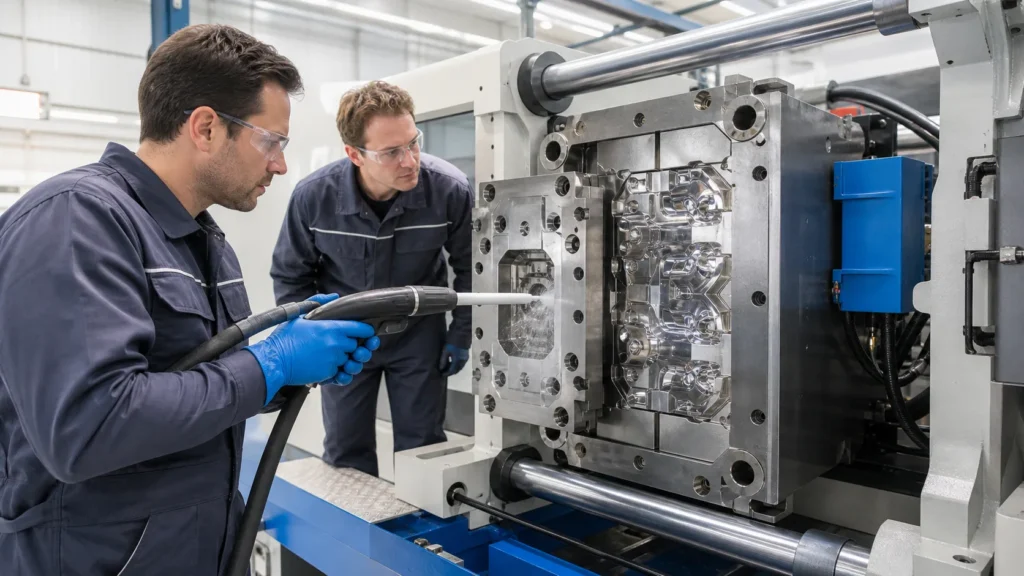
Mold and press cleaning removes production buildup so your team can inspect tooling and prepare for the next run. When residue is allowed to build up, small problems can turn into quality issues, difficult changeovers, and unplanned maintenance stops.
At Precision Dry Ice Cleaning, we work with plastics manufacturers that need a practical way to clean high-value tooling and production equipment in place. Our dry ice blasting support is available throughout New York, New Jersey, Pennsylvania, and Delaware for planned maintenance needs.
A Cleaner Path to Reliable Molding Production
Molds and presses collect contamination slowly, often between scheduled maintenance checks. Mold-release agents, resin residue, oils, grease, carbonized material, dust, and airborne debris can settle onto cavity surfaces, vents, ejector systems, platens, and nearby equipment.
Even a thin layer of buildup can interfere with the details that matter most during molding. We often see residue become more noticeable after long production runs, material changes, or repeated use of the same tool without a thorough cleaning.
Neglected cleaning can contribute to problems such as:
- Poor surface finishes or cosmetic marks on finished parts
- Flash, short shots, or inconsistent fill patterns
- Sticking parts and difficult ejection
- Venting concerns, uneven cooling, and longer cycle times
- More downtime during repairs, mold changes, or troubleshooting
Dry ice blasting gives you an in-place cleaning option that does not leave behind secondary blasting media. Instead of waiting for contamination to create a visible defect, we recommend making cleaning part of a planned approach to equipment care.
Why Mold and Press Cleaning Matters During Production
Residue on cavity and core surfaces can transfer directly to plastic parts. A mold may still run, but its output can begin to show surface flaws, inconsistent texture, or other defects that require closer quality checks. Routine plastic injection mold cleaning helps keep high-value tooling easier to inspect and better prepared for dependable production.
Vents deserve close attention as well. When vents become blocked by deposits, gases may not escape as intended during the molding process. That can contribute to burn marks, incomplete fills, inconsistent molding results, and repeated adjustments that slow the run.
The mold is only one part of the picture. Oils, lubricants, dust, and resin residue can also collect on platens, tie bars, hydraulic areas, guards, and surrounding production surfaces. Even when that debris does not touch a finished part, it can make inspections harder and raise the chance that contamination reaches more sensitive areas.
Cleaning intervals should reflect what your equipment is actually doing, not just what the calendar says. Buildup may develop faster when you are running high volumes, filled resins, recycled materials, flame-retardant compounds, or frequent product changes. We encourage you to consider material type, run length, part-quality trends, and past maintenance records before issues lead to a shutdown.
How Dry Ice Blasting Cleans Critical Surfaces
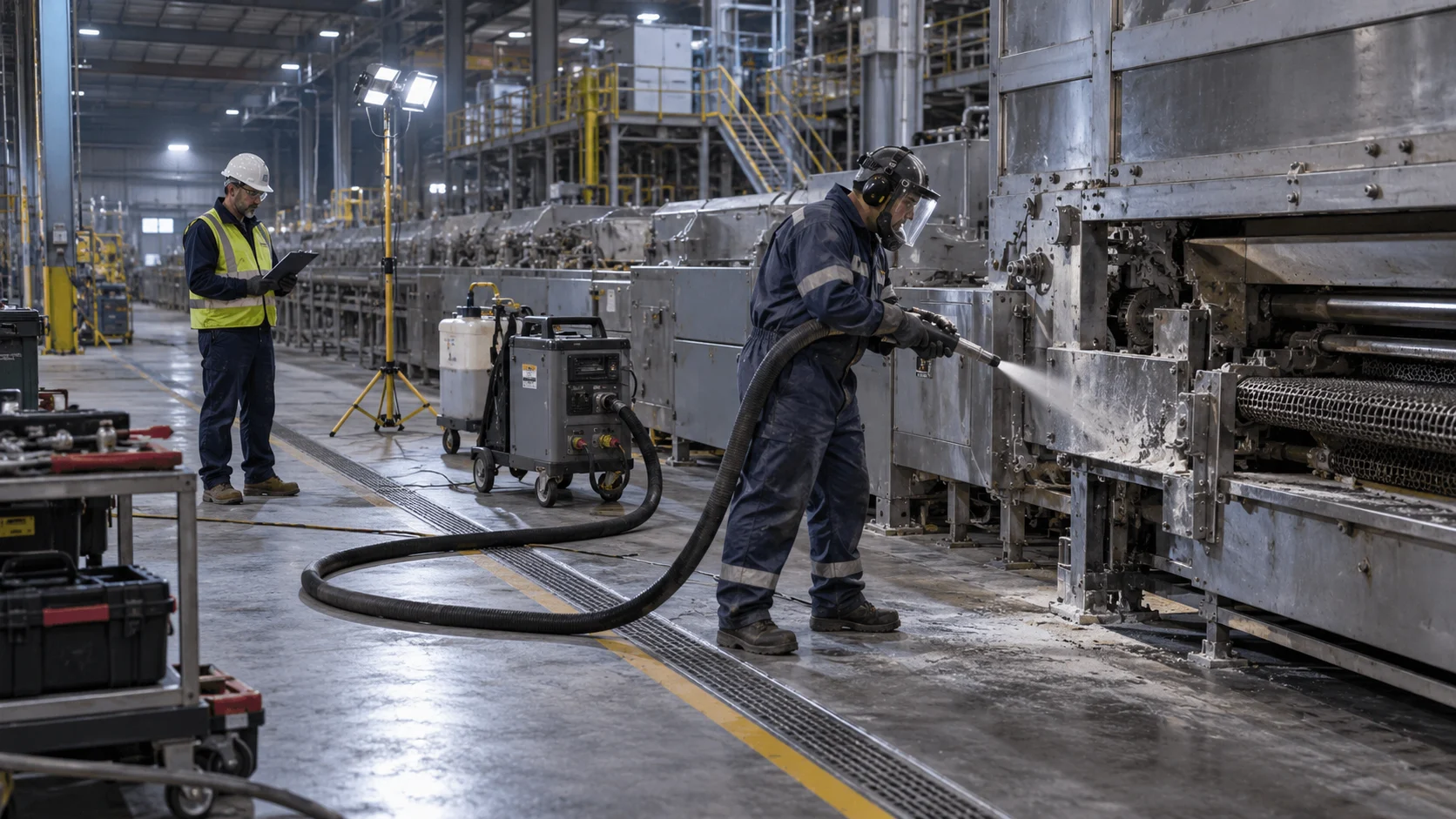
Dry ice blasting supports mold and press cleaning by directing solid carbon dioxide particles at production deposits. See Cold Jet’s mold cleaning applications for examples. The cold temperature and impact help loosen deposits. After contact, the dry ice turns into gas, leaving the removed residue as the primary material that needs to be collected.
That difference can be useful for molds, presses, and equipment with many detailed or hard-to-reach areas. Plastic injection mold cleaning often involves small vents, textured surfaces, cavities, tight spaces, and components that are not easy to access with conventional methods.
Dry ice blasting may be well suited for cleaning:
- Detailed mold cavities and core surfaces
- Vents, ejector areas, and textured tooling
- Platens, guards, and press components
- Resin residue and buildup around production equipment
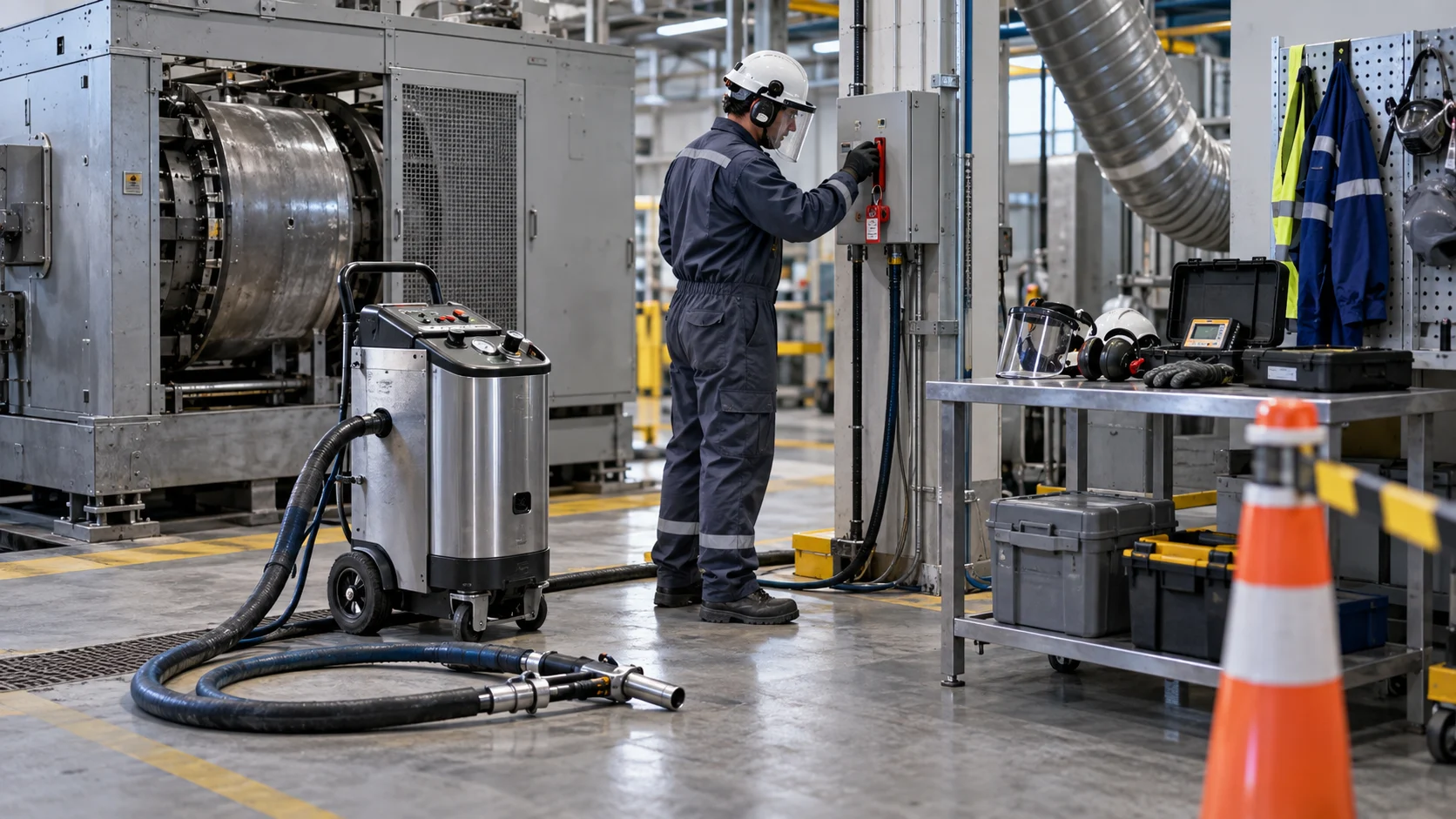
In-place cleaning can reduce the need for extensive disassembly when conditions allow. Still, the right method depends on the type of buildup, the condition of the equipment, and the manufacturer’s requirements. We assess the surface and contamination before recommending an approach.
Schedule Mold and Press Cleaning in Your Maintenance Plan
A strong maintenance plan goes beyond cleaning when a defect appears. We recommend scheduled inspections, documented cleaning intervals, and adjustments based on the condition of the tool. Plastic injection mold cleaning works best as one part of broader mold care that also includes lubrication, vent checks, cooling-channel maintenance, and wear inspections.
Production teams should watch for warning signs between planned services. Rising scrap, repeated cosmetic defects, difficult part release, longer cycle times, poor venting, visible residue, inconsistent fill patterns, and increasing downtime can all point to equipment that needs attention sooner.
Good documentation helps turn maintenance from a reaction into a repeatable process. After cleaning, record the source of contamination, the method used, downtime required, and the production results that follow. Those notes can help your production, quality, engineering, and maintenance teams spot recurring patterns and set more useful cleaning schedules.
Prepare Equipment for Fall Production Demands
Fall is often a smart time to review molds and presses before year-end production schedules become tighter. Some facilities are preparing for higher customer demand, while others are working to complete maintenance before winter weather adds complications to scheduling and logistics.
Start with the tools that support high-volume work, deadline-sensitive jobs, or parts with a history of quality concerns. Cleaning those molds and presses before the busiest stretch of production can help reduce the risk of contamination-related interruptions when there is less room in the schedule.
Planned downtime, mold changes, shift transitions, and pre-season maintenance windows can all provide an opportunity for cleaning. Building the work into an existing schedule is usually easier than responding after residue has already affected output.
Keep Contamination From Slowing Output
Cleaner tooling supports clearer inspections, more consistent parts, and better visibility into the true condition of molds and presses. When contamination is addressed before it hardens or spreads, maintenance teams can spend less time reacting to defects and more time protecting equipment performance.
A practical plan starts with watching for changes in part quality, documenting buildup, and setting cleaning intervals around your real production conditions. Treating residue as an early maintenance concern can help keep valuable molds, presses, and production equipment ready for demanding work.
Book Mold and Press Cleaning for Your Facility
Precision Dry Ice Cleaning delivers plastic injection mold cleaning that removes residue without abrasive media or lengthy disassembly. Our process helps manufacturers clean detailed tooling efficiently while protecting critical mold surfaces. Contact us to discuss your equipment and cleaning requirements.