Forestry Mulcher Cleaning Before Maintenance
Published
Plan forestry mulcher cleaning around sap, oily dust, hydraulic service points, drive housings, electrical areas and cooling packages.
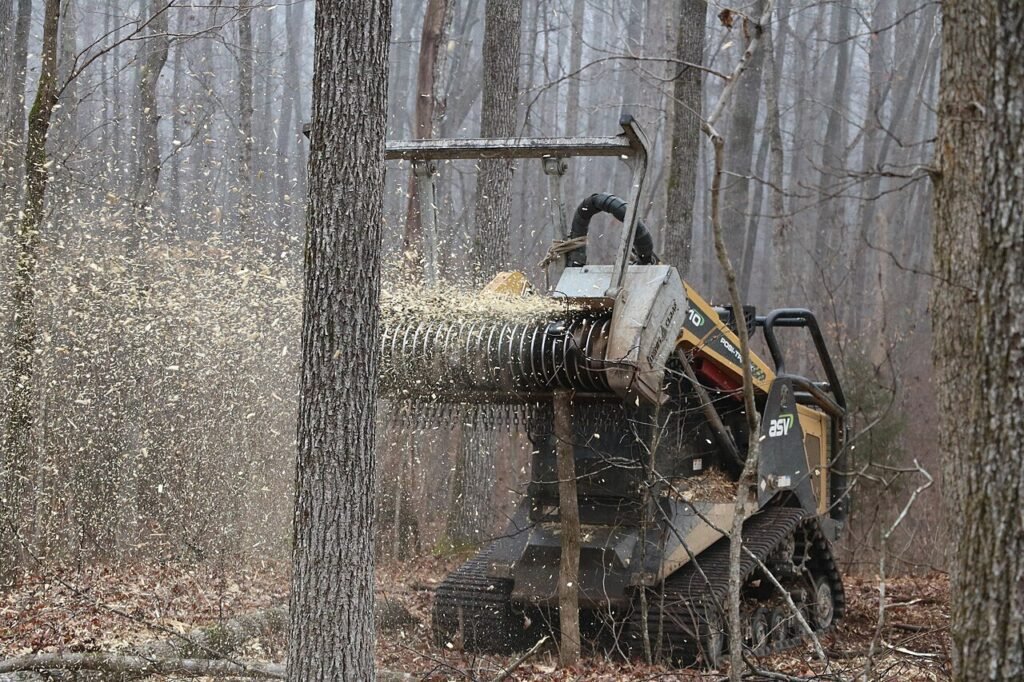
Forestry mulcher cleaning before maintenance should cover the carrier as well as the attachment. Build the visit around resin and greasy dust on service surfaces, debris in the drive housing, cooling-package access and the areas your technician needs to inspect.
Loftness recommends removing debris from the mulching head and power unit, with attention to the cooling and exhaust areas. Its guidance also connects cleaning with checks for leaks, hose wear, wiring condition and loose hardware. 6 Use the instructions for your own machine to set the inspection list.
Separate loose debris from sticky sap and oil buildup
Start by clearing loose sticks, branches and chips under the machine’s maintenance procedure. Identify packed soil separately from pitch, sap, oily dust and grease films. Mark the deposits that need detailed cleaning on close-up photos.
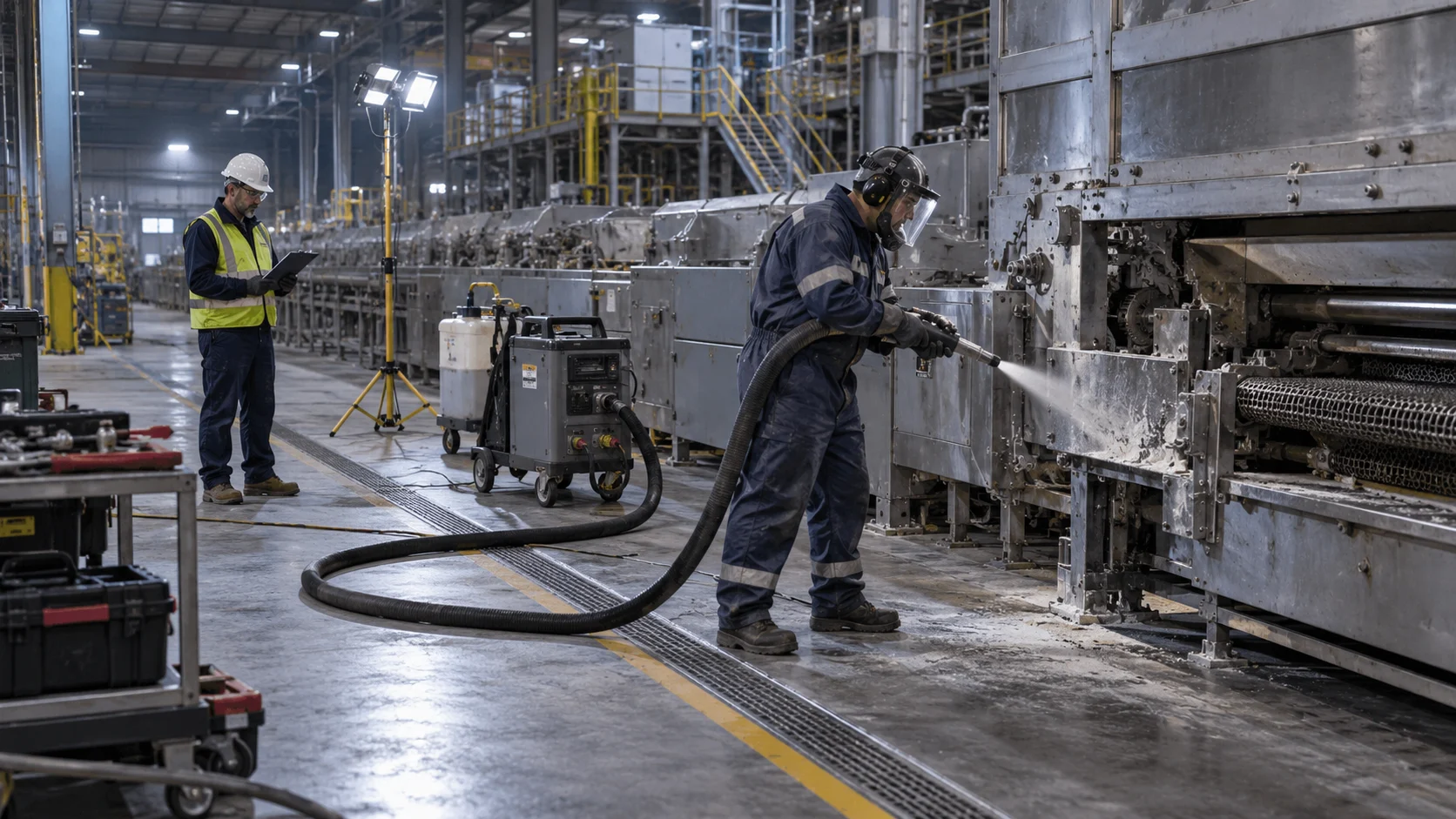
Dry ice blasting removes pitch and resin from wood-processing machinery and grease and oil from heavy equipment. Use it for the bonded residues on the agreed surfaces after the bulk debris has been cleared. 3, 2
Add the vegetation type and operating conditions to the work order. A carrier working in sappy pines should have its own residue photos and cleaning priorities rather than sharing a generic fleet description.
Write the cleaning list around access
Give each target area a name and a photograph. Mark the housing, guard, attachment frame or carrier surface that needs attention. Specify whether the cleaning is local to a repair or covers a wider part of the machine.
Ask the equipment team to identify what stays installed, what must be removed and what must be protected. Include those duties in the work order. Leave guard removal, hydraulic isolation and access preparation with the people responsible for the machine.
Include the attachment and carrier service areas
- Hydraulic service points. Mark external pump housings, valve manifolds and hose connections for residue removal before inspection.
- Drive housing. Have your maintenance team open the guard and identify the metal surfaces to clean. Keep belt condition, tension and lubrication on the technician’s list.
- Electrical areas. Identify harness routes, sensor mounts and connector exteriors. Arrange isolation and protection before cleaning.
- Engine compartment. Clear loose chips from accessible enclosures, then list the oily surfaces for detailed cleaning.
- Cooling package. Record the cooler model, blockage and fin condition. Assign its cleaning procedure separately.
Loftness connects routine cleaning with checks for leaks, worn hoses, wiring damage and loose hardware. Keep those inspection tasks with the maintenance team and record the cleaning areas in the service handoff. 6
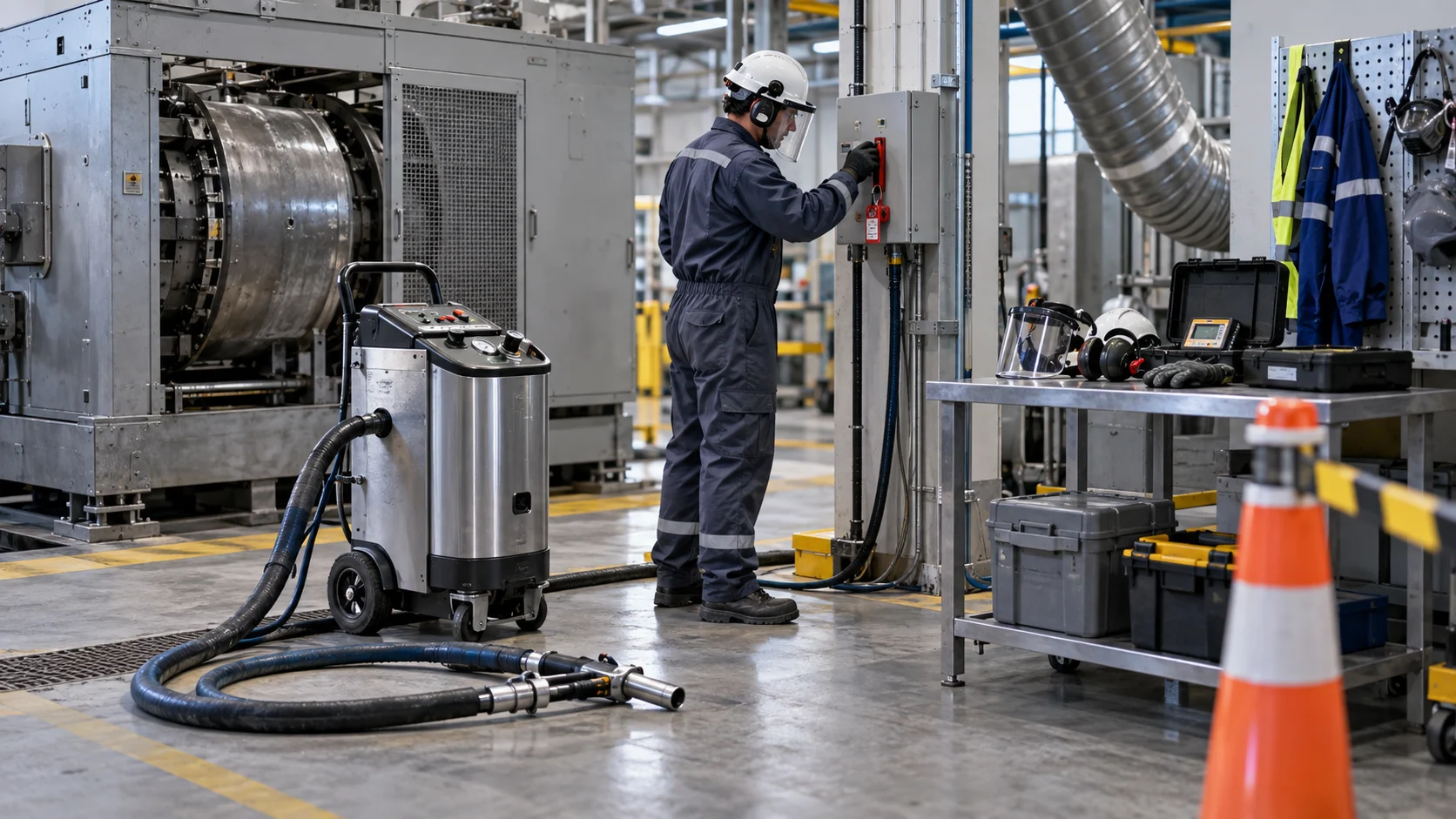
For electrical work, include grounding in the cleaning setup. Cold Jet warns that blasting can generate static discharge, and Kärcher’s cited operating manual prohibits directing the jet at live electrical equipment. 9, 10
Give radiators and oil coolers a separate task
Photograph the cooler screen, both accessible faces of the core and any fin damage. Fecon describes chips, dust and sap blocking a mulcher’s cooler; its guidance directs compressed-air cleaning outward from the clean-air side. Follow the instructions for the actual cooling package. 4
Include dry ice core cleaning only where the cooler’s procedure permits it. Keep screens and shrouds on the work list, and refer damaged fins, leaks or fan concerns to the equipment team. Record which parts of the cooling package were cleaned before returning the machine for inspection.
Record the condition before handing the machine back
Use matching photos of the agreed areas before and after cleaning. Note any areas that remain inaccessible, any deposits left in place and any additional work referred to the equipment team.
The technician should complete the inspection, repair and lubrication tasks in the machine’s maintenance procedure. Keep the cleaning record with the service record so the next visit starts with the same area names and photographs.
Build a repeat cleaning list
After the first visit, keep the task list short and machine-specific. Add the asset ID, operating hours, target surfaces, preparation duties and preferred cleaning window. Review the list when attachments, working conditions or maintenance priorities change.
For recurring work, see scheduled maintenance cleaning. For the service scope, see forestry equipment dry ice cleaning.
Request forestry equipment cleaning with photos of the machine, your location and the date it is due for service.
Related forestry equipment cleaning
- Forestry Equipment Dry Ice Cleaning
- Dry Ice Blasting vs Pressure Washing for Forestry Equipment
- Forestry Equipment Cleaning Before Repairs or Resale