CLEANING APPLICATION
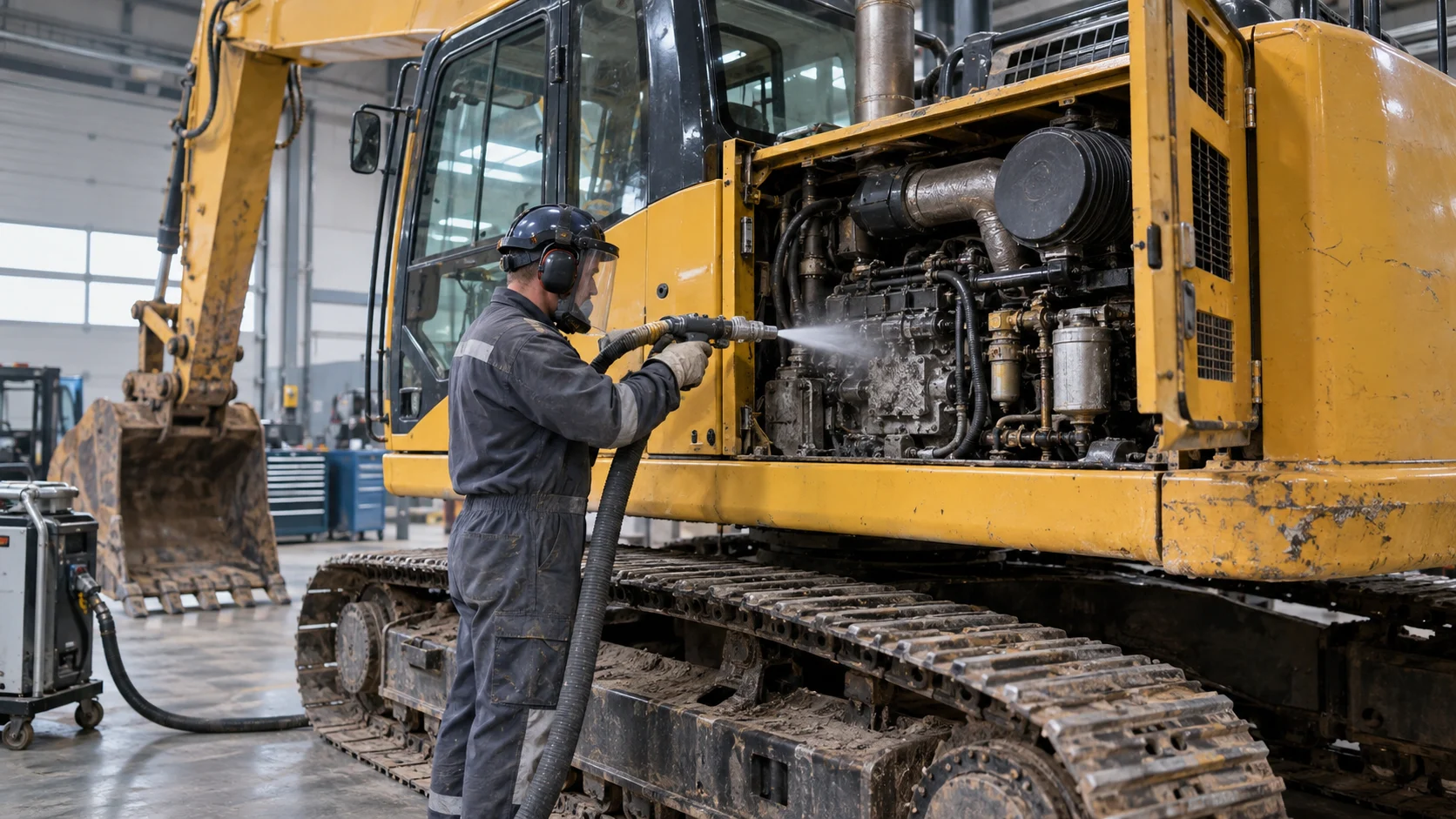
Construction and Mining Machinery and Equipment Dry Ice Cleaning
Construction and mining equipment dry ice cleaning for grease, oil and buildup on machinery, fleet assets and quarry equipment.
We remove grease, oil and production buildup from construction, quarry and mining equipment. Book a cleaning visit for individual machines, a fleet or equipment prepared for maintenance inspection.
Start with the result you need. That may be exposing inspection points, cleaning external components before repair, or defining a repeat cleaning scope. Send the equipment type, buildup, and location to request a cleaning quote. For paving machinery, organize seasonal deposits and access with the end-of-season asphalt cleaning plan.
Deposits removed from construction and mining equipment
We remove grease, oil and dirt bonded to accessible housings, frames, guards and service areas on construction, quarry and mining machinery. Clear stubborn buildup from service areas before equipment inspection and maintenance.
Operational benefits
- Expose fittings and service areas for the maintenance team’s inspection.
- Clean individual machines or fleet groups at the released work location.
- Remove deposits without a water wash or abrasive grit before servicing.
Non-toxic dry ice and eco-friendly cleaning benefits
Dry ice is a non-toxic cleaning medium. Dry ice blasting cleans with solid CO₂ and compressed air without detergents, solvents, wash water or added abrasive grit. Its environmental benefits include no chemical rinse water and no spent blasting media from the blasting step.
The dry ice turns into gas. Removed deposits still require collection, and ventilation and protective equipment remain part of the cleaning setup.
Heavy equipment dry ice cleaning applications
Book construction and mining equipment cleaning by machine or fleet. Group the assets below by maintenance priority and the deposits to remove.
Construction machinery and earthmoving equipment
For excavators, backhoes, bulldozers, skid steers, wheel loaders, and similar equipment, identify the areas needing attention. Describe engine compartments, chassis surfaces, accessible undercarriage sections, and external hydraulic components separately. Include the condition of paint, hoses, seals, and protective coatings.
Quarry and mining machinery
For fixed processing plants, surface mines and aggregate operations, use our dedicated mining, quarry and aggregate equipment cleaning page. It covers crushers, screens, conveyors, haul trucks and the maintenance sequence across several plant assets.
Cold Jet identifies haul trucks, loaders, crushers, mills, screens, and conveyors among its mining applications. For your project, distinguish the mobile fleet from fixed processing equipment. List accessible housings, frames, drives, and other surfaces to clean.
Site support and material handling equipment
Discuss generators, compressors, pumps, forklifts, and lifting equipment as individual assets. Specify external mechanical cleaning separately from electrical components, cooling fins, and other sensitive areas. Include guard removal and access duties in the scope.
Define the buildup before choosing a cleaning method
Send close-up photos of grease, oily grime, carbon or other buildup, plus an overall view of the machinery. Identify the areas to clean and the maintenance or inspection work planned afterward.
Remove bulk mud, packed earth, stone and loose material before the cleaning visit. Hardened concrete, mineral scale, cured coatings and heavy corrosion need separate removal procedures.
Dry ice changes to gas during cleaning, so the process does not leave spent blasting grit. Removed dirt, grease, and other contamination still need collection and handling. Review dry ice blasting applications and limitations when comparing methods.
Prepare machinery for inspection, servicing, or presentation
Expose agreed inspection points
Identify the joints, housings, fittings, or other areas your team needs to inspect. Then define how clean each surface must be. Cleaning is a preparation step; your maintenance or inspection team remains responsible for evaluating leaks, wear, cracks, and other defects.
Plan component service and repair
For overhaul or component replacement, list the external surfaces to clean before your technicians begin. Agree on protected openings, components to mask, and any parts your team must remove. Discuss internal component cleaning as a separate scope.
Coordinate fleet presentation and rental returns
For sale preparation, rental return, or a fleet condition review, specify the surfaces to present and document. Use the owner’s inspection criteria to define the result. Cleaning alone does not establish mechanical condition or acceptance by a buyer or rental company.
Protect sensitive areas and plan equipment isolation
Before work, have your equipment team define shutdown, stored-energy control, and safe access. Include raised attachments, suspended loads, hydraulic pressure, rotating components, and batteries in that review. Keep cleaning within the approved work area and equipment condition.
Identify exposed connectors, sensors, bearings, seals, labels, air intakes, and damaged coatings before selecting the test area. Review manufacturer limits for pressure, temperature, and direct cleaning. Also agree on protection for nearby surfaces and where removed material will go.
For control cabinets, electric motors, or electronic modules, use our electrical and electronic equipment dry ice cleaning page. Plan those scopes around de-energized equipment and the required technical review.
Site preparation for construction, quarry, and mining work
Tell us whether the equipment is at a jobsite, fleet yard, maintenance shop, quarry, or mine. Include the work-area dimensions, vehicle access, available compressed air, and preferred cleaning location. Review ventilation, CO2 monitoring needs, noise, residue collection, and separation from nearby work.
For a mine-site request, provide the operator’s contractor qualification requirements, induction process, and site rules before scheduling. Identify underground locations, confined spaces, combustible dust, or restricted areas at the project-review stage. These conditions require a separate access and work-method assessment.
Review safety and facility requirements with the person responsible for site preparation. Define who provides access, isolation, lifting arrangements, and approval to return the equipment to service.
Schedule a single asset or recurring fleet cleaning
For one machine, request a scope based on the actual asset and deposit. For multiple units, group equipment by type, condition, and access needs. This gives the cleaning crew a defined equipment list and work sequence.
Connect fixed machinery to planned shutdown cleaning. For fleets and repeat jobs, discuss scheduled maintenance cleaning using agreed surfaces and inspection points. Set service intervals with your maintenance team rather than assigning the same interval to every machine.
For surrounding production assets, include industrial machinery cleaning in the review. See dry ice cleaning pricing for the information needed to scope a quote.
Construction and mining equipment cleaning questions
Can dry ice blasting replace pressure washing for heavy equipment?
Choose the method for the deposit and the cleaning objective. Discuss dry ice for surface contamination where adding rinse water or grit is undesirable. Scope bulk earth removal and any separate washing or preparation work before the detailed cleaning stage.
Can you remove grease without stripping the paint?
Request a test on a representative painted area. Identify weak paint, previous repairs, and any finish that must remain intact. Set acceptance criteria before wider cleaning rather than assuming all paint and coatings will respond alike.
Can construction equipment be cleaned at the jobsite?
Submit the location and access details for review. Identify the cleaning area, equipment isolation, compressed-air arrangements, ventilation, and residue handling. Confirm the site plan and availability before scheduling a visit.
Does cleaning repair leaks, corrosion, or damaged components?
Cleaning does not repair mechanical defects. Define inspection, repairs, coating work, and return-to-service checks separately with your equipment team. State if the cleaning is preparation for one of those tasks.
What information is needed for a quote?
Start with the project ZIP code, machine type, number of units, buildup, and preferred timing. Photos and technical details can follow. Include the intended result and whether the work is a single project, shutdown task, or recurring maintenance request.
Planning forestry and mulching equipment cleaning
For logging and mulching machinery, use the forestry equipment dry ice cleaning scope to plan access around radiators, coolers, hydraulic components and electrical connections.
Get a heavy equipment cleaning quote
Discuss heavy equipment dry ice cleaning for your construction machinery, quarry plant, or mining assets in NY, NJ, PA, or DE. Get a cleaning quote, or discuss a test cleaning when the surface or deposit needs evaluation first.
Process reference: Cold Jet mining equipment applications.
LET’S LOOK AT YOUR PROJECT
Need dry ice
cleaning?
Call for dry ice cleaning services in NJ, NY, PA, or DE. Tell us what needs cleaning and when you need the work done.
NY · NJ · PA · DE / Businesses and private owners