Planning Dry Ice Cleaning for Municipal Fleets and Public Works Equipment
Published
A proposed planning framework for public works teams organizing equipment cleaning around inspection needs and fleet availability.
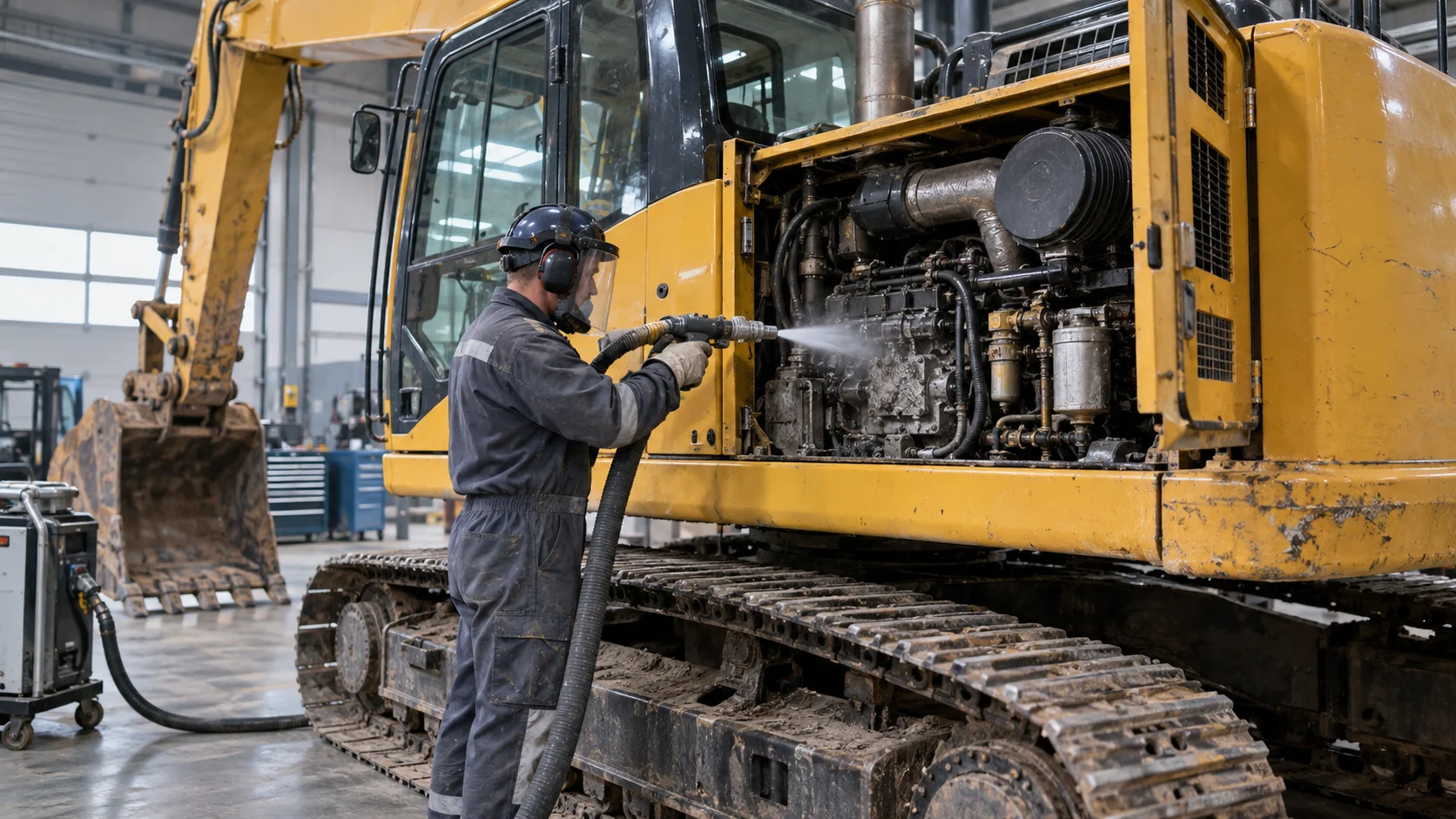
Municipal fleet cleaning should begin with a list of assets and the reason each one needs attention. An inspection area, an engine compartment, and an auction-preparation project call for different work. Define those outcomes before grouping equipment into a cleaning visit.
Use this guide as a proposed planning framework for your department. Adapt it to the equipment instructions, site procedures, and purchasing requirements. For the service overview, see municipal and public works dry ice cleaning.
Start municipal fleet cleaning with an asset register
Give every vehicle or piece of equipment a recognizable identifier. Add its location, the person who controls access, and the next date it is needed. Describe the areas to clean in terms a crew and an inspector can locate.
Separate the visible deposit from the underlying condition. For example, note oily buildup around an accessible housing without assuming that cleaning repairs a leak. If the objective is an inspection, ask the technician to mark the areas that need exposure.
| Asset-register field | What to record |
|---|---|
| Asset and location | Fleet number, equipment type, department, and staging location. |
| Cleaning objective | Named inspection point, selected deposit removal, or presentation goal. |
| Surface limits | Paint, protective coating, labels, seals, wiring, and excluded areas. |
| Availability | Release time, required handback, and priority relative to other assets. |
| Acceptance | Named inspector and the agreed way to assess the cleaning result. |
Group similar work without hiding differences
Group assets by deposit, access, and surface requirements. Two vehicles of the same model may have different coatings, repairs, or buildup. Keep those differences in the scope instead of treating a fleet number as proof of identical cleaning conditions.
Use the relevant application page to expand the brief. Review engine-bay cleaning, undercarriage cleaning, or heavy-equipment cleaning. For paving assets, add the details requested on the asphalt machinery page.
Then divide the list into required and optional work. Identify which assets can move to a later visit if the test changes the estimate. Give the coordinator authority to select from that agreed priority list.
Choose a representative test area
Select a test area that includes the actual deposit and the surface you need to preserve. Identify any nearby feature that affects access or protection. Agree on the inspection method before the first cleaning pass.
Record the starting condition, the result, and any deposit that remains. Where permitted, use photographs of the same area before and after the test. Note surface differences that limit how widely the result can be applied.
Arrange a cleaning test before the main visit when suitability remains unresolved. If the required result is heavy-corrosion removal, soluble-salt removal, or preparation for a coating specification, request a separate method review. Do not assume the equipment-cleaning scope covers those objectives.
Assign preparation before the cleaning window
Identify who parks, supports, isolates, and releases each asset. Assign lifting and panel removal where needed. State whether the department or another contractor performs those tasks, and include the required personnel in the schedule.
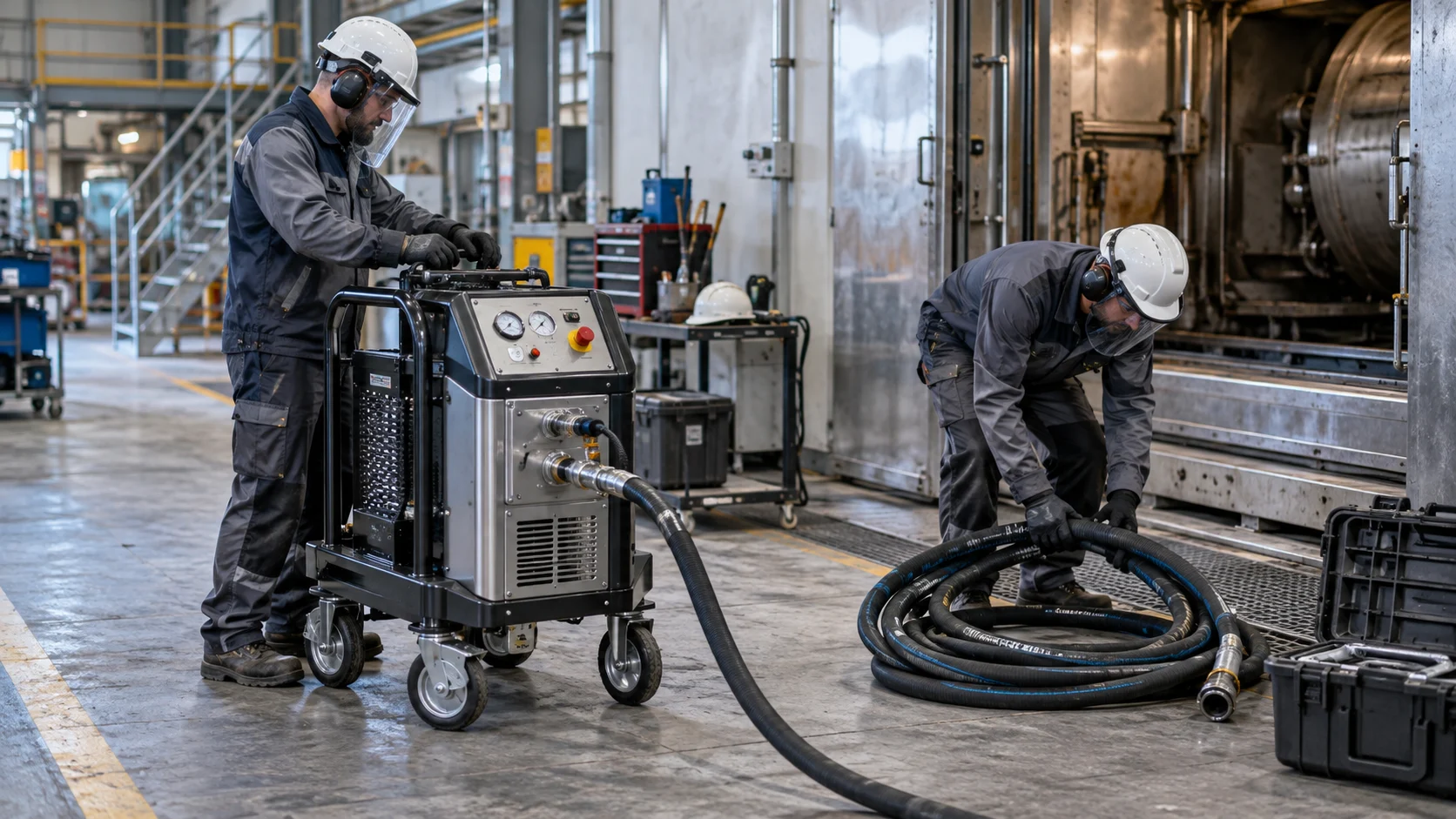
Also check delivery access, hose routes, compressed-air arrangements, staging space, and collection equipment. Identify nearby workers or public areas that affect the work zone. Review ventilation, CO2 monitoring, noise, and the handling of removed material.
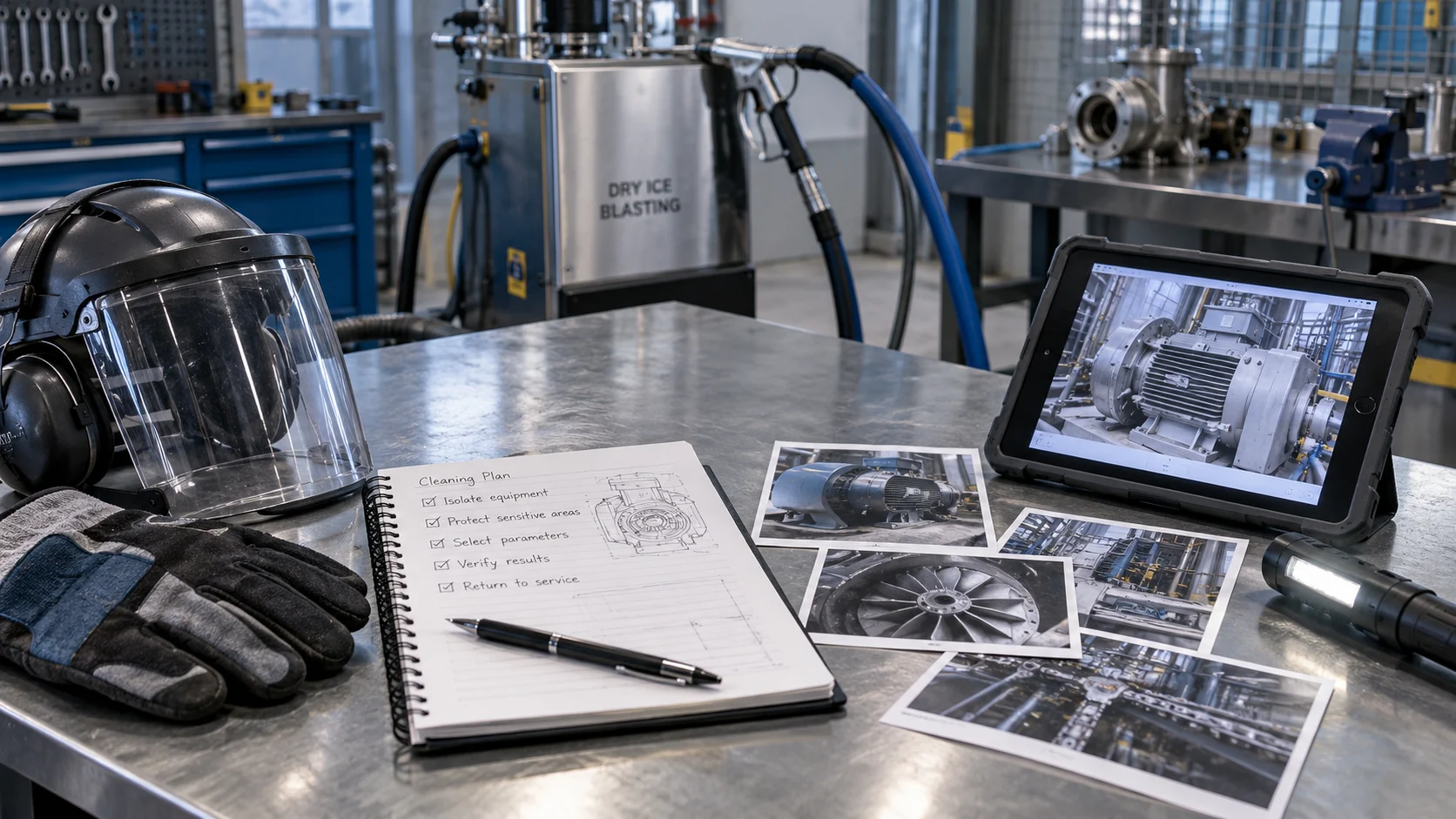
Use the Facility Checklist to organize these decisions. Keep open questions visible until the responsible person resolves them.
Build a schedule that includes the full handback
Plan from the required return-to-service time backward. Include setup, test approval, cleaning, collection, inspection, and the owner’s technical tasks. Avoid treating the active blasting estimate as the total time an asset is unavailable.
| Stage | Decision to settle |
|---|---|
| Release and setup | When can the crew access the asset and establish the work zone? |
| Test review | Who accepts the test and authorizes the remaining scope? |
| Cleaning sequence | Which asset goes first and what work is optional? |
| Collection and acceptance | Who checks the cleaned surfaces and the work area? |
| Department handback | Who completes reassembly, mechanical checks, and release? |
Enter your estimates in the Cleaning Window Planner. Treat its output as a planning aid for review, with an agreed contingency and a latest stopping time.
Define collection and purchasing responsibilities
Name the party responsible for collecting removed material and arranging its disposal. Identify the deposit as far as the department can, and provide available records for unknown coatings or contamination. Include these responsibilities in the request for quotation.
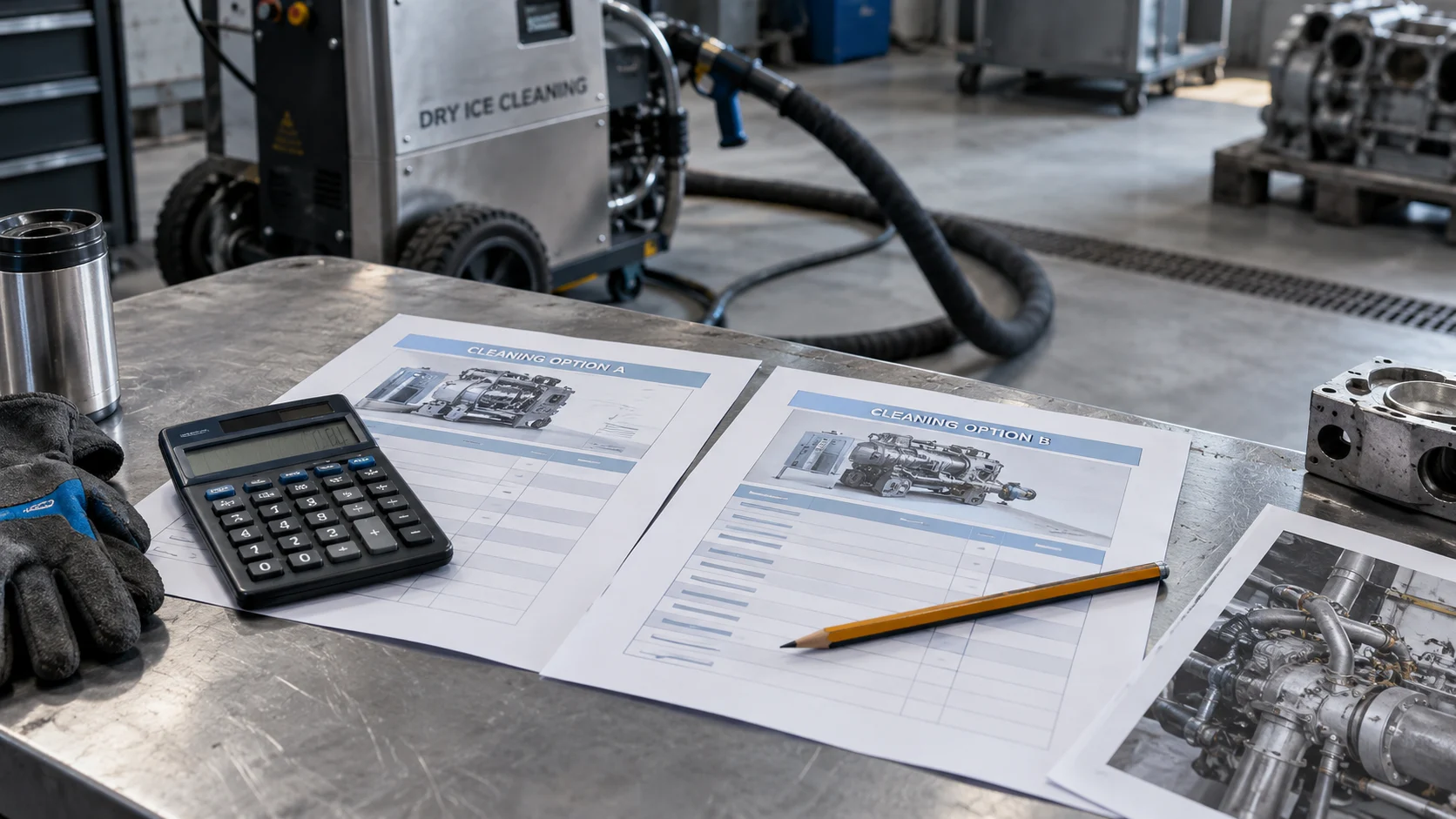
Ask purchasing to compare the same asset list, access assumptions, exclusions, and acceptance record. Use the government equipment cleaning scope-of-work guide to organize the request. Company identifiers are listed on the government contracting page.
Use the first visit to plan repeat work
Keep a record of the completed assets, observations, and any tasks moved to a later visit. At the next inspection, review buildup at the same locations. Note changes in use, storage, repairs, or surface coatings.
Discuss recurring maintenance cleaning using that record. Set future intervals around the observed condition and the department’s priorities rather than a fixed assumption for every asset.
Prepare your municipal fleet cleaning brief
Collect the asset register, approved photographs, inspection objectives, and required dates in the Project Brief Builder. Then request a municipal project review for equipment in New Jersey, New York, Pennsylvania, or Delaware.