Cleaning Brewery Canning and Bottling Equipment
Published
Brewery canning and bottling equipment cleaning should map the line from container handling through labeling and packing.
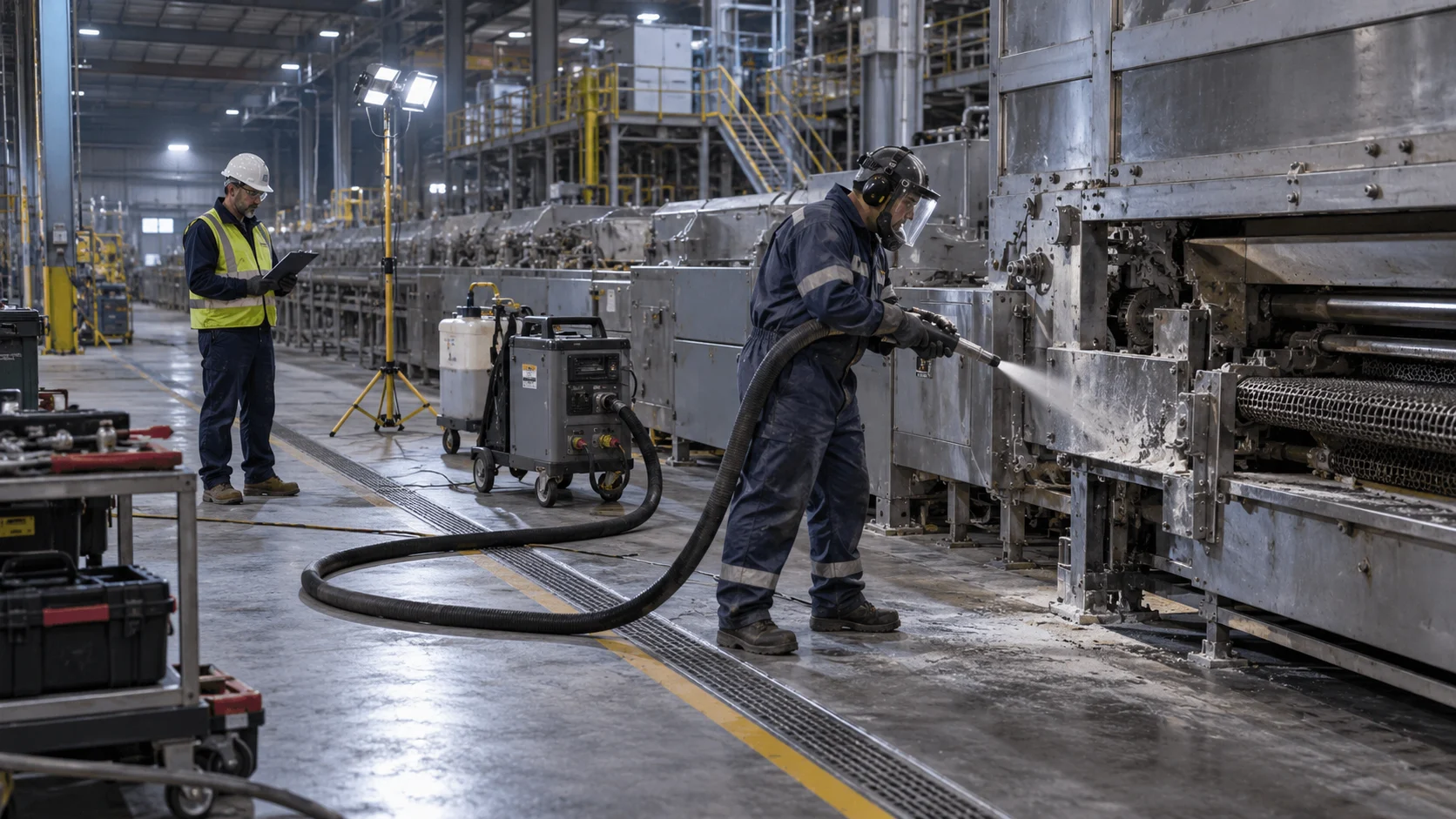
Brewery bottling equipment cleaning and canning-line maintenance should map the line from container handling through labeling and packing. Attached product residue, grease and adhesive need station-specific instructions so deposit removal supports maintenance inspection and setup.
Brewery bottling equipment cleaning stations
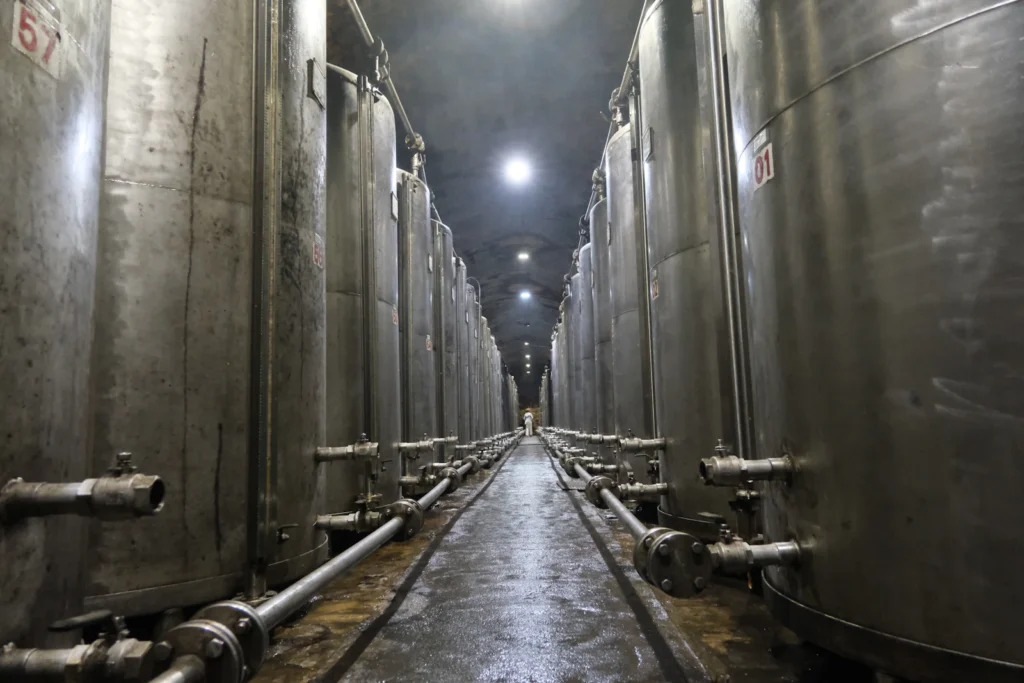
List accessible filler exteriors, conveyor frames, guides, rollers/orienters, labelers and packing machinery. Include nesters and de-nesters where present. Photograph the residue and the clearance needed for access. Keep product-contact internals and the brewery’s internal cleaning cycles identified under their own instructions.
Coordinate the handoff with the facility’s sanitation program. The FDA overview of food CGMPs provides related regulatory background.
Product and adhesive tasks in brewery bottling equipment cleaning
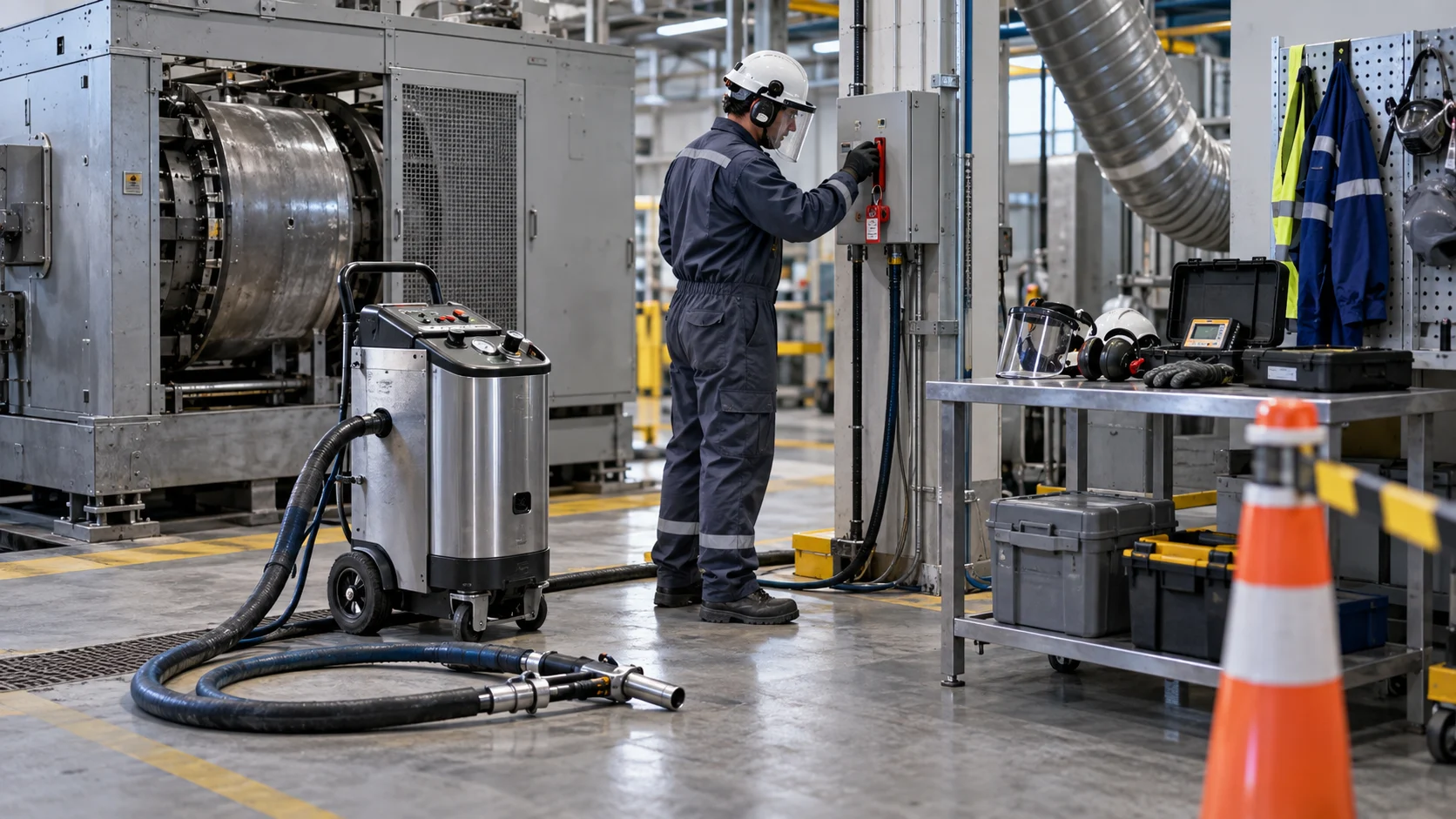
Mark attached production residue, machine grease and label adhesive by station. Glue splash around applicators needs its own exterior-cleaning scope. Belts, seals, bearings, sensors and electrical components follow their maker’s requirements. Maintenance defines which guards or covers open and which components remain protected.
Use the stop for a connected inspection
Dry-ice blasting clears the specified deposits without adding wash water or cleaning solvents during that step. Collect dislodged material before presenting surfaces for inspection. The brewery completes lubrication, reassembly, container-line setup and sanitation under its procedures. Record remaining work by asset so the next crew has a clear handoff.
Equipment and handoff map
| Station or step | Cleaning focus | Next responsibility |
|---|---|---|
| Filler and vessel exteriors | Attached production grime | Internal cleaning cycles kept separate |
| Container handling | Product buildup and grease | Guides, rollers, belts and sensors |
| Labeling and packing | Label adhesive and glue splash | Exterior scope and line setup |
Prepare the cleaning visit
- Line map and station numbers
- Residue and access photographs
- Isolation and component protection
- Internal cleaning, sanitation and restart owners
The operational benefit is a line-wide maintenance handoff built around the deposits that need attention. Deposit removal and internal clean-in-place procedures have different scopes. The brewery’s sanitation and quality teams retain responsibility for product-contact verification and release.
Related services and planning resources
Brewery, distillery and winery equipment cleaning connects these tasks to the full industry cleaning scope. Read the related equipment-maintenance guide and use the shutdown cleaning window planner to organize asset availability.
For service support, see food processing equipment cleaning, packaging machinery cleaning and request a cleaning quote. Precision Dry Ice Cleaning provides mobile service in NY, NJ, PA and DE.
For media requirements and agency-source scope, read the FDA, EPA and USDA reference guide.