Dry Ice Cleaning Comparison for Industrial Equipment
Published · Updated
Compare dry ice, manual, wet, and abrasive cleaning for industrial equipment. Match the method to the deposit, surface, work window, and inspection objective.
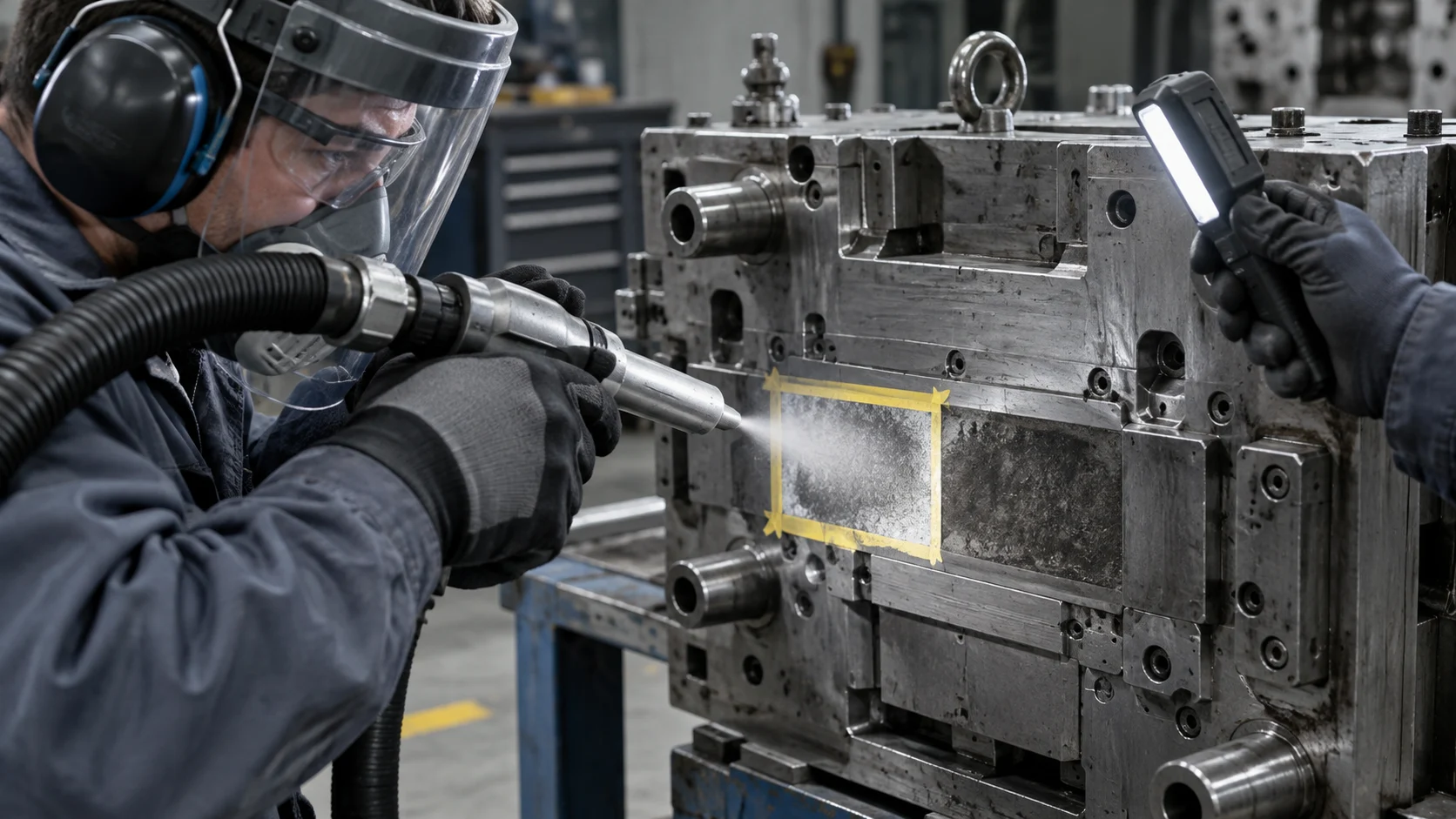
A dry ice cleaning comparison should start with the equipment, the deposit, and the condition needed after cleaning. The right question is which method fits that task. A process that suits a robust machine frame may be unsuitable for a coating, a detailed tool, or an area with restricted access.
Planning work at your site? Explore our mobile dry ice blasting services. If you are comparing the service names, start with Dry Ice Blasting vs. Dry Ice Cleaning.
Use this guide to organize a discussion with your maintenance team and cleaning provider. Compare the full job, including preparation, cleaning, collection, inspection, and return to service. Where the response is uncertain, agree on a representative test. Clarify the process names before comparing methods with the dry ice blasting and cleaning terminology guide.
Waterless industrial cleaning comparison
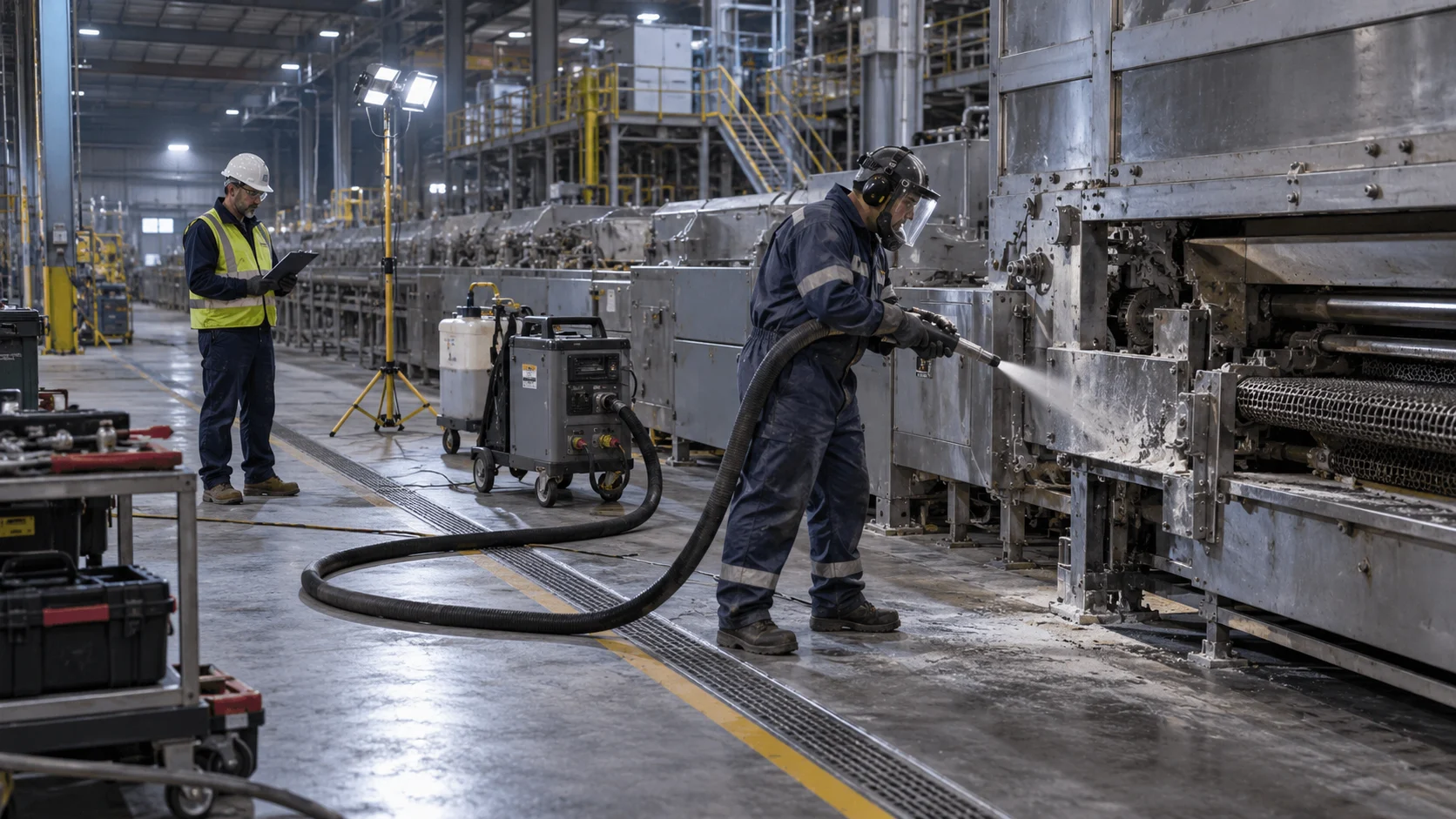
A waterless method may reduce rinse-water handling and drying work, but the whole maintenance sequence matters. Compare dry ice, manual dry cleaning, chemical wiping, and abrasive media against the same deposit, surface, access, residue-collection plan, and handback requirement. Dry ice itself sublimates; removed contamination still needs capture.
For food production, review food-contact zones and sanitation handback. For a production tool, see injection mold cleaning methods. Get a dry ice cleaning quote for the equipment and maintenance window you specify.
What a dry ice cleaning comparison reveals
Dry ice blasting uses solid carbon dioxide particles and compressed air. The dry ice becomes gas, so there is no spent dry ice grit to collect. Removed contamination still needs an appropriate collection and disposal plan. For more on the process, see Cold Jet’s dry ice blasting overview.
Evaluate it for production deposits when adding water or persistent blasting media would complicate the task. Surface condition, deposit response, nozzle access, and cleaning settings still matter. Your maintenance team handles repairs and approves the asset for production.
Dry ice cleaning comparison by project need
| Approach | When to evaluate it | Questions before choosing |
|---|---|---|
| Dry ice blasting | Deposits on suitable equipment where avoiding added water or spent blasting grit is useful | Does the deposit release? What finish stays? Are air, access, ventilation, and collection arrangements suitable? |
| Manual cleaning | A small or accessible task where the approved tools and cleaning product fit the component | How much preparation and hands-on time is needed? What materials remain to be collected? |
| Water or steam-based cleaning | A task whose surfaces and facility arrangements permit the selected wet process | Where does the liquid go? What must be protected? Which drying and inspection steps follow? |
| Abrasive cleaning | A task that calls for a specified material-removal or surface-preparation result | What profile or finish is required? Which media, containment, and cleanup arrangements are specified? |
This is a selection framework, not a statement that one method is best for every deposit or material. Cold Jet identifies these approaches as alternatives in its cleaning-method comparison. Therefore, choose the method using the equipment restrictions and the actual job requirements.
Separate deposit removal from surface preparation
Write down what should come off and what should remain. For a mold, that may mean a production deposit and a defined tool finish. On machinery, it may mean accessible grease or buildup before inspection. For a refinishing project, the next coating system may specify a different preparation result.
Do not judge the method only by how clean a small area looks. Record the condition under consistent lighting and use the inspection agreed for the component. Surface damage, wear, or an unresolved mechanical issue belongs in the handback record as a separate item.
Include the work window in your dry ice cleaning comparison
Include the time to make the asset available, remove or protect components, establish the work area, clean, collect residue, inspect, and return the equipment to its owner. Also identify any delay between these stages. An equipment-cleaning quotation and a maintenance shutdown schedule should use the same work boundaries.
For your own comparison, record the observations in the dry ice and manual cleaning cost worksheet. Avoid applying another company’s time savings or labor assumptions to an untested asset.
Plan the surroundings as well as the surface
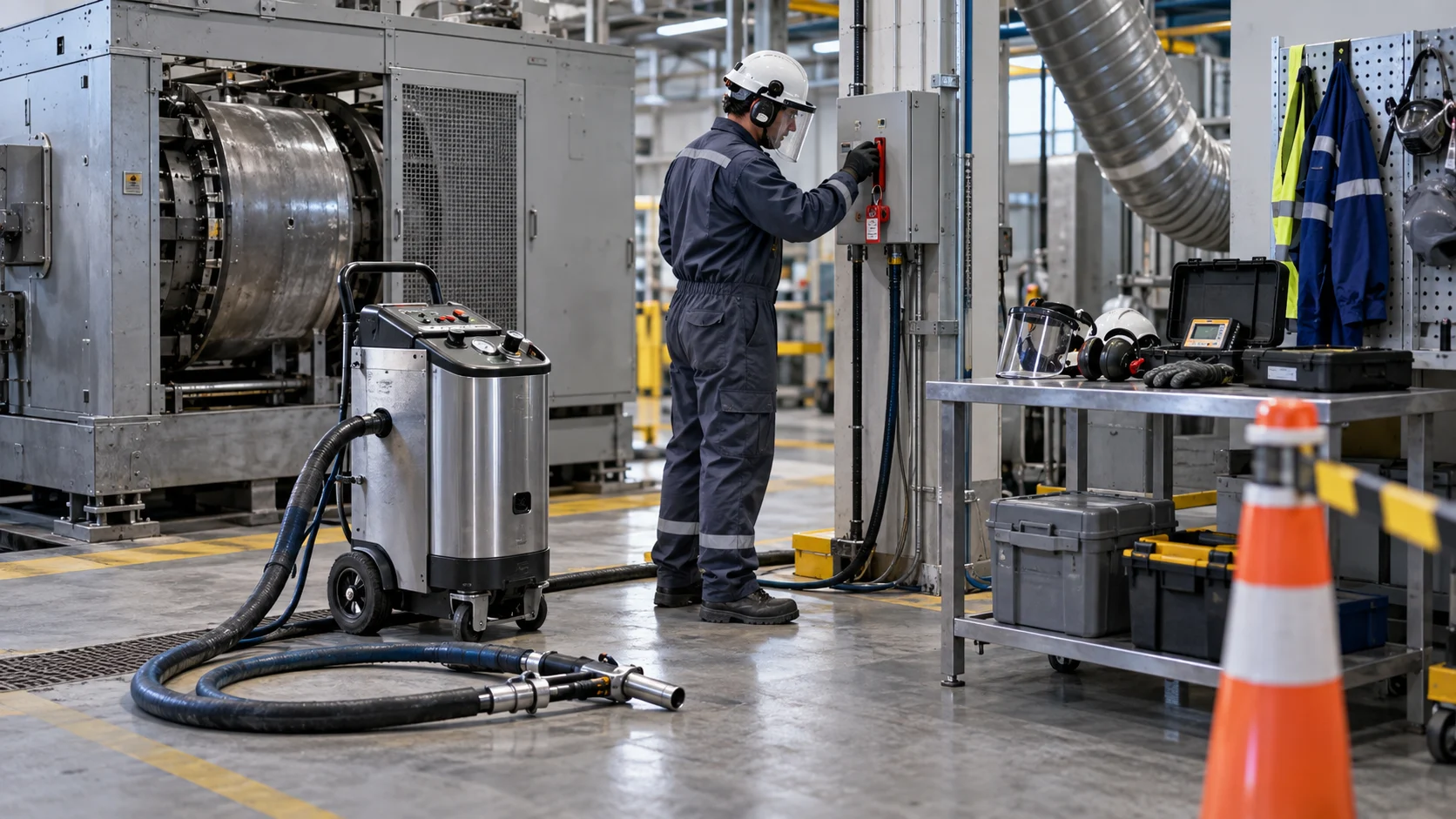
Dry ice releases carbon dioxide. The NIOSH carbon dioxide reference identifies inhalation and cold-contact hazards. Account for the work area, ventilation assessment, nearby activity, noise, and the removed residue in the site plan. No process label replaces a facility-specific assessment.
Use the equipment and site setup checklist to collect the actual machine, air-supply, access, and responsibility information. For wet or abrasive alternatives, ask the relevant provider to document its own preparation and collection arrangements on the same basis.
Use a representative test to resolve uncertainty
Choose an area that reflects the real deposit, finish, and access conditions. Agree on the cleaning objective, inspection method, photograph permissions, and any charge before the test. Record the starting condition and outcome, including any areas that need a different approach.
Use the Dry Ice Cleaning Application Review to organize the surface, deposit, and access questions for your representative test.
For recurring work, use the result to build a named maintenance asset register. For a fixed outage, connect the task to the shutdown work package. A successful test of one condition should not be presented as proof for every surface or deposit.
Choose the next step for your equipment
Precision Dry Ice Cleaning serves New York, New Jersey, Pennsylvania, and Delaware. Explore industrial machinery cleaning, injection-mold cleaning, or another cleaning application to identify the relevant scope.
Send the equipment details, deposit, location, photographs, and intended result through our cleaning quote form. If suitability remains uncertain, discuss a defined test cleaning. The written quote should confirm actual inclusions, exclusions, price, and availability.