Plastic Injection Mold Cleaning Methods During Production
Published · Updated
Compare injection mold cleaning methods for release-agent and resin buildup, in-press access, tooling finishes, test cleaning, and production release.
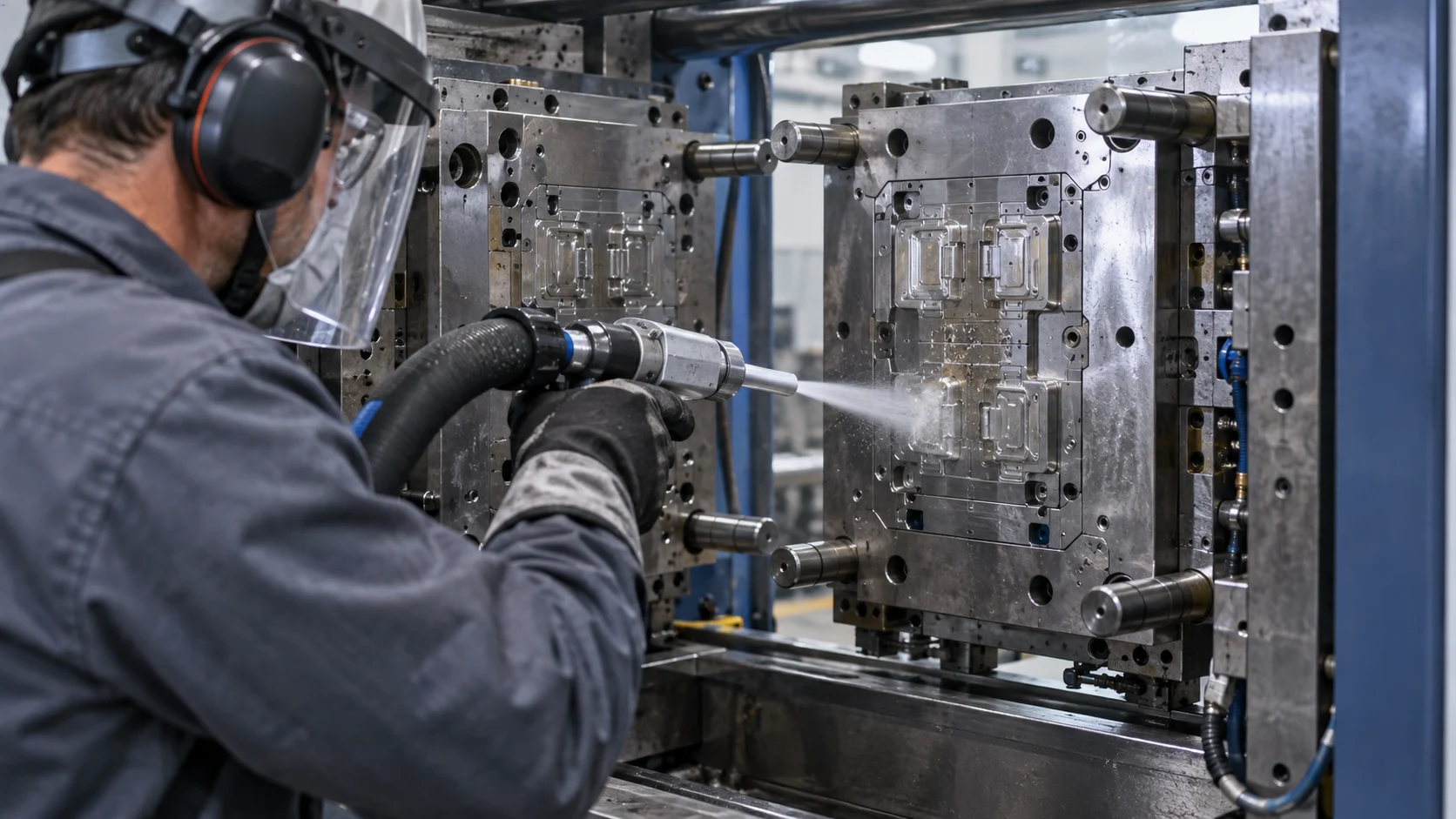
Compare injection mold cleaning methods by deposit, tool finish, features and your available production window. An in-press mold may offer access to some cavities and vents while other surfaces remain obstructed. Define those conditions before comparing dry ice blasting, manual work, solvents, or off-press cleaning.
This guide concerns plastic injection tooling and mold-release deposits. It does not cover biological mold remediation. Our plastic injection mold cleaning service covers the cleaning work available in NY, NJ, PA, and DE.
Identify what is building up on the mold
Record the tool ID, resin or compound, release-agent product, process temperature, cycle history, and recent maintenance. Map the cavities, vents, parting lines, shutoffs, texture, and polished or coated surfaces involved. Photograph the tool as a whole and the deposits in detail. Mark any existing wear, corrosion, repairs, or finish damage separately from removable buildup.
Release agent, resin residue, carbonized deposits, and contamination transferred from a prior process may respond differently. A method that removes a film from one tool should not be assumed suitable for another coating or texture. The toolmaker’s instructions and the part-quality team should set the boundaries.
Compare common injection mold cleaning methods
Manual cleaning can target a small accessible area, though scrapers or brushes may threaten a precision finish if used incorrectly. Solvent or aqueous cleaning may suit a particular residue but can add chemical handling, drying, and access requirements. Off-press methods may reach removed components more fully but require removal and reinstallation. Dry ice blasting introduces no rinse water or persistent blasting medium and can address accessible production deposits. The cleaning work includes isolation, nozzle access, residue collection and the tooling team’s inspection handoff.
Cold Jet lists resin and release-agent buildup among plastic and rubber mold cleaning applications. Treat that as an application example rather than proof that a particular cavity, coating, or tool can be cleaned to specification.
Arrange cleaning while the mold remains in the press
In-press location and usable access are different. Identify how the operator can reach each target surface, where dislodged material will travel, and what surrounding parts need protection. The facility must define the safe work condition and control unexpected machine movement. If the cavity, vent, or shutoff is obscured, a partial in-press clean may leave important deposits in place.
Ask the production team whether the mold must cool or be opened to a particular position, who performs those steps, and who checks the tool afterward. Our guide to cleaning without disassembly explains why access still determines the result. The vent and cavity guide covers feature-level inspection.
Set a test for mold release-agent removal
Select a representative deposit on a finish that reflects the proposed job. Agree on the area, excluded features, observable removal goal, and stopping point. Record the condition before and after cleaning. Review cavity detail, vent openings, texture, polishing, coatings, and any deposit that remains. A visually clean patch does not measure tool geometry or confirm finished-part quality.
If the test exposes wear, corrosion, or coating damage, refer that condition to the toolmaker. Cleaning does not repair the tool. Keep the cleaning record and the inspection decision attached to the same tool ID so the next maintenance event starts with evidence rather than assumptions.
Choose in-press or bench cleaning
In-press cleaning keeps the tool installed during a cleaning pause. Bench cleaning fits removed tooling during changeovers, inspection and preparation for storage. Compare tool handling, nozzle access, residue collection and the inspection handoff in the in-press vs bench cleaning guide.
For polished tooling, use the polished injection mold guide to identify the finish, coatings and fine features in the cleaning scope.
Schedule injection mold cleaning methods around production
Compare the whole window, including isolation, preparation, cleaning, collection, inspection, restart, and production checks. A method that appears quick at the nozzle may require more time elsewhere. Record the actual time and result for repeat work, along with changes in resin, release agent, and cycle count. Our maintenance program can track recurring cleaning needs.
Questions about in-production mold cleaning
Can an injection mold be cleaned without disassembly?
Yes. Accessible mold surfaces can be cleaned while the tool remains installed during a maintenance pause. Concealed surfaces require additional access. Coordinate equipment isolation, residue collection and inspection with the facility team.
Will dry ice blasting remove every mold release agent?
No universal result can be assumed. Test the actual release product and buildup on the specified finish, then document what remains and whether another process is needed.
Get a quote for injection mold cleaning methods
Send the tool ID, resin and release system, photographs, finish details, access arrangement, required work window, and inspection criteria. Get a plastic injection mold cleaning quote for the specific tooling.