Choosing Data Center Cleaning Methods for Each Surface
Published
Match the method to the surface, contamination, and equipment instructions before requesting a cleaning quote.
Choose data center cleaning methods one task at a time. Separate routine room cleaning from selective cleaning of power and mechanical equipment. Then review the contamination, surface, access conditions, and manufacturer’s instructions for each task.
Use the comparison below as a proposed framework for scoping work. It is not approval to apply a method to any particular asset. For the scope offered by Precision, visit data center dry ice cleaning.
Separate routine dust removal from equipment cleaning
Oracle’s contamination-control guidance calls for HEPA-filtered vacuums in data centers and appropriate wiping materials. It also cautions that unsuitable cleaning practices can worsen the environment. Read Oracle’s guidance.
Start a room-cleaning request with the facility’s approved procedure. Identify the floors, ledges, exterior hardware surfaces, and other areas under review. Ask the equipment owner to specify allowed tools and materials.
Prepare a separate scope when the request concerns an adhered deposit on a generator, motor, enclosure, or mechanical assembly. Do not extend a room-cleaning procedure to internal equipment surfaces without review.
Compare data center cleaning methods by task
Use these categories to ask more precise questions during procurement. Each option still needs approval for the actual surface and operating conditions.
| Method to review | Proposed task category | Question before approval |
|---|---|---|
| HEPA-filtered vacuuming | Routine collection of loose dust from approved surfaces | Does the equipment and attachment meet the site’s cleaning procedure? |
| Approved wiping | Accessible surfaces covered by the owner’s instructions | Which wipe and cleaning material are allowed for this surface? |
| Selective dry ice cleaning | Defined deposits on selected facility equipment | Has the equipment owner accepted the method and test criteria? |
| Specialist component service | Sensitive assemblies or work requiring technical access | Which tasks belong to the manufacturer or qualified service provider? |
Ask vendors to identify their exact scope. Compare the same surfaces, access duties, collection responsibilities, and acceptance criteria across proposals.
Where selective dry ice cleaning enters the review
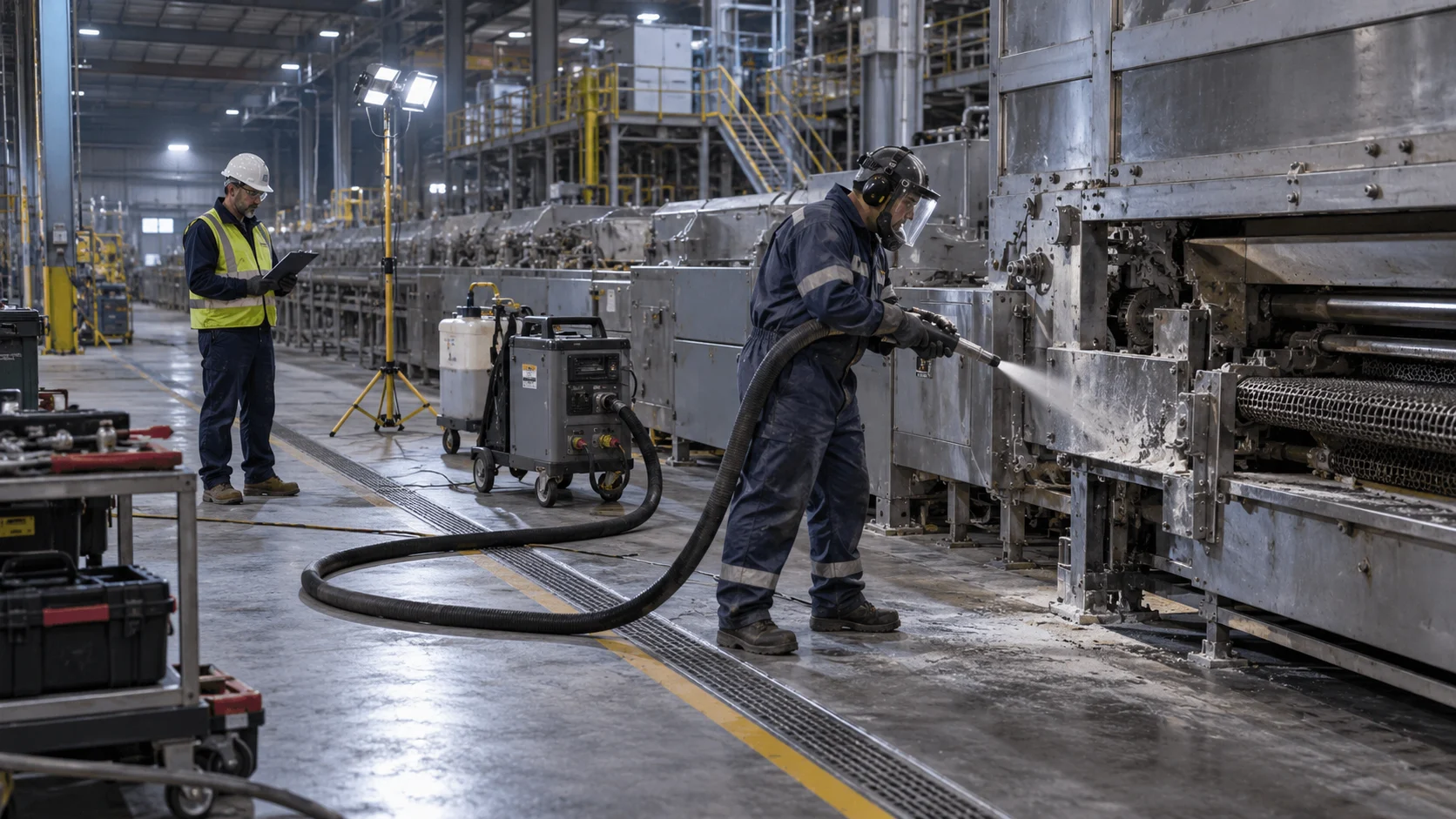
ASCO describes dry ice cleaning as using solid CO2 that becomes gas, leaving the removed contamination for collection. Its application guidance includes de-energized motors, generators, and control cabinets. See ASCO’s process guidance.
For a proposed data center project, ask whether the deposit, surface condition, and access support this method. Request manufacturer instructions and a representative test where needed. Agree on what the contractor must demonstrate before wider cleaning begins.
Keep live server hardware and direct treatment of sensitive electronics outside the proposed facility-equipment scope. If the project involves internal electrical components, use the electrical equipment planning guide to frame a separate technical review.
Compare the full work sequence
When comparing quotes, ask for more than active cleaning time. Include setup, protection, access, collection, inspection, and the owner’s return-to-service process. Identify any technical labor excluded from the contractor’s price.
Use the Cleaning Cost Comparison Calculator with your own approved assumptions. Review the results alongside the asset list. Do not apply a general cost estimate to untested deposits or equipment with different access requirements.
Next, check the schedule against the data center maintenance window guide. Confirm which team owns each stage and how much time remains for handback.
Ask what happens to the removed material
For every proposed method, ask where removed material goes and who collects it. Identify the work boundary, nearby equipment, and permitted location for collection equipment. Include waste identification and handling in the quote request.
For a dry ice proposal, also review ventilation and dry ice storage. CDC documents harmful exposure when CO2 accumulates in poorly ventilated conditions. Read CDC’s dry ice exposure guidance. Ask the facility team to define the controls and monitoring for the actual work zone.
Use the facility checklist tool to collect open questions. Resolve them with the responsible teams before scheduling.
Use a test to answer a defined question
Write the test objective before selecting a sample area. Ask whether the trial is evaluating deposit removal, surface response, access, or collection. Agree on the inspection method and who accepts the result.
Record the exact surface and conditions. If the result is acceptable, use it to refine that scope. If another asset has a different coating, deposit, or component arrangement, request a separate review.
A test cleaning discussion is a useful next step when the proposed method needs evaluation. For a scope that is already defined, request a project assessment for selected equipment in New Jersey, New York, Pennsylvania, or Delaware.