Removing Ink Buildup From Printing Equipment
Published · Updated
Plan removing ink buildup by press component, ink system and surface. Separate frame cleaning from precision roller inspection and print approval.
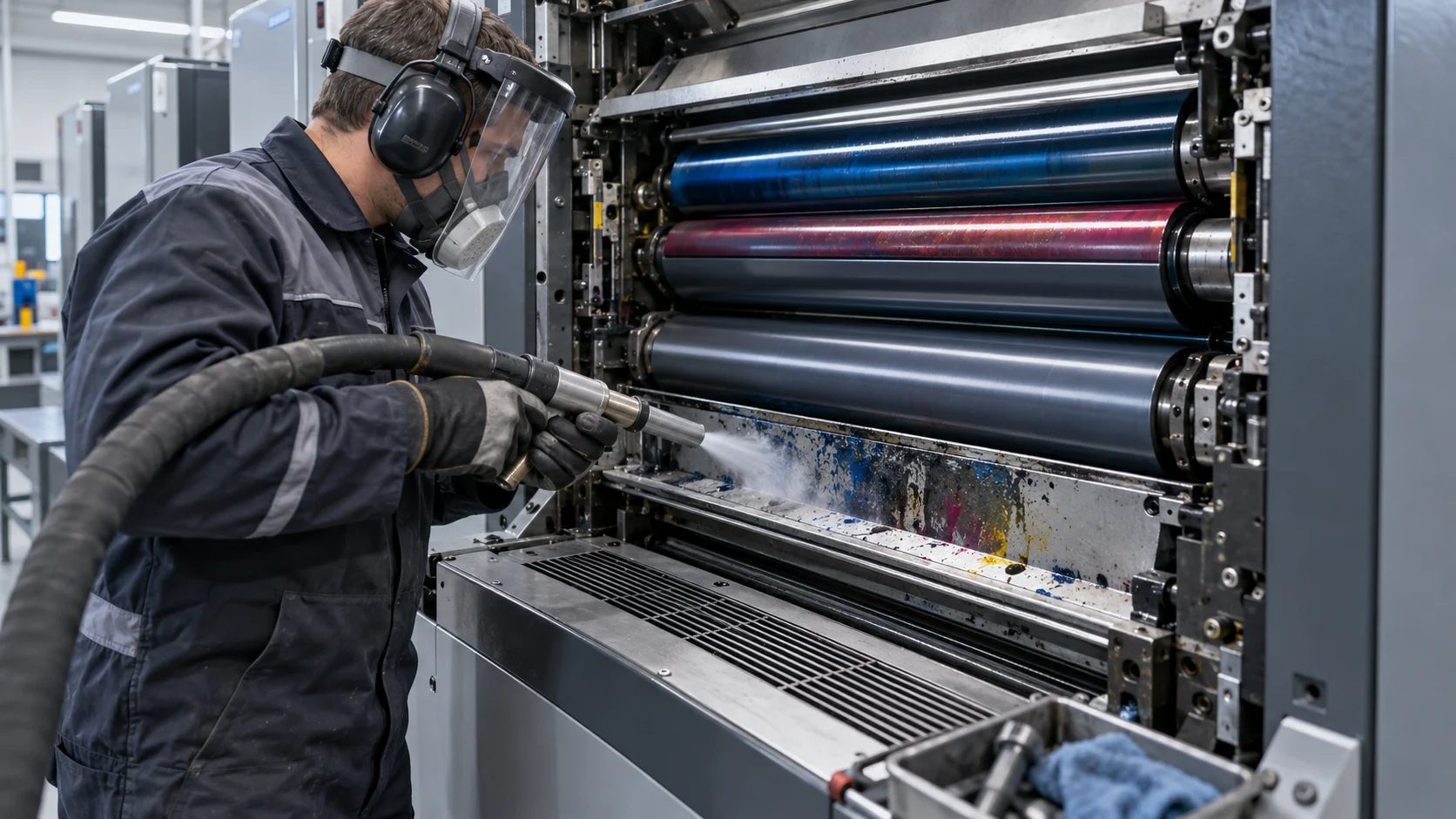
Removing ink buildup from printing equipment starts with a component list. Define whether the request concerns press frames, trays, delivery units or a precision roller. Give each area its own cleaning objective and inspection requirement.
Use this suggested planning framework with your press and roller manufacturers’ instructions. The printing press and roller cleaning service describes the broader scope available for review. Assign the cleaning window and completion checks with the press maintenance checklist.
Cleaning press rollers without solvent assumptions
Solvent wiping is one option, but the choice depends on ink chemistry, roll material, surface finish, and the maker’s instructions. Separate rubber-covered rollers from engraved anilox cells. For each, set a test and decide whether visual appearance, measured cell volume, or print testing determines acceptance. A no-solvent process does not remove the need to capture dislodged ink.
Read the printing press and roller cleaning service for a broader equipment scope and anilox roller cleaning for precision cells. Get a press roller cleaning quote with the component and ink details.
Removing ink buildup from different surfaces
Provide the press make and model, the ink system and the relevant product information. Record whether the deposit includes ink, adhesive, paper dust or grease. Also note previous cleaning attempts and areas where the finish is uncertain.
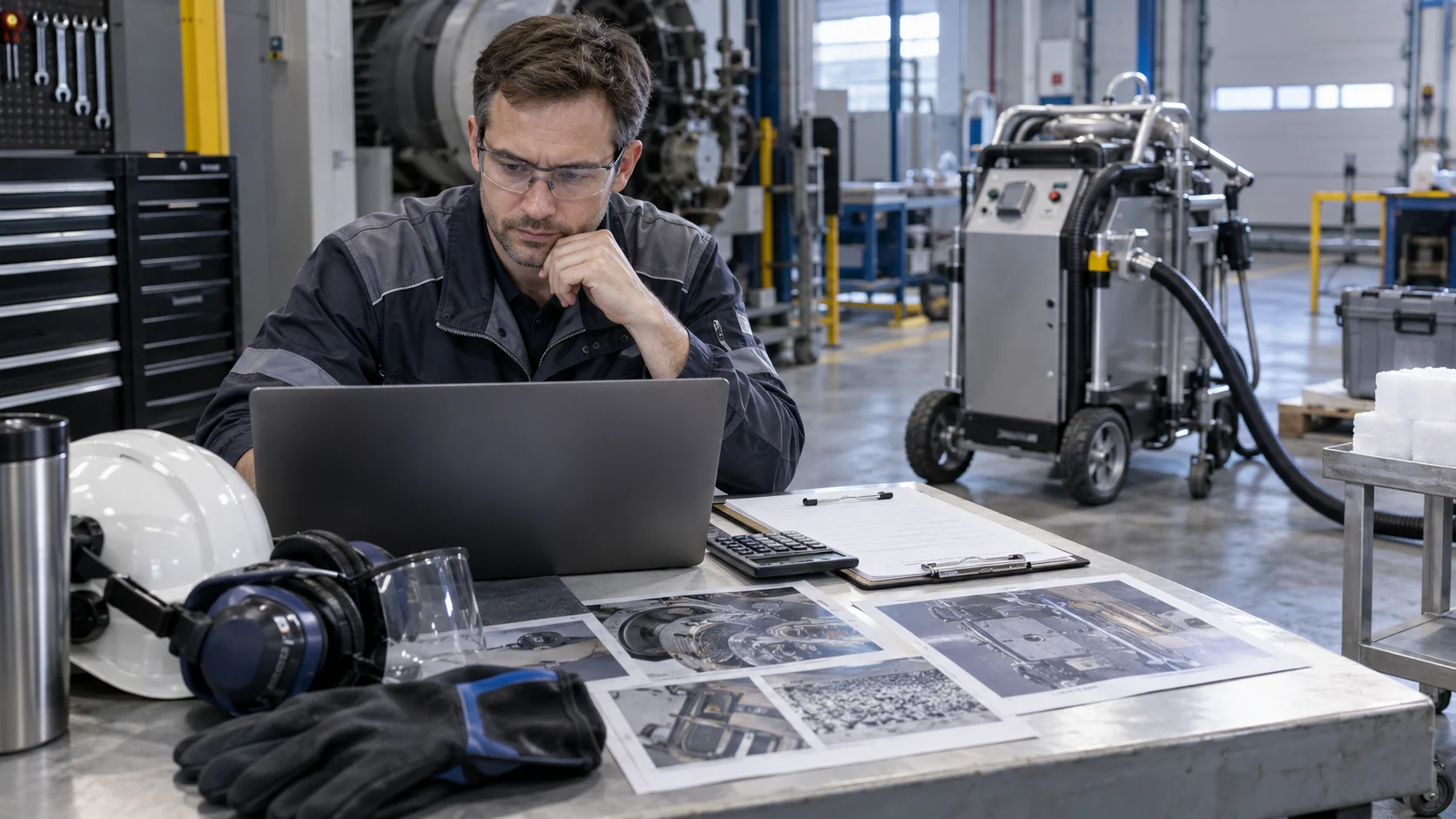
Photograph the complete assembly before taking close views. Label each target with the same component name used in the work scope. Ask the press team to distinguish unwanted deposits from lubricants or materials that belong on the equipment.
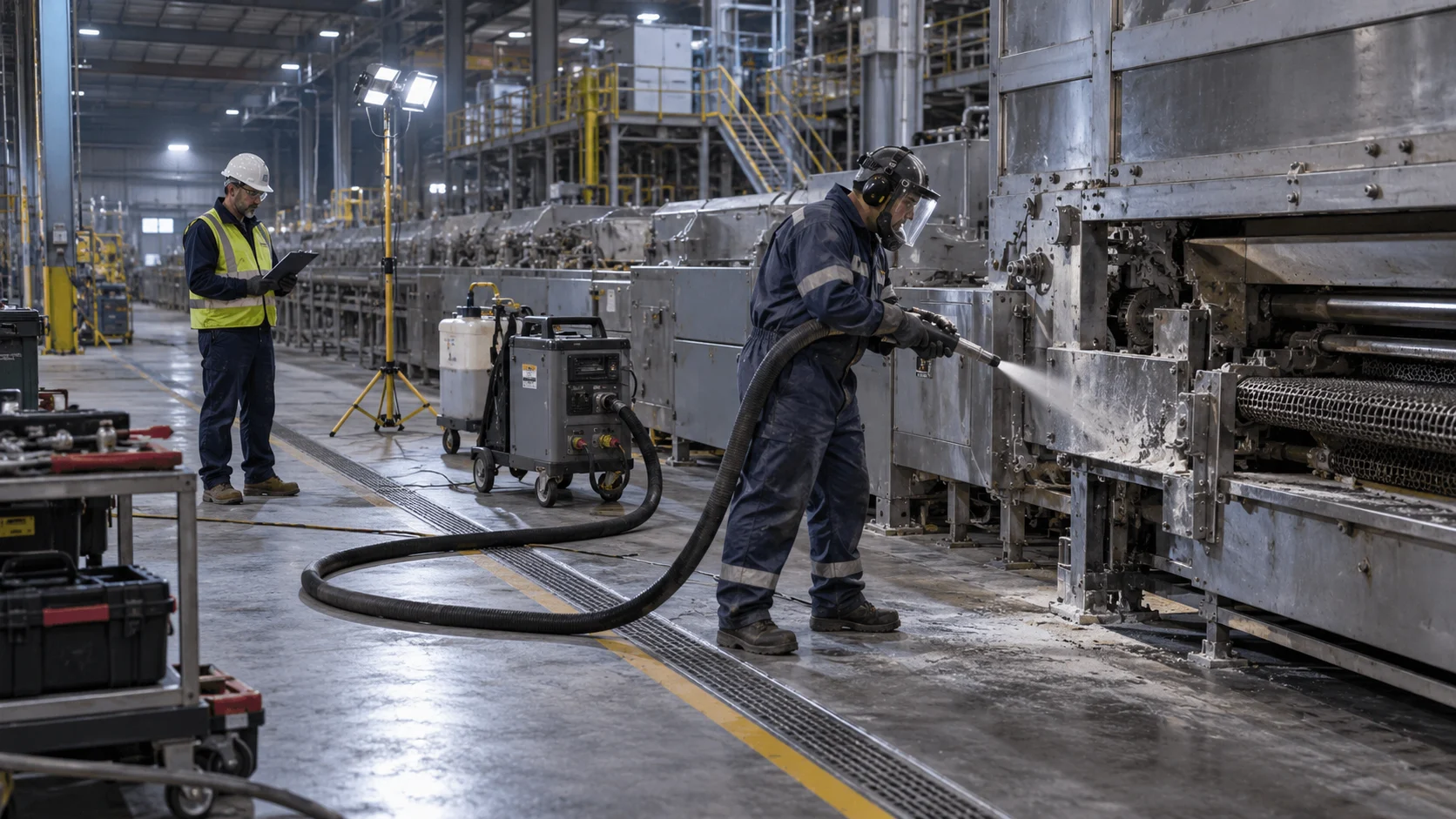
Cold Jet lists printing components and ink-handling equipment among its applications for removing ink and accumulated residue. See its printing industry overview. Treat that information as a starting point for evaluating your specific surfaces.
Separate press structures from precision rollers
| Component group | Cleaning question | Separate acceptance question |
|---|---|---|
| Frames and side walls | Which identified deposits should be removed? | Are the coating and identification labels retained? |
| Trays and accessible delivery parts | What residue and corners are included? | Who approves the component for its next use? |
| Precision rollers | What does the roller manufacturer permit? | What measurement or specialist inspection is required? |
| Nearby drives and controls | What must be protected or excluded? | Who checks and releases the assembly? |
Identify anilox, ceramic-coated and rubber-covered rollers individually. Provide the supplier’s cleaning guidance and the required condition after the work. Keep a roller-capacity or ink-transfer objective separate from a request to remove visible residue from a press frame.
If the objective concerns anilox-cell volume, specify who will measure it and what method they will use. Request the relevant before and after records. Do not use a frame-cleaning result as evidence that a different roller surface meets its specification.
Compare removing ink buildup methods fairly
Ask the equipment supplier which manual or chemical processes are approved for each component. Then define any proposed dry ice trial against the same cleaning boundary. Include required component removal, protection and reassembly in both scopes.
Have the contractor identify where the selected method needs a test. A proposal should state what remains outside its scope, including recoating, roller repair, alignment and print-process adjustments. Assign those tasks separately when the maintenance objective requires them.
Use the cleaning cost comparison tool with your own work estimates. Include the press team’s preparation and handback time along with contractor charges.
Use a representative trial before extending the work
Select a marked area with the actual ink deposit and finish. Record the cleaning objective before the trial. Include a relevant edge or recess if it forms part of the proposed scope and the equipment owner approves access.
Document what was removed, what remains and any visible surface change. Use matching photographs and keep an exception list. Ask the designated reviewer to decide whether to proceed, revise the approach or evaluate another method.
The test cleaning worksheet provides a record structure. Its illustrative example explains wording only and should never be copied as a press result.
Removing ink buildup during a maintenance window
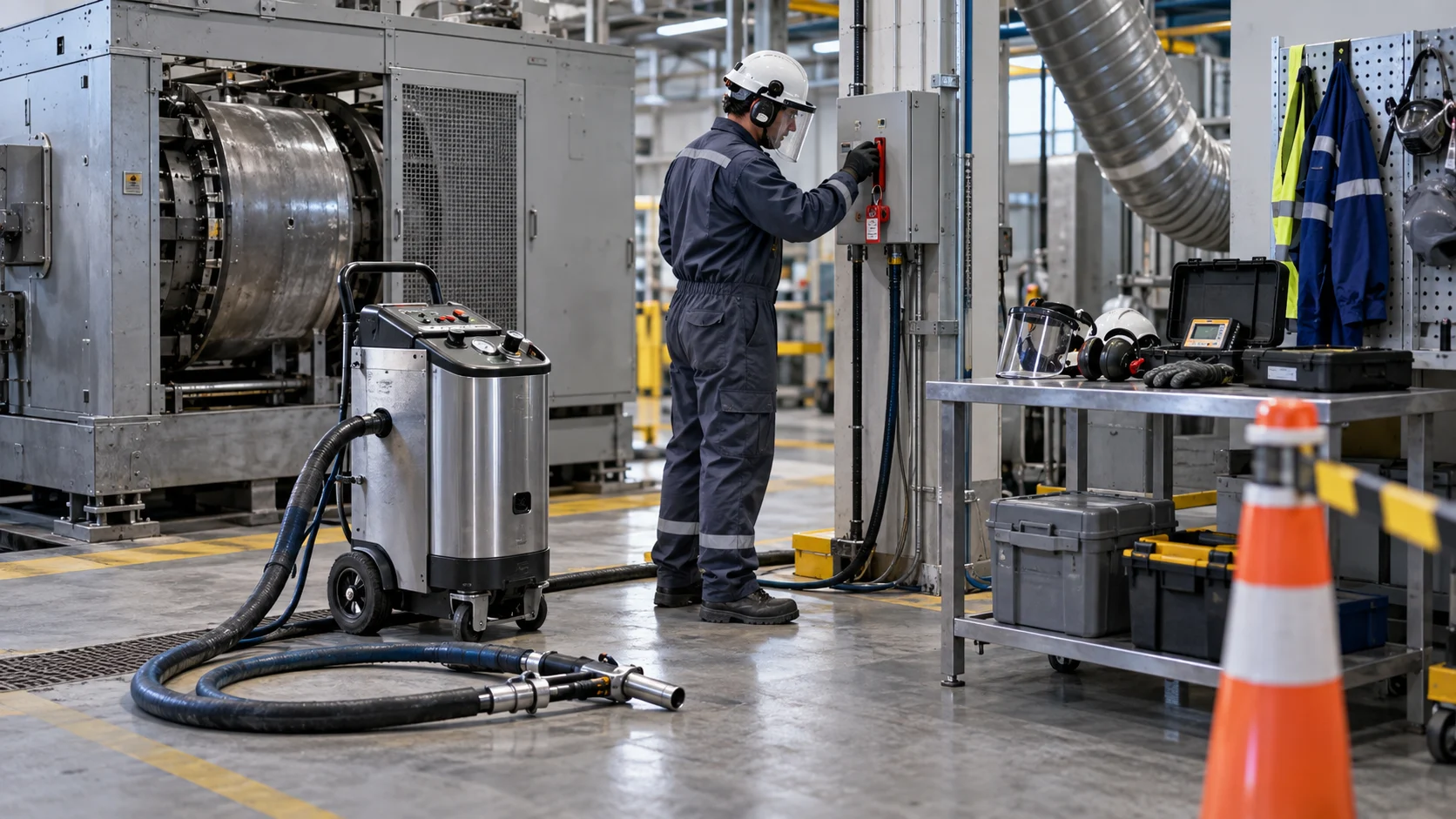
Name the person responsible for isolation, guard removal, component handling and reinstatement. Confirm when each area becomes available. Put priority components ahead of optional presentation work and identify who can change that order.
Review compressed air, nearby production, noise, ventilation and collection of removed material through the site assessment. Keep loose residue away from excluded areas using the approved collection plan. Assign final inspection and any press maintenance before release.
Use the shutdown window planner to separate your task estimates. For related packaging deposits, see adhesive removal planning.
Keep a component-level cleaning history
Record the press identifier, ink system, target components and actual completed work. Add the inspection decision and unresolved items. Use the same photo locations during the next review so the team compares equivalent areas.
Revisit the scope when inks, coatings, substrates or access change. The maintenance cleaning log can hold the baseline and visit records. Review those observations with production rather than assigning a fixed interval from a general guide.
Get a printing equipment cleaning quote
Send the component list, current photographs, project ZIP code and proposed work window. Include roller instructions when precision surfaces are involved. Get a printing equipment cleaning quote with your acceptance requirements and available access.