Planning Adhesive Removal on Packaging Machinery
Published · Updated
Prepare a packaging adhesive removal scope with product details, surface boundaries, trial criteria, and line access.
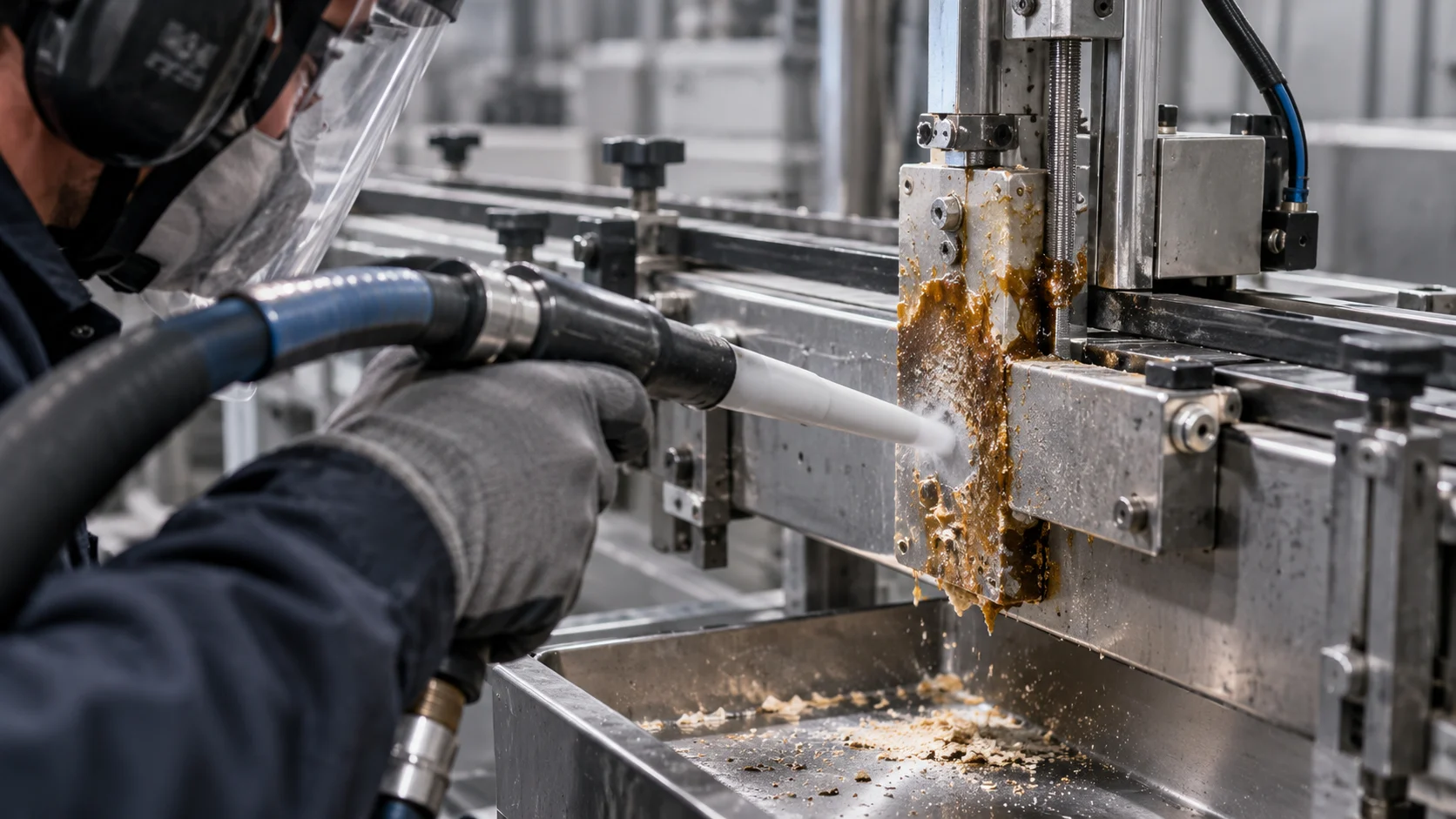
Packaging adhesive removal starts with identifying the material that is stuck to the machine and the surface that needs to remain. A useful inquiry names the station, describes the adhesive, and explains the maintenance objective.
That information helps separate a defined cleaning task from an open-ended request to restore a whole packaging line. Use the steps below before requesting packaging and converting equipment cleaning.
Identify the packaging adhesive removal target
Record the adhesive product name and obtain its technical information where available. Describe how it reaches the target surface, whether through splash, stringing, transfer, or another observed route. Include any paper fibers, ink, grease, or coating mixed into the deposit.
Photograph a representative area while the buildup is visible. A close image helps show the deposit, but a wider image shows access and nearby components. Give both images the same station reference so the cleaning team can understand their relationship.
Include the length of time since the last cleaning if your team knows it. Treat that as an observation, not as a prediction of how long the next visit will take.
Define what must stay on the machine
List the paint, coating, labels, seals, or other materials that need protection. Identify exposed sensors and wiring near the proposed cleaning boundary. Provide equipment-maker instructions for precision surfaces or sensitive components.
Separate the target deposit from the materials intentionally applied to the equipment. A request to remove residue should not be interpreted as permission to strip a coating or remove a lubricant needed for operation.
If the deposit sits beside a damaged finish, show that condition before the trial. An agreed boundary helps the operator know when to pause and request a review.
Connect the deposit to the operating problem
Describe what your team needs to accomplish. You may need access for inspection, removal of accumulated material from an accessible guide, or a more clearly defined task during an existing maintenance stop.
Use observed facts. Record where operators see accumulation and what current cleaning requires. Avoid assigning a production defect to the deposit unless your team has established that connection.
A clear objective also improves the acceptance standard. Removing an accessible accumulation to expose a surface for inspection is a different request from restoring a precision dimension or proving a production-quality result.
Test a representative area before broadening the scope
Choose a test location with the same adhesive, surface finish, and access conditions as the proposed work. Identify who can authorize the trial and who evaluates the result.
Agree on the stopping point. That might be a defined boundary, a change in the underlying surface, or an area needing a different approach. Record what was removed and what remains.
Review your adhesive cleaning application to organize the deposit, surface finish, access limitations, and test questions before expanding the work.
Use the result to refine the larger scope. A successful trial on one adhesive and finish provides information about that combination. It should not become an automatic approval for every station, material, and deposit on the line.
Plan cleaning and inspection as separate tasks
Name the team responsible for releasing the equipment, isolating it, and removing any required guards. Identify the available work area and the order in which stations can be accessed.
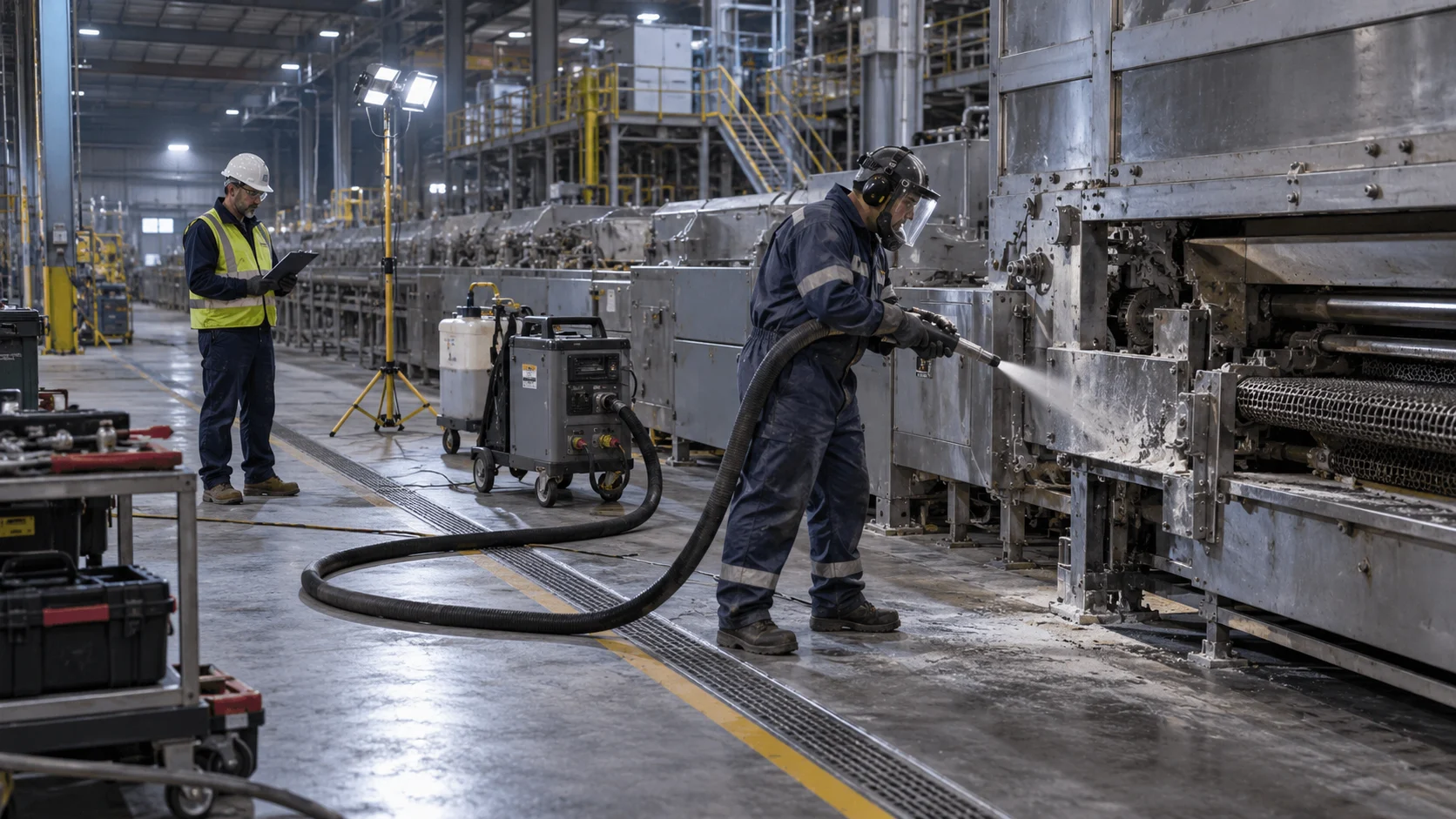
Then assign cleanup and inspection responsibilities. The removed adhesive remains part of the project even though the dry ice changes to gas. Include collection and surrounding-surface checks in the plan.
For a coordinated outage, connect this task to shutdown cleaning. If adhesive buildup is one part of a larger residue problem, use our adhesive and production residue service to describe the other deposits without losing the station-level detail.
Make the scope useful for the next visit
Keep photographs, product names, and inspection notes together. If the adhesive, packaging material, or operating schedule changes, update the record before repeating the previous scope.
Review the interval against observed buildup. Repeating a visit at the same frequency is useful only when the equipment condition and maintenance objective still support it.
For packaging adhesive removal pricing, send the equipment list, target surfaces, location, photographs, and preferred timing. Request a project review to discuss an application test and a scope tied to your actual machinery.