Cleaning Meat and Poultry Conveyors and Slicers
Published
Meat and poultry conveyor cleaning should follow the product path through slicing, transfer and weighing.
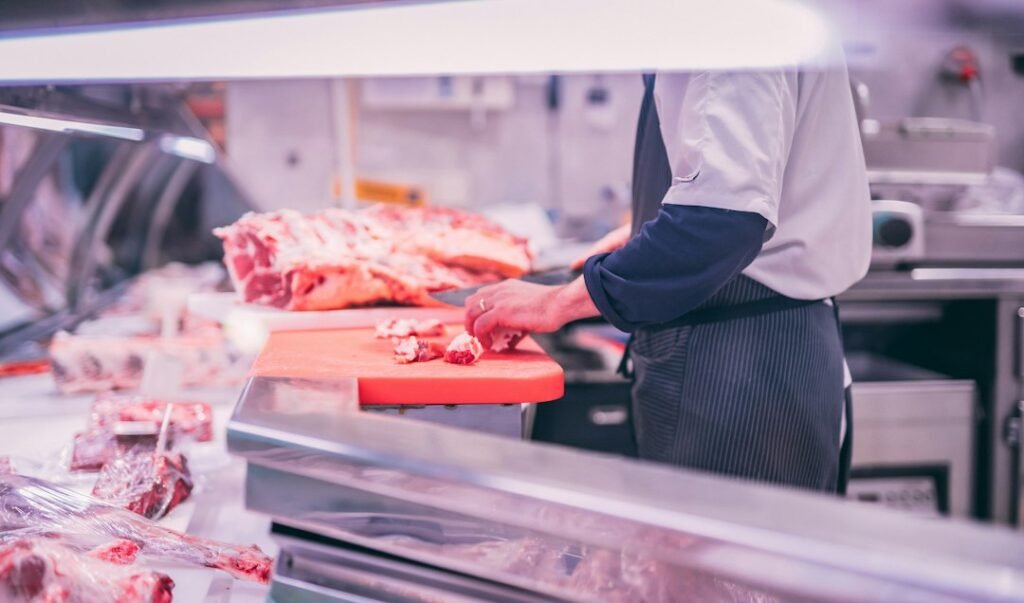
Meat and poultry conveyor cleaning should follow the product path through slicing, transfer and weighing. Fat, protein residue and grease need an equipment-specific work list so the cleaning crew can clear the named surfaces while maintenance manages opening, isolation and component handling.
Meat and poultry conveyor cleaning stations
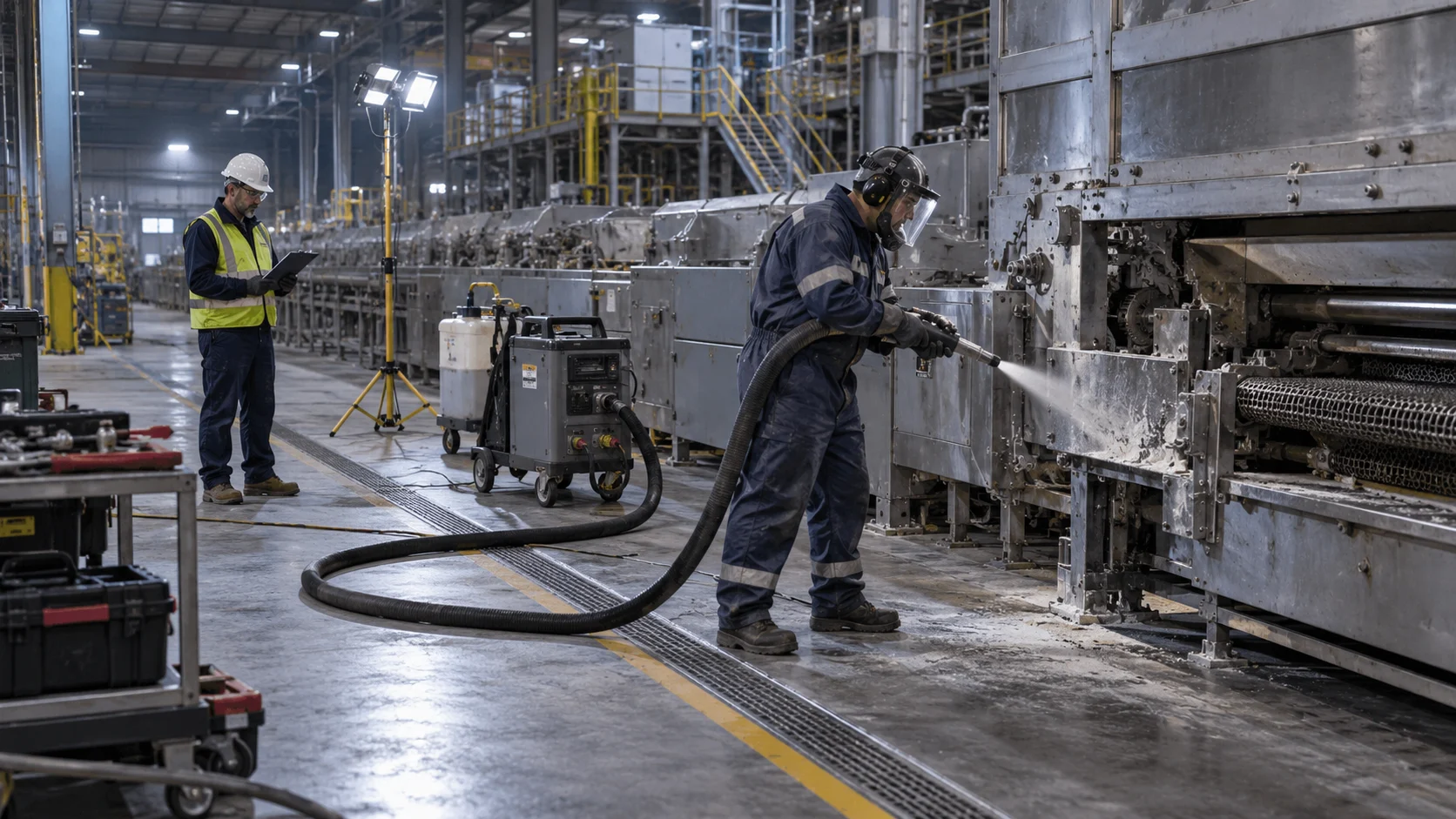
Start with the slicer housing, feed conveyor, transfer guides and downstream weighing station. Identify which deposits sit on product-contact components and which sit on frames or guards. Give each station an asset number. Photographs should show both the residue and the opening needed to reach it, including the space below the conveyor for collection.
Component handling during meat and poultry conveyor cleaning
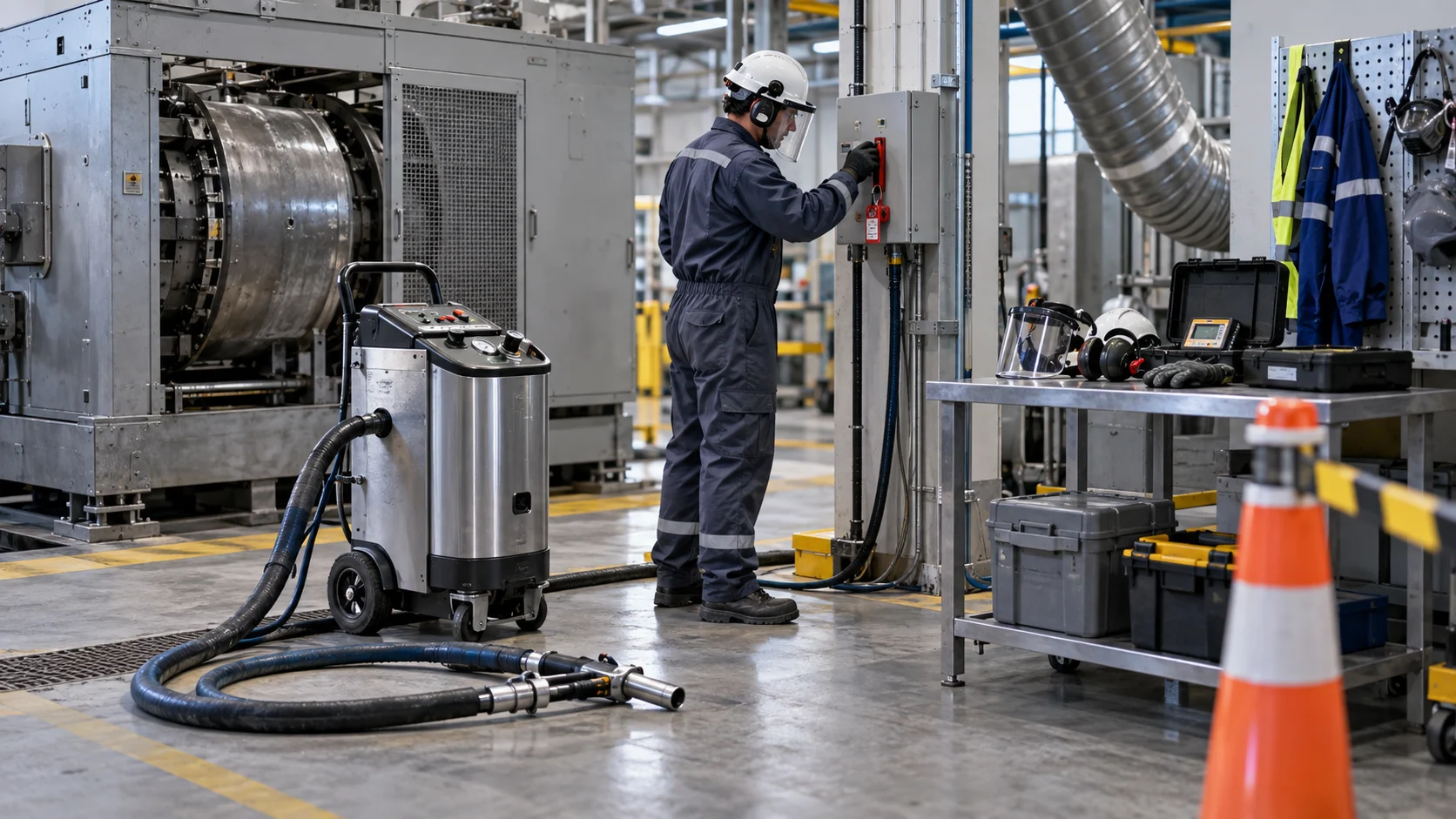
Blades, belts, bearings, seals, load cells and sensors have different handling requirements. The plant should identify removable parts and the components that stay protected. Dry-ice blasting targets the agreed surfaces without wash water or cleaning solvents in that step. Blade servicing, lubrication and electrical work remain named maintenance tasks.
Follow a clear station sequence
Arrange the work in the order each asset is isolated and opened. Keep raw-product and finished-product work areas identified. Collect the dislodged residue before moving to the next station, then present the cleared surfaces for inspection. Record the equipment completed so sanitation and reassembly can follow the same station list.
Equipment and handoff map
| Station or step | Cleaning focus | Next responsibility |
|---|---|---|
| Slicer housings and supports | Attached fat and protein residue | Blade handling and food-contact procedures |
| Conveyor frames and guides | Product buildup and grease | Belt, bearing and guard inspection |
| Weighing-equipment supports | Attached food and production grime | Load-cell protection and weighing checks |
Prepare the cleaning visit
- Station numbers and product-zone boundaries
- Surface and deposit photographs
- Machine isolation and openings arranged by maintenance
- Named owner for inspection, sanitation and release
The operational benefit is a visible, organized handoff. Maintenance receives the named surfaces cleared of the specified deposits, with remaining work identified. The plant then completes food-contact cleaning, sanitizing and verification under its own program.
Related services and planning resources
Meat and Poultry Processing Dry Ice Cleaning connects these tasks to the full industry cleaning scope. Read the related equipment-maintenance guide and use the shutdown cleaning window planner to organize asset availability.
For service support, see food processing equipment cleaning, packaging machinery cleaning and request a cleaning quote. Precision Dry Ice Cleaning provides mobile service in NY, NJ, PA and DE.
For media requirements and agency-source scope, read the FDA, EPA and USDA reference guide.
Industry reference image. Photo by Iñigo De la Maza.