Can Machinery Be Dry Ice Cleaned Without Taking It Apart?
Published · Updated
Find out what cleaning in place means, which access questions to resolve, and how to assess a machine before planning disassembly or a shutdown.
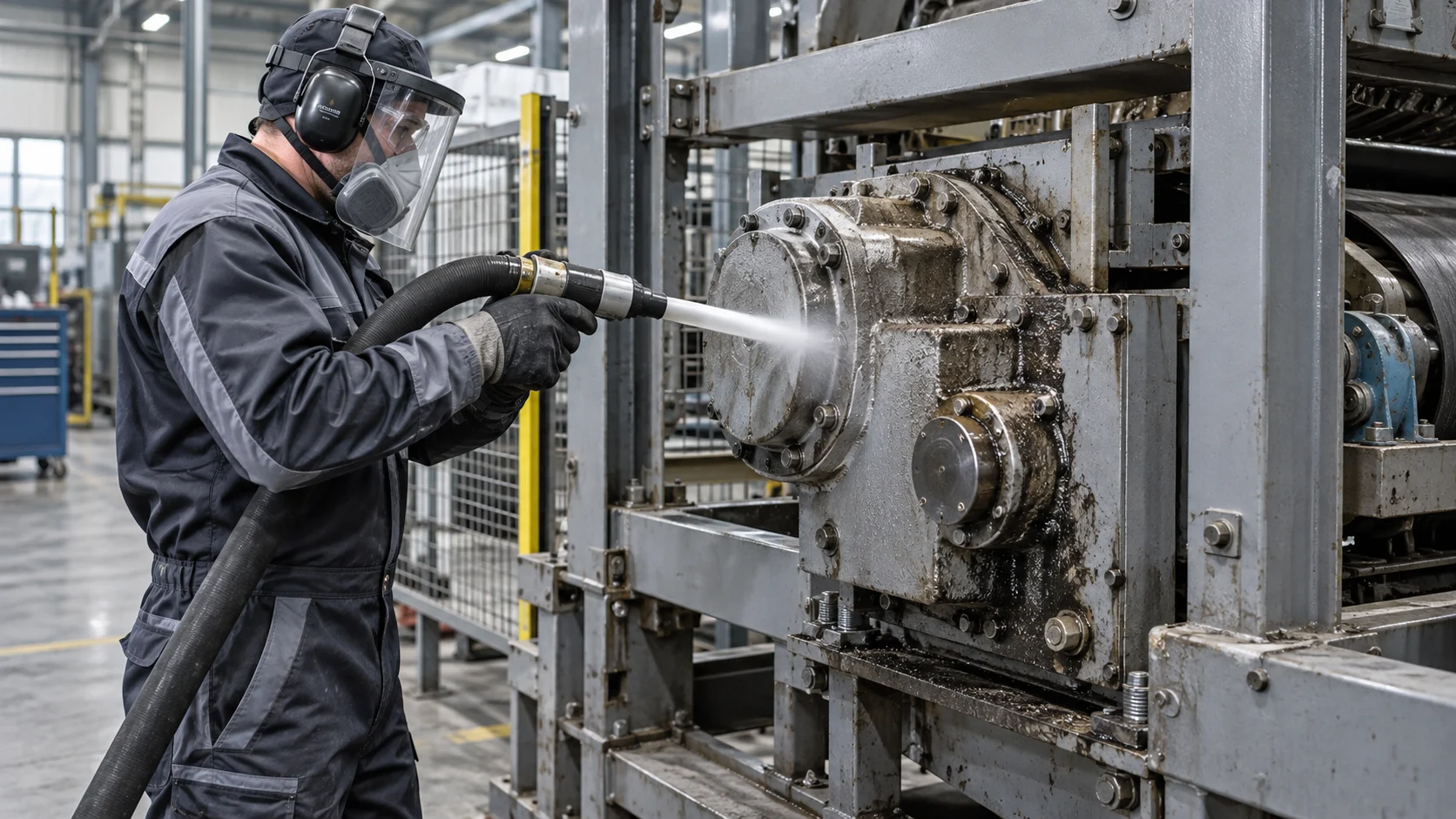
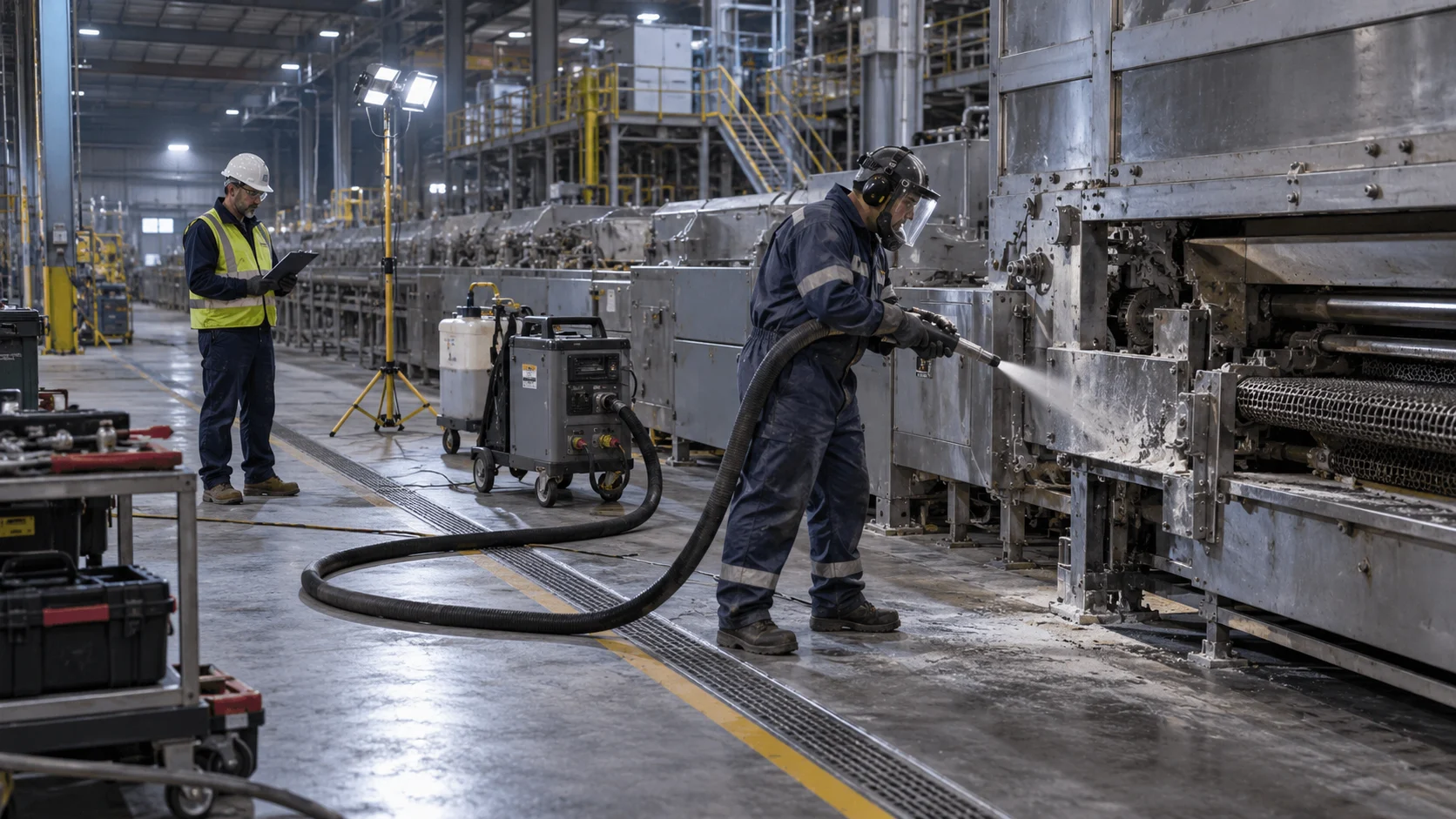
Dry ice cleaning without disassembly is possible for some accessible machinery surfaces. Cold Jet lists cleaning equipment in place among the process’s applications. The useful question for your project is which surfaces can be reached, cleaned, and inspected with the equipment in its proposed condition. Cold Jet’s technical FAQ provides the manufacturer’s overview.
Assess surfaces for dry ice cleaning without disassembly
Describe the deposit and its location before deciding how much equipment to dismantle. “Clean the machine” leaves too much open. Identify the roller face, mold surface, fixture, frame, or other area that needs attention, then state the result required for maintenance or inspection.
For plastic tooling, the installed mold, tool geometry, and actual deposit shape the method. Compare in-press access, release-agent removal, testing, and production handback in our plastic injection mold cleaning methods guide.
For industrial machinery, separate exposed production surfaces from areas behind guards, beneath assemblies, or inside housings. For injection molds, identify the exact faces and recesses to assess. Photograph the equipment as it will actually be presented for cleaning.
Check access from the operator’s position
Use a line-of-sight access review: can the operator direct the nozzle at the target surface and inspect the result? Do not include a hidden cavity in the scope merely because its opening is visible. Ask the assessor to distinguish direct access, access requiring preparation, and surfaces that remain outside the proposed work.
| Access question | What to record |
|---|---|
| Can the target be reached? | Obstructions, working clearance, hose routing, and the proposed operator position. |
| What must move or come off? | Specific guards, panels, liners, or assemblies; who removes and replaces them. |
| What needs protection? | Openings, components, adjacent work, and materials identified by the equipment owner. |
| Where will deposits collect? | Areas beneath and behind the target, including surfaces that need later inspection. |
| How will the result be checked? | Inspection access, lighting, acceptance criteria, and the person responsible. |
Plan dry ice cleaning without disassembly around equipment access
Treat “in place” as an access description. It is not permission to clean an energized or operating machine. Confirm the equipment owner’s isolation, stored-energy, work-authorization, and return-to-service procedures before scheduling. Agree who prepares the asset and who confirms that it is ready for the cleaning crew.
Review compressed air, ventilation, CO₂ monitoring, noise, work-area separation, and contamination collection with the facility team. Cold Jet’s dry ice safety guidance discusses ventilation, handling, and protective equipment. Use the facility requirements overview to organize the project discussion.
Use a representative test to settle uncertainty
Choose a test area that represents the difficult part of the job, including the deposit, surface condition, and access restrictions. Agree on what success means before the test: which residue should be removed, what must remain, and what inspection will follow.
Record the starting condition, setup and cleaning time, material use, remaining deposits, and any preparation needed. Keep setup time separate from active blasting time. If the test exposes an unknown coating or a component requiring protection, revise the scope before extending the work.
Review your machinery cleaning application to organize the deposit, surface condition, and access restrictions that the representative test needs to address.
A successful test on one exposed surface is a basis for discussing comparable areas. Ask for a separate assessment where the geometry, deposit, or surface changes.
Compare the complete maintenance sequence
When evaluating possible disassembly savings, include preparation, isolation, cleaning, collection, inspection, reassembly, and the facility’s release process. Identify which steps actually change. Avoid scheduling the entire job around active blasting time alone.
For a planned shutdown, agree on the priority assets and a fallback scope if access takes longer than expected. Our guide to planning a production shutdown covers sequencing and handover.
For a broader method comparison, read why dry ice blasting suits machinery and tooling. Use its test checklist alongside the access review.
Start with an access review
Send the machine type, target surfaces, deposit description, site ZIP code, available window, and photographs showing both close detail and surrounding access. Flag any components that must remain assembled. Request a test cleaning to discuss whether cleaning in place belongs in your project scope.