Cleaning Polished Injection Molds with Dry Ice
Published
Polished injection mold cleaning targets release-agent and resin buildup on cavity faces and fine details. Learn how access and finish guide the work.
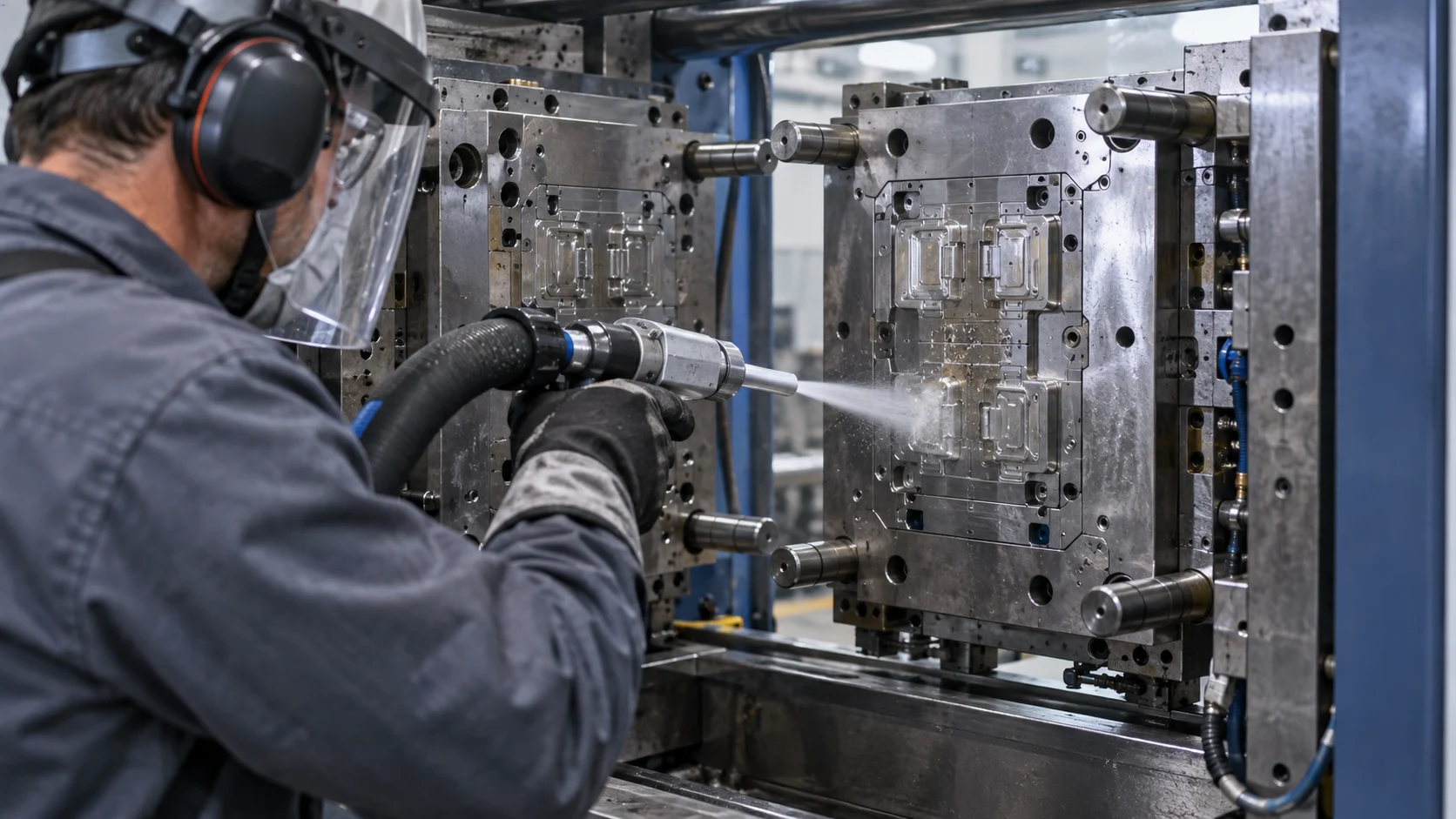
Polished injection mold cleaning targets residue on the working surface while retaining the finish needed for the molded part. Release-agent film, resin residue and off-gassing deposits need to be distinguished from scratches, wear and coating damage.
Precision Dry Ice Cleaning cleans production molds and tooling in New Jersey, New York, Pennsylvania and Delaware. Our plastic injection mold cleaning service includes cavity faces, accessible vents, parting lines and inserts.
Why the mold finish belongs in the cleaning scope
A mirror finish, texture or fine engraved detail is part of the tool’s working surface. Mark those features before cleaning. Include the mold material, coatings, prior repairs and the toolmaker’s cleaning instructions in the work order.
This information sets the cleaning boundaries. A deposited film is a cleaning task. A scratch, worn edge or damaged coating is a tooling condition for the owner’s inspection and repair process.
Dry ice cleaning and abrasive profiling
Dry ice cleaning uses soft CO2 particles carried by compressed air. Impact, cooling and sublimation act on the deposit. The process is used for precision mold cleaning without adding sand, grit or another abrasive medium.
Polished-tool cleaning is a deposit-removal task. It is not a request to roughen the cavity or create an anchor profile for a new coating. The finished surface must still meet the owner’s inspection requirements.
Cleaning settings and nozzle access
Pressure, particle size where adjustable, feed rate, nozzle choice and working distance are cleaning variables. Record the setup used for repeat work. Detail-rich tooling needs a controlled nozzle path and clear access to the affected surface.
For a coated or unusually sensitive surface, use the manufacturer’s restrictions and a defined test area to establish the cleaning settings.
Include fine features and accessible vents
Photograph cavity faces, core pins, parting lines, shutoffs, logos and measurement markings. Mark where the residue is concentrated. Read the vent and cavity cleaning guide for the deposit map.
Small features need direct access to the deposit. Their diameter alone does not establish whether a nozzle stream can reach an internal surface. Obstructed passages and concealed vent paths may require the tooling team to open the assembly.
Inspect the finish after deposit removal
Compare the same marked areas before and after cleaning, using consistent lighting and magnification where required. Record remaining deposits and any previously hidden wear. Keep visual cleaning acceptance separate from dimensional measurements and molded-part approval.
Medical production tooling also has facility-specific quality requirements. See medical-device manufacturing equipment and tooling cleaning and cleanroom equipment cleaning for related planning.
Prepare a polished injection mold cleaning request
Send photos of the entire tool and the polished areas, the residue type, finish or coating details and the available cleaning window. State whether the tool remains in the press or is removed. Compare in-press and bench cleaning before requesting your tooling cleaning quote.
Technical reference: Cold Jet’s medical manufacturing guidance describes precision mold cleaning and the retention of detailed mold features.