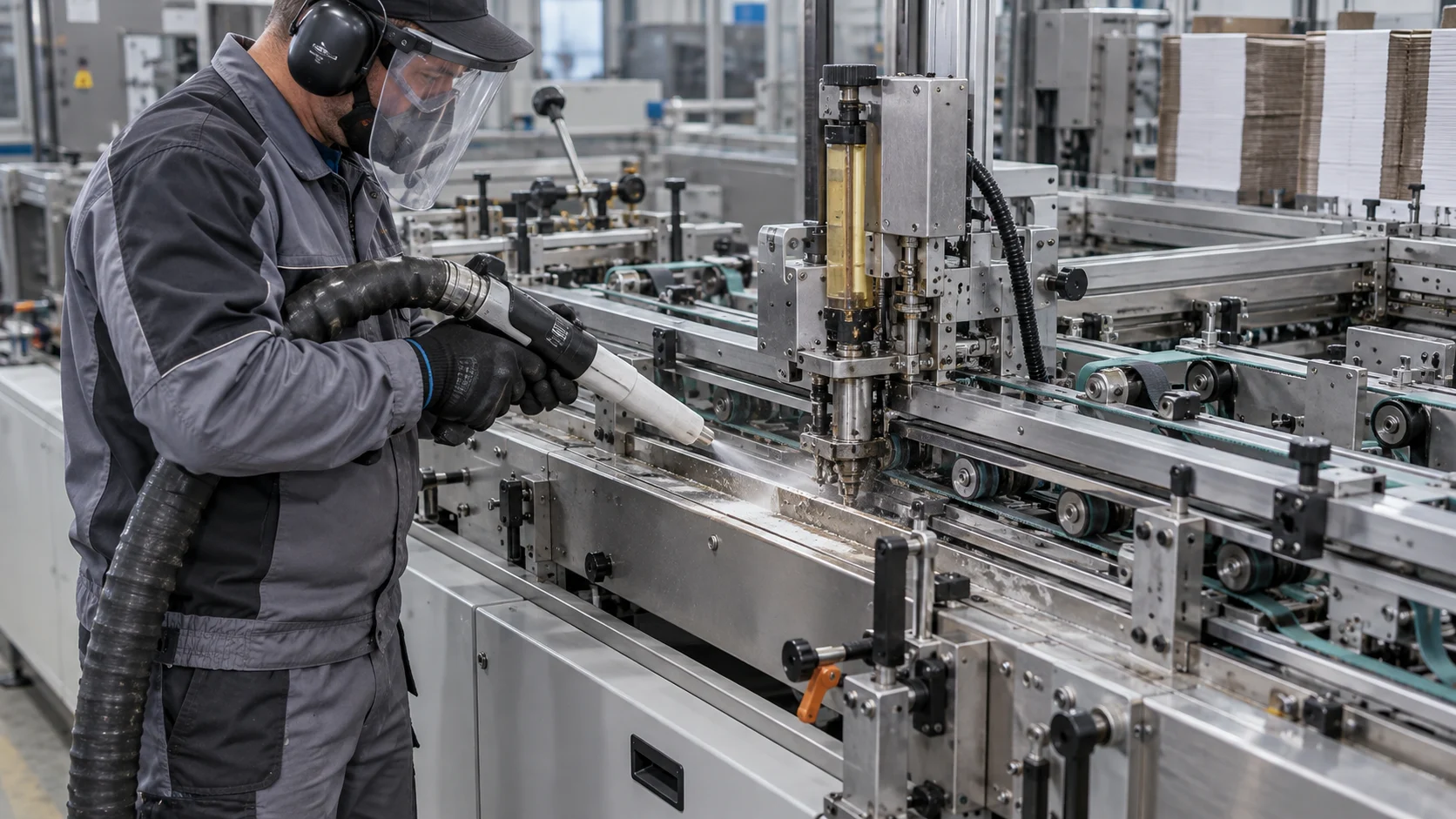
CLEANING APPLICATION
Packaging and Converting Equipment Cleaning
Packaging equipment dry ice cleaning in NY, NJ, PA, and DE. Scope adhesive buildup, accessible machinery, line access, and recurring maintenance.
Packaging equipment dry ice cleaning starts with the station that needs attention and the deposit you want removed. Precision Dry Ice Cleaning accepts projects across New York, New Jersey, Pennsylvania, and Delaware. Plan a focused service visit, a line-wide cleaning scope, or recurring work around your maintenance schedule.
A packaging line brings together different materials, surfaces, and operating requirements. Treating the whole line as one cleaning surface makes it difficult to compare quotes or inspect the result. Instead, identify the affected equipment and give each task a clear cleaning boundary.
Packaging equipment dry ice cleaning by station
Cold Jet’s packaging application guidance includes conveyors, labeling equipment, seal bars, and adhesive-related components. Use those categories to describe your project, then provide the details that determine the actual work.
This service page covers equipment and deposit scope. The packaging industry page connects that work to the wider facility, while paper manufacturing and converting covers related paper operations.
Carton forming, packing, and material handling
Identify the formers, guides, frames, transfer points, and accessible machinery surfaces needing attention. Describe whether the deposit is adhesive, product residue, grease, or a mixture. Include photographs from the side the cleaning team can reach.
Separate a cleanable deposit from wear, misalignment, and damaged parts. Your maintenance team should retain responsibility for mechanical adjustments and repairs. That division gives both parties an inspection standard they can use.
Labeling and adhesive equipment
For glue splash or adhesive buildup, supply the product name, cure condition, and affected surface. Mark seals, sensors, painted areas, and identification labels that need protection. Include the age and thickness of the deposit where known.
External deposit removal is a different task from opening a dispensing system or flushing internal lines. State whether the request covers an accessible nozzle exterior, a surrounding bracket, or another defined component. Assign internal servicing separately.
Seal areas, printing components, and tooling
List the equipment model and the surfaces around the sealing or printing station. Include coatings, contact surfaces, and components that need manufacturer review. For precision rollers, use a separate test and inspection standard.
If the project includes molded packaging tools, link the scope to plastic injection mold cleaning. Press and roller work belongs with printing press cleaning. Keep those tasks connected without merging their acceptance criteria.
Remove the deposit while defining what must remain
Document the original surface before cleaning. Identify paint, plated finishes, protective coatings, markings, and components that must remain untouched. Ask for the proposed boundary to be shown in photographs or a marked equipment list.
A suitable test should use the real adhesive and surface condition. Compare the deposit removed, material remaining, and condition of the underlying finish. If the first test does not meet the objective, revise the method or scope before extending it.
Our adhesive and production residue service explains the information needed for this assessment. Avoid defining success only as a more attractive machine. Tie the result to the surfaces your team needs cleaned.
Coordinate access with production and maintenance
List when each station can be isolated and accessed. Identify who removes guards, trays, covers, or components. Include nearby products, packaging materials, and equipment that require separation from the work area.
Dry ice cleaning can be evaluated for equipment that remains installed. However, nozzle access still determines what can be reached. Surfaces behind fixed barriers need their own access plan, and live operation should not be assumed from the phrase cleaning in place.
For a shared outage, place the cleaning tasks within the shutdown schedule. Record which task comes before inspection, repair, adjustment, and restart. A clear sequence gives purchasing more than a total number of cleaning hours.
Include collection and line release in the scope
The dry ice does not leave spent blasting grit, but the removed adhesive and other deposits remain material to collect. Agree on protection for adjacent equipment and who handles the residue at the end of the visit.
For food or pharmaceutical packaging, ask your quality team to identify the cleaning zone and production-release requirements. Keep deposit removal, any subsequent sanitation, and final release as defined steps. Do not substitute a cleaning description for the facility’s approved process.
For broader food-line work, review food processing equipment cleaning. Electrical cabinets and electronic assemblies need the separate scope described on our electrical equipment page.
Establish a repeatable maintenance task
Begin with the stations where buildup repeatedly returns. Record the initial condition and define the surfaces included in the baseline visit. Then compare those same points before the next scheduled cleaning.
Review changes in adhesive, packaging format, line hours, and access. A recurring agreement should describe the equipment and working conditions, not assume every visit is identical. Update the scope when the production process changes.
Use scheduled maintenance cleaning to connect these tasks to an asset list. Keep optional deep-cleaning work distinct from the routine areas included in each visit.
Packaging machinery cleaning questions
Can several lines share one visit?
Yes. Provide a separate asset list and access window for each line. Identify shared work areas and the order in which maintenance can release the equipment.
Is every adhesive suitable for dry ice removal?
The adhesive, bond, age, and surface all matter. Use a representative test when the response is uncertain. Share product information before agreeing on the full cleaning scope.
Does the quote include disassembly?
Ask for the responsibilities to be stated. Identify what your maintenance team removes, what remains installed, and who handles reassembly and equipment checks.
How is the price determined?
The scope depends on deposit condition, surface area, accessibility, component protection, working window, and cleanup. Our pricing page explains how these factors shape a project quote.
Request a packaging equipment cleaning quote
Send the project ZIP code, line or machine type, residue description, and preferred timing. Add photographs and adhesive details when available. State whether this is a one-time visit or a recurring maintenance requirement.
Request a project review for packaging equipment dry ice cleaning. For the next planning step, read planning adhesive removal from packaging machinery.
Process reference: Application reference. Project suitability requires a separate assessment.
LET’S LOOK AT YOUR PROJECT
Ready for a
cleaner starting point?
Call to discuss your equipment, cleaning goals, and preferred dates. Have a shutdown planned? Start the scope review before your maintenance window is finalized.
NY · NJ · PA · DE / Businesses and private owners