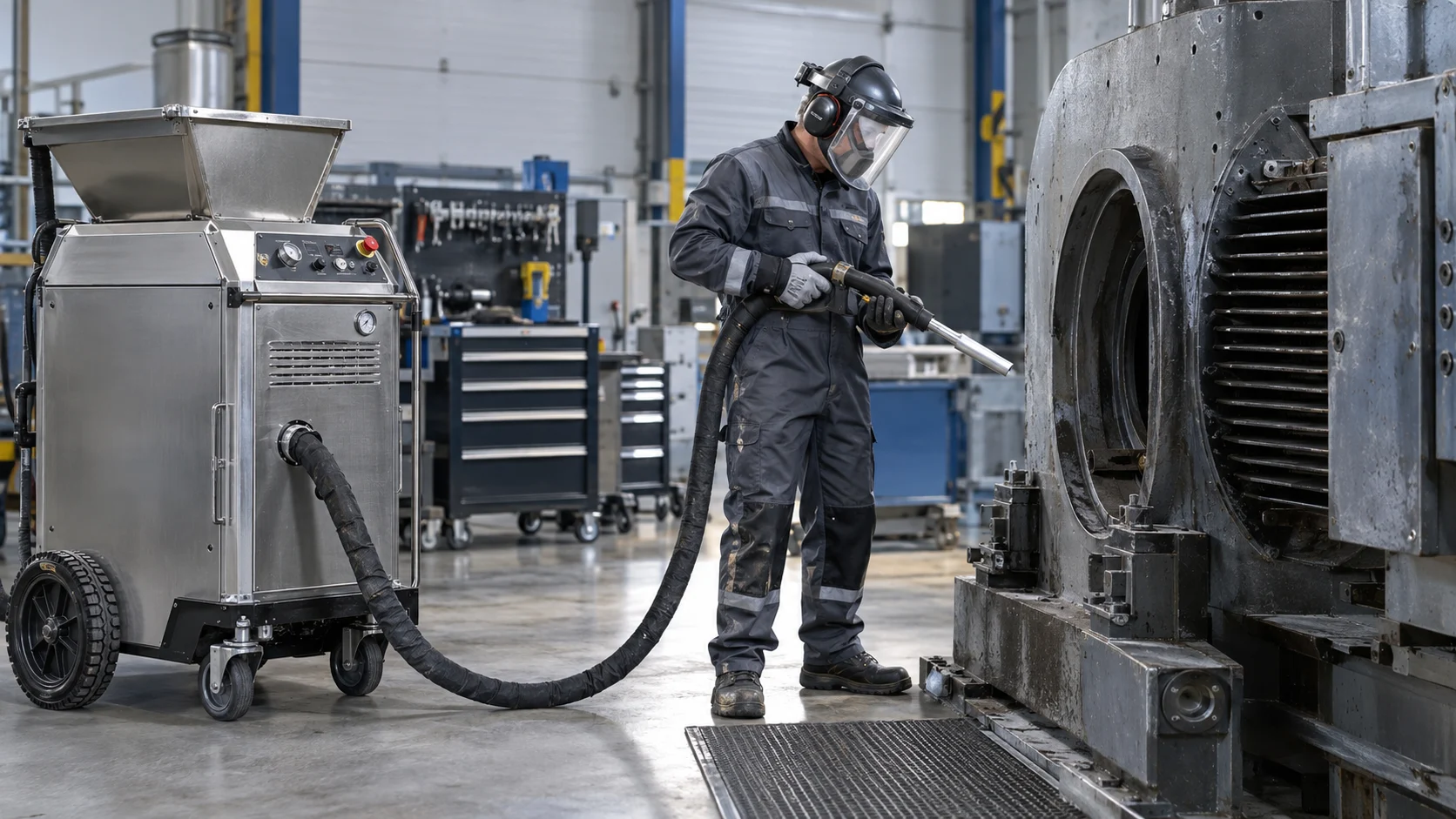
Deposits removed from assets covered by our services
We remove grease, oil, ink, adhesive, release-agent buildup, resin, soot and identified production residue from specified equipment surfaces. Bakery, roasting, vehicle, marine and property tasks each have deposit-specific service pages.
Operational benefits
- Choose the equipment scope that matches your maintenance or project deadline.
- Clean accessible installed assets without unnecessary movement solely for exterior cleaning.
- Remove deposits without wash water, chemical cleaning agents or added abrasive grit.
Dry ice is a non-toxic cleaning medium. Dry ice blasting cleans with solid CO₂ and compressed air without detergents, solvents, wash water or added abrasive grit. Its environmental benefits include no chemical rinse water and no spent blasting media from the blasting step.
Food-grade dry ice is a food-safe cleaning medium used for food-processing equipment. Food-facility cleaning still follows the site’s sanitation, allergen-control and equipment-release procedures.
The dry ice turns into gas. Removed deposits still require collection, and ventilation and protective equipment remain part of the cleaning setup.
Industrial dry ice blasting services
For machinery and production lines, start with industrial equipment cleaning. List accessible housings, frames, and production surfaces. Also identify deposits that interfere with inspection or maintenance. For fleet and quarry assets, review construction and mining equipment dry ice cleaning. For mulchers and land-clearing fleets, see forestry equipment dry ice cleaning. For cabinets, motors, and control systems, use electrical and electronic equipment dry ice cleaning and its de-energized work requirements.
For finishing lines, review paint and spray booth dry ice cleaning. This guide covers accessible overspray deposits, booth materials, site controls, and the maintenance window.
Tooling projects need a more specific scope. Explore plastic injection mold cleaning, rubber mold cleaning, and composite tool cleaning. These guides explain finishes, features, residue, and access.
Dry ice cleaning services for printing and food equipment
Use the printing press and roller cleaning page for ink and press-residue applications. The packaging equipment guide connects adhesive residue, production machinery, and planned cleaning windows.
For processing operations, explore food and bakery equipment cleaning and coffee roaster cleaning. First, identify the cleaning zone and equipment. Then include your facility’s inspection or release requirements.
Automotive, classic-car, motorcycle, and marine cleaning
The automotive dry ice cleaning page covers undercarriage, chassis, underbody, and engine-bay work. Discuss the vehicle condition, access, target deposits, and the areas to preserve.
For specialist projects, use the dedicated classic-car cleaning and restoration preparation page. We also have guides to motorcycle cleaning and boat and yacht cleaning. Each has its own scope questions.
Mobile cleaning and planned maintenance
For on-site work, provide the location and route from unloading to the work area. Next, review air supply, working space, ventilation, nearby operations, and access. Use the four-state service area and facility requirements guides before agreeing on a visit.
A one-time project can focus on equipment or a defined vehicle area. However, repeat work also needs a schedule. Use scheduled maintenance cleaning or planned shutdown cleaning to connect the asset list with production plans.
For commercial walkways and hard floors, see our chewing gum removal service. It explains surface testing, work-area access, and how to request a quote for a group of gum deposits.
How to request a dry ice cleaning quote
Send overall photographs and close-ups. Include the surface material, buildup, cleaning objective, city, and ZIP code. Also state your preferred timing. Finally, note any disassembly, lift access, sensitive components, or site restrictions.
Review pricing and project scope for quote structure and cost factors. If the surface or likely response is uncertain, discuss a defined test cleaning. Use the result before committing to a larger scope.
When should another cleaning method be considered?
For heavy corrosion, coatings, or a specified surface profile, use the applications and limitations guide. A review should distinguish removable deposits from damage. For example, a worn finish may need repair as well as cleaning.
Dry ice cleaning service questions
Which service page should I use for my project?
Choose the page for your equipment or surface, then identify the buildup and cleaning objective. Machinery, molds, printing equipment, food equipment, vehicles, and marine projects each need their own scope review.
What should I send to request a quote?
Send overall and close-up photographs, the surface material, buildup, city, ZIP code, and preferred timing. Include access limits, sensitive components, and the condition you want after cleaning. Review dry ice cleaning pricing and scope before submitting the details.
Can I request a test before a larger cleaning project?
Request a representative test cleaning when the deposit or surface response needs evaluation. Agree on the test area, finish to retain, and inspection criteria before using the result to plan wider work.
Equipment cleaning scopes by maintenance goal
Industrial oven and furnace cleaning. Review baked-on residue, cool-down, and protected internals.
Robotic paint line cleaning. Scope overspray on accessible robots, carriers, and fixtures.
Printing press maintenance cleaning. Map ink residue by press station and maintenance window.
Electrical cabinet exterior cleaning. Set exterior-only boundaries and qualified isolation.
Production line changeover cleaning. Plan cleaning, inspection, and production handback.
Equipment recommissioning cleaning. Prepare stored or idle equipment for owner inspection.